


 Play store

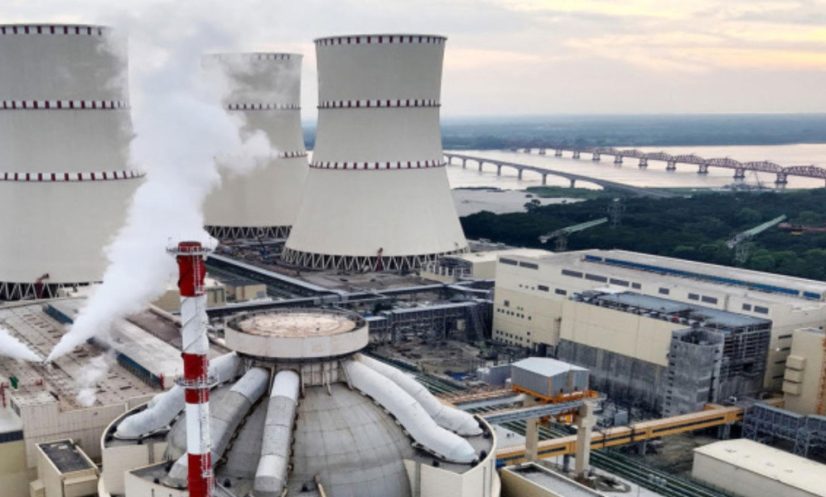
A heavily guarded convoy carrying uranium fuel for the first unit of the Rooppur Nuclear Power Plant left Hazrat Shahjalal International Airport for Pabna on Saturday morning (October 3).
The consignment is being transported in three lorries under security provided by the Bangladesh Army, with the Special Response Battalion (SRB), police and intelligence agencies also involved.
The convoy departed the airport at around 7:15am, according to media reports.
The uranium arrived in Dhaka on a special cargo flight at around 11:43pm on Friday. Airport Executive Director Group Captain SM Ragib Samad told The Business Standard that details of the shipment’s movement were classified.
Civil Aviation and Tourism Minister M Rashiduzzaman Millat made an unannounced visit to the airport on Friday night and said police had taken necessary security measures for the consignment.
The flight had initially been scheduled to arrive on Friday afternoon but was delayed by several hours. The shipment was originally due in Bangladesh on September 24, but the delivery was postponed after Pakistan denied permission for the aircraft to use its airspace.
Bangladesh began loading nuclear fuel into Unit 1 of the Rooppur plant on April 28, marking a major step towards generating the country’s first nuclear power for the national grid.
Located about 160 kilometres from Dhaka, the $12.65 billion Rooppur project is being built with Russian technical and financial assistance. The plant has two units, each with a generation capacity of 1,200MW, for a combined capacity of 2,400MW.
The facility uses Generation III+ VVER-1200 reactor technology, featuring multiple active and passive safety systems, several layers of protection and a core catcher.
Russia is supplying the uranium fuel and will continue to do so throughout the plant’s operation. Russian specialists will initially assist in running the facility, while Bangladeshi personnel are expected to gradually take over operational leadership within three years.
Construction of Unit 1 has been completed, allowing fuel-loading and related processes to begin. Work on Unit 2 is still underway and is expected to be completed by the end of next year.