Play store

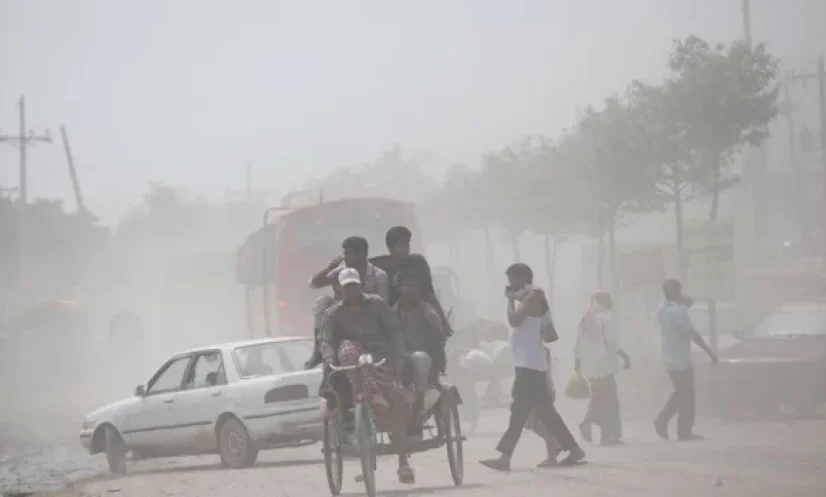
Dhaka ranked joint first among the world’s most polluted cities on Thursday morning, sharing the top position with Kinshasa, the capital of the Democratic Republic of the Congo, as air quality deteriorated to an unhealthy level.
According to the Air Quality Index (AQI), Dhaka recorded a score of 152 at 9:25am, placing it alongside Kinshasa as the world’s most polluted city at the time.
An AQI score between 151 and 200 is classified as ‘Unhealthy’, indicating that air pollution has reached levels that may affect the health of the general population, while sensitive groups face an even greater risk.
Delhi ranked third with an AQI score of 145, followed by Jakarta at 132 and Jerusalem at 107.
Under the AQI scale, readings between 101 and 150 are considered ‘Unhealthy for Sensitive Groups’, 151 to 200 ‘Unhealthy’, 201 to 300 ‘Very Unhealthy’, and anything above 301 is deemed ‘Hazardous’, posing serious health risks to everyone.
The AQI is a globally recognised indicator that measures daily air quality and informs the public about the potential health effects of exposure to polluted air.
In Bangladesh, the AQI is calculated using the concentration of five major pollutants: particulate matter (PM2.5 and PM10), nitrogen dioxide (NO₂), carbon monoxide (CO), sulfur dioxide (SO₂) and ground-level ozone.
Dhaka has long battled severe air pollution, particularly during the dry winter months when dust, vehicle emissions, brick kiln operations and construction activities significantly degrade air quality. Air pollution typically eases during the monsoon season due to frequent rainfall.
According to the World Health Organization (WHO), air pollution is responsible for an estimated seven million premature deaths worldwide every year, contributing to strokes, heart disease, chronic obstructive pulmonary disease (COPD), lung cancer and acute respiratory infections.
Health experts advise people, especially children, older adults and those with respiratory or heart conditions, to limit prolonged outdoor activities when air quality reaches unhealthy levels.