Play store

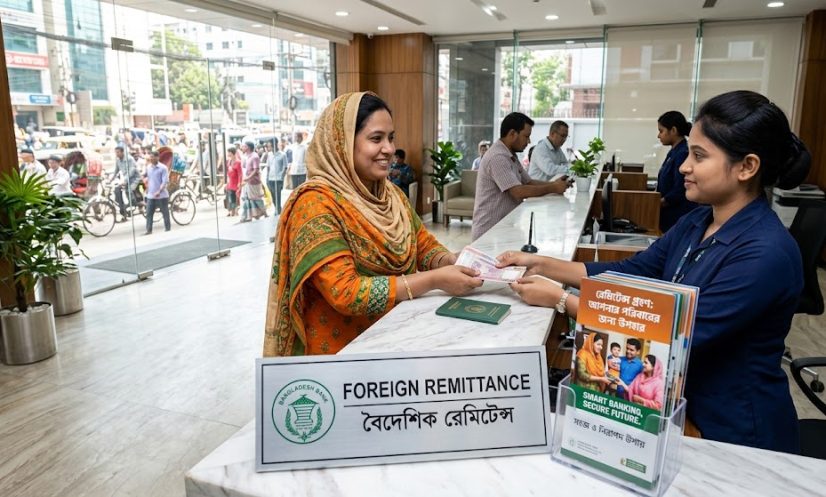
Bangladesh received $1.526 billion in remittances during the first 14 days of September, up $51 million, or 3.4 percent, from $1.475 billion received during the same period last year.
According to the latest data from Bangladesh Bank, the country received $98 million in remittances on September 14 alone.
Remittance inflows have remained strong since the beginning of the current 2026-27 fiscal year. From July 1 to September 14, the country received a total of $7.351 billion, compared with $6.375 billion during the same period of the previous fiscal year.
This represents an increase of $976 million, or 15.3 percent, year-on-year.
The strong growth in remittances is considered positive for the country’s foreign exchange market and reserves. Higher remittance inflows increase the supply of foreign currency in the banking system, helping banks meet import payments and maintain external payment balance.
During the first 14 days of September, Bangladesh received an average of around $109 million in remittances per day. The inflow on September 14 was $98 million.
The country has witnessed relatively strong growth in remittance inflows over the past several months, with the trend continuing from the beginning of the current fiscal year. In the first two-and-a-half months of FY2026-27, remittances were nearly $1 billion higher than in the corresponding period of the previous fiscal year.
Remittances are one of Bangladesh’s major sources of foreign currency, alongside export earnings. The inflow plays an important role in meeting import costs, supporting the balance of payments and strengthening foreign exchange reserves.
The recent increase in remittances through formal banking channels is also contributing to the stronger inflow. Bangladesh Bank data show that while growth during the first 14 days of September was 3.4 percent year-on-year, cumulative growth since July 1 stood considerably higher at 15.3 percent.
The continued rise in remittances is therefore being viewed as an important positive factor for the economy, particularly amid efforts to strengthen the foreign exchange market and maintain adequate reserves.