


 Play store

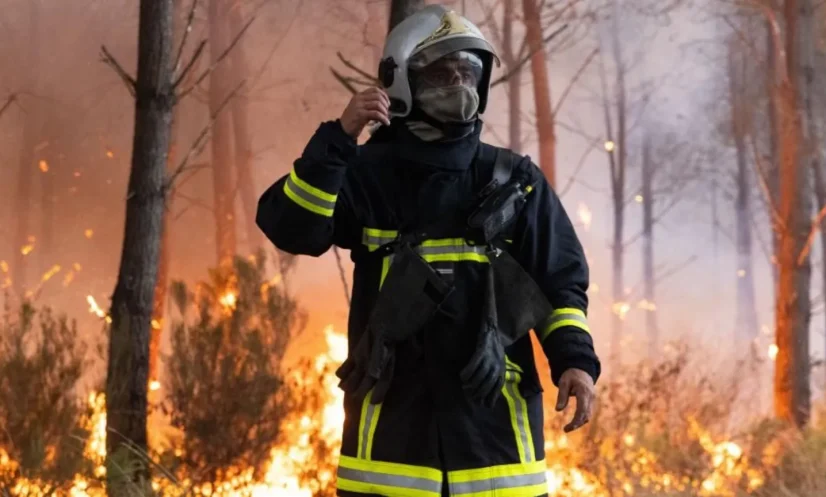
A massive wildfire has advanced to within 15 kilometres (nine miles) of the French city of Bordeaux, prompting authorities to prepare for further evacuations as firefighters battle what officials describe as one of the country’s worst fire emergencies in decades.
Bordeaux Mayor Thomas Cazenave said the city was preparing for “all eventualities” and making arrangements to accommodate large numbers of evacuees if the fast-moving blaze continued its advance.
“We are preparing to accommodate a large number of people should further evacuations be ordered,” he said.
The wildfire, burning across the Gironde region in south-western France, has already forced the evacuation of around 220,000 people nationwide, while another 100,000 people have fled wildfires in neighbouring Spain.
French Interior Minister Laurent Nuñez described the situation as “unprecedented”, warning that firefighters were confronting a blaze that had effectively “taken on a life of its own”.
Fire crews continue to struggle against extreme heat, strong winds and dry vegetation, while forecasters warned that another severe heatwave expected on Tuesday, with temperatures approaching 40 degrees Celsius, could further complicate efforts to contain the flames.
The fire has already scorched approximately 42,000 hectares of land in the Gironde region and destroyed around 240 homes, making it one of France’s largest wildfires since the Second World War.
Jerome Steffe, mayor of the town of Cestas, south of Bordeaux, described the disaster as “the fire of the century”.
He said around 17,000 residents had been evacuated from his municipality after the blaze expanded dramatically over the weekend.
“In my city the situation is really catastrophic,” he said, adding that although firefighters had slowed the fire’s advance, they had “won only a small battle”.
He warned that shifting winds and airborne embers could quickly trigger new outbreaks despite extensive efforts to create firebreaks around vulnerable communities.
French Prime Minister Sébastien Lecornu said the country was experiencing an “unprecedented fire season”.
According to government figures, 116,085 hectares have burned across France since the beginning of the year, while authorities have recorded 13,566 separate wildfire outbreaks.
Lecornu said that around 90 percent of wildfires were caused by human activity, often through carelessness such as discarded cigarette butts, unattended barbecues or unsafe construction work.
However, he also revealed that some fires had been deliberately started, with police making 162 arrests for suspected arson-related offences since 6 July.
President Emmanuel Macron travelled to the fire-ravaged Gironde region on Monday to meet firefighters and emergency personnel and express support for communities affected by the disaster.
Wildfires are also burning in several other parts of France, including Var, Landes, and Haute-Corse on the island of Corsica, stretching emergency resources across the country.
Meanwhile, Spain entered its fifth consecutive day of a national wildfire emergency as firefighters battled multiple blazes west of Madrid and near Valencia.
Satellite imagery analysed by BBC Verify showed that several separate fires around Almorox, Villa del Prado and San Martín de Valdeiglesias merged into a single massive blaze that has now burned more than 27,000 hectares.
Spanish authorities warned that the region is facing some of the most destructive wildfires in its history.
Scientists say climate change is increasing the frequency and intensity of heatwaves, prolonging droughts and creating ideal conditions for extreme wildfires across southern Europe.
According to the Copernicus Climate Change Service, Europe is the world’s fastest-warming continent, heating at roughly twice the global average, increasing the risk of prolonged fire seasons and more destructive wildfires in the years ahead. Source: BBC News