


 Play store

Md Mohsin Hossain, Bangkok: Climate change, geopolitical conflicts and disruptions to supply chains are intensifying food insecurity and macroeconomic pressures worldwide, with nearly 260 million people facing acute food insecurity. Meanwhile, extreme temperatures are reducing GDP growth by around 0.5 percentage points in affected countries, adding to economic pressures from rising food prices, volatile energy and fertiliser markets, and armed conflicts, particularly in low-income and heavily indebted nations.
Against this backdrop, policymakers from the International Monetary Fund (IMF), the United Nations and several African and Middle Eastern countries have called for stronger preparedness, targeted social protection, increased domestic food production and improved revenue mobilisation to address the growing crisis.
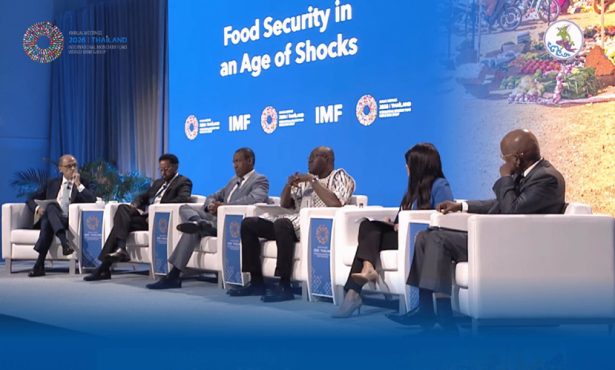
The issues were discussed at a panel titled “Food Security in the Face of Disasters” on Thursday, October 15, the fourth day of the week-long IMF-World Bank meetings in Bangkok, Thailand. Speakers examined the global food security situation, the effects of climate change and geopolitical conflicts, and the resulting macroeconomic challenges.
Rodrigo Valdes, director of the IMF’s Fiscal Affairs Department, said the world had faced repeated food price shocks in recent years. Wars, disruptions to trade and supply chains, adverse weather conditions, and volatility in energy and fertiliser prices had made food markets increasingly unpredictable.
He said rice prices had risen by 50 per cent, wheat prices by 37 per cent and soybean prices by 21 per cent following conflicts in the Middle East. The severe impact of El Niño had reduced rainfall in Niger to its lowest level since 1995, while Indonesia had experienced its most intense heatwave in 30 years.
According to Valdes, extreme temperatures were reducing GDP growth by around 0.5 percentage points in affected countries. The consequences of food crises extend beyond access to food and household purchasing power, significantly affecting government revenues and public expenditure.
He noted that food markets were not as globally integrated as oil markets. Food production depends heavily on local weather conditions and crop cycles, meaning food crises can differ from energy crises in their nature and duration. Nevertheless, their fiscal consequences can be substantial.
Extreme heat could reduce government revenue by 0.15 to 0.4 percentage points in Southeast Asia and the Sahel region, while severe droughts could increase public expenditure by three to four percentage points in the Sahel and East Africa.
Valdes stressed the importance of preparedness rather than waiting until a crisis emerged before launching relief programmes. He said digital identification systems, registries of people eligible for social protection and digital payment mechanisms should be established in advance so assistance could reach affected populations quickly and efficiently.
IMF Deputy Managing Director Nigel Clarke said food insecurity could no longer be treated merely as a temporary humanitarian emergency. It had become a recurring macroeconomic and fiscal risk.
Wars in Ukraine and the Middle East, together with weather-related disasters such as El Niño, were simultaneously disrupting food, energy, shipping and fertiliser markets. The combined effects of these shocks were placing mounting pressure on economies.
Clarke said low-income and fragile states were particularly vulnerable because of high debt, elevated interest rates and limited fiscal capacity. These countries faced the difficult task of protecting vulnerable populations during crises while maintaining economic stability.
Somalia’s Finance Minister Bihi Egeh described how his country was dealing with the cumulative effects of multiple crises rather than a single emergency, calling the situation a “cocktail of shocks”.
About 75 per cent of Somalia’s total food consumption depends on imports, leaving its food markets and cost of living highly exposed to global supply chain disruptions and geopolitical conflicts.
Egeh said successive droughts in 2020, El Niño-related floods in 2024, declining international development assistance in 2025 and the effects of the Middle East war in 2026 had placed the country’s economy under severe strain.
The combination of import dependence and recurring natural and international crises has made ensuring food security increasingly difficult for Somalia.
Burkina Faso’s Finance Minister Aboubakar Nakanabo said food security was not merely an agricultural issue but one closely linked to economic conditions, social stability, government revenue and national security.
The country is facing interconnected challenges, including security threats, climate-related shocks and limited fiscal capacity. Nakanabo stressed the need to move beyond reliance on emergency relief and help people produce more of their own food.
He said farmers needed access to irrigation and fertilisers to strengthen domestic production. Governments also needed to incorporate potential food crises into budget planning, increase domestic revenue mobilisation and establish financial safeguards to manage future shocks.
Djibouti’s Finance Minister Ilyas Moussa Dawaleh said his country, with a population of about 1.5 million, depended entirely on food imports. Its location in a region marked by instability made food security a major challenge.
He said Djibouti had sought to strengthen food security in 2012-13 by investing in agriculture in neighbouring Ethiopia and Sudan. However, the Covid-19 pandemic, political changes and internal conflicts subsequently created crises in those countries as well.
Climate change has reduced grazing land and contributed to rising tensions in neighbouring regions, increasing the flow of refugees into Djibouti. The country must now provide food not only for its own population but also for refugees arriving from Yemen and other countries.
Dawaleh warned that renewed commercial tensions around the Strait of Hormuz and the Gulf region could further aggravate food insecurity by pushing up oil prices. Higher energy costs increase the expense of transporting and distributing food, placing additional pressure on already vulnerable economies.
Rola Dashti, executive secretary of the United Nations Economic and Social Commission for Western Asia (ESCWA), said nine of the organisation’s 22 member states were directly experiencing conflict or dealing with its aftermath.
She said food security was not simply a question of availability but also of affordability. According to estimates for 2025, the cost of a nutritious meal had risen by around 35 per cent.
Dashti warned that a 20 per cent increase in food prices could push around five million additional people into food insecurity. In most Middle Eastern countries, food accounts for 35 to 40 per cent of the consumer price index (CPI), meaning higher food prices could further accelerate overall inflation.
She called for food production, transportation and distribution to be treated as interconnected parts of a single system. Ensuring food security requires identifying weaknesses throughout the entire chain, from production to delivery to consumers.
Dashti also highlighted the links between social protection programmes and school attendance. If food crises undermine children’s nutrition and education, the long-term damage to human capital and social cohesion could be irreversible.
The panel underscored that climate change and geopolitical conflicts were affecting not only food markets but also government budgets, revenue collection, social protection systems and overall economic stability. Import-dependent, heavily indebted and low-income countries were particularly exposed to the combined effects of multiple crises.
Speakers identified several priorities for addressing these challenges, including developing early-warning systems and reliable databases, delivering assistance quickly through digital payments, strengthening agricultural production, improving domestic revenue mobilisation and incorporating potential crisis-related costs into public budgets.
They also stressed that emergency relief must be complemented by long-term planning and effective social protection systems. Ensuring food security, they said, requires an integrated approach that considers food production, supply chains, affordability and governments’ financial capacity.