


 Play store

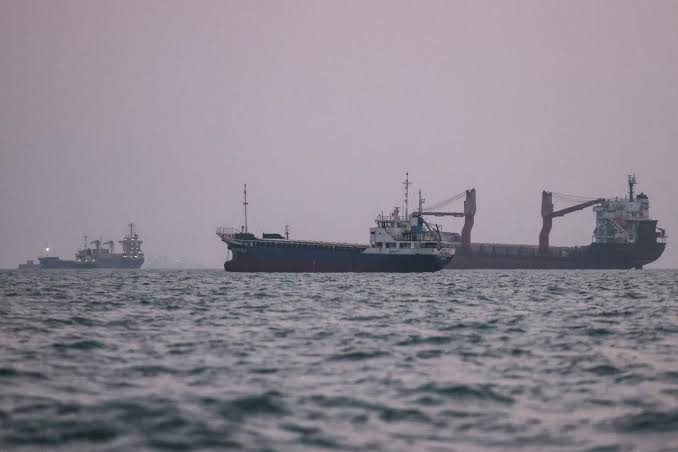
Iran has warned that any further military action against its territory will trigger a swift and more severe response, signalling a sharp escalation in its confrontation with the United States in the Gulf.
Iranian Parliament Speaker Mohammad Bagher Ghalibaf said on Sunday that any new attack would be met with a “faster, heavier and more painful response”, warning that Tehran was no longer bound by what he described as the principle of proportionate retaliation.
“The Americans must understand before it is too late that the rules of the game have changed,” Ghalibaf said, adding that Iran’s recent operations against what it described as “aggressor bases” were only the beginning.
His comments came amid escalating clashes in and around the Strait of Hormuz, a critical global energy route.
Defence analyst Wolfgang Pusztai described the latest confrontation as a “very significant” escalation after Iranian forces reportedly targeted a US aircraft carrier and a missile destroyer.
US forces were able to evade the ballistic missile strikes, according to reports. Washington subsequently retaliated by striking three Iranian oil tankers, while the US military released footage showing a tanker sinking in the Gulf of Oman.
US Defence Secretary Pete Hegseth warned that American forces would continue to destroy Iranian tankers if Tehran targeted US warships operating in regional waters.
Meanwhile, Iran’s Islamic Revolutionary Guard Corps, or IRGC, said it had targeted a remotely operated US vessel and attacked three US-affiliated ships and three oil tankers that it said were travelling along “unauthorised” routes.
The confrontation has further disrupted traffic through the Strait of Hormuz, through which around one-fifth of the world’s oil and gas supplies passed before the conflict. Commercial shipping through the waterway is now largely suspended.
Although a temporary shipping arrangement was reportedly reached with Oman last week, Tehran has refused to fully reopen the route until the United States fulfils commitments under what Iranian officials describe as a lapsed interim peace agreement.
Senior Iranian officials have increasingly portrayed the confrontation as an “existential war”.
Hassan Qashqavi, spokesman for Iran’s parliamentary Commission on National Security and Foreign Policy, confirmed the missile strikes against US warships and criticised the American blockade.
He said Iran’s president had expressed readiness at the Bishkek summit to return to negotiations, but claimed that Washington ignored the offer and instead intensified its pressure and blockade.
Tehran is also seeking to project economic resilience in the face of what it calls US economic warfare.
Economy Minister Ali Madani-Zadeh said American pressure would not force Iran to change its policies, arguing that trade and production were continuing despite the conflict and that millions of Iranian workers had adapted to years of sanctions.
To address mounting economic pressures, the government has formed what it calls an “economic war task force” to deal with urgent trade, financing and supply-related challenges.
However, Majidreza Hariri, president of the Iran-China Chamber of Commerce, acknowledged that the economy had been Iran’s most serious problem even before the latest conflict.
He said military attacks and the economic blockade were inevitably causing severe pressure on Iran’s currency and the wider economy.
Despite those vulnerabilities, IRGC spokesman Brigadier General Hossein Mohibi insisted that the blockade would ultimately prove more costly for Washington than Tehran.
He argued that the economic and strategic costs of prolonging the confrontation would inflict greater losses on the heavily indebted United States, as tensions between the two countries continued to push the Gulf region towards a deeper and potentially more dangerous conflict. Source: Al Jazeera