


 Play store

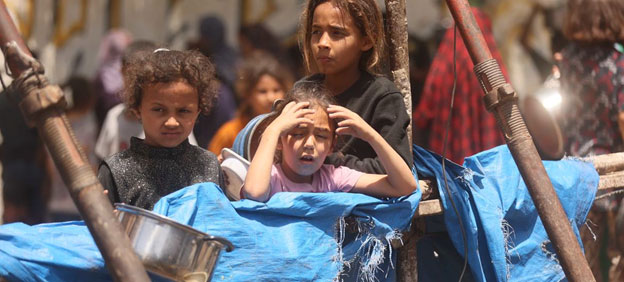
Nearly 50,000 women and girls in Gaza have been killed or severely injured since the war began in October 2023, with the toll equivalent to one in every 21 women and girls in the territory, according to UN Women.
More than 38,000 women and girls have been killed and another 11,700 severely injured in Israeli airstrikes and ground military operations, the UN agency said.
Although most casualties occurred during the first two years of the war, women and girls continue to be killed despite a ceasefire agreement that took effect in October 2025. Some 277 women and girls were killed in Gaza over the past year, according to UN Women.
Nearly every woman and girl in Gaza has been displaced, the agency said, citing more than 150 evacuation and movement orders issued by the Israeli military since October 2023. These orders have forced nearly one million women and girls from their homes.
Most now live in tents or damaged buildings, often without privacy or basic facilities. Amid dire living conditions, women and girls continue to care for children, sick and injured people and older family members, while struggling to cook and clean without essential supplies.
Women are also being forced to give birth in unsafe and unsanitary conditions, putting their lives at risk. The number of miscarriages reached nearly 4,000 in the first six months of 2026, three times the figure recorded during the final six months of 2025, UN Women said.
The number of households headed by women has also increased sharply since October 2023. Nearly one in four households in Gaza, or an estimated 86,290 households, is now reportedly headed by a woman, compared with one in nine before the war.
Many women who have lost their husbands, fathers or other family members are now solely responsible for providing for and protecting their families amid worsening humanitarian conditions.
Despite the ceasefire, women and girls continue to face severely restricted access to food, shelter, safe drinking water and hygiene supplies, alongside ongoing hostilities and insecurity.
Bombing has destroyed homes, businesses, hospitals, schools and shops, making it increasingly difficult to access essential services and basic goods. Restrictions on humanitarian access and continued bombardment have compounded the crisis.
Between July and December 2026, an estimated 702,000 women and girls are projected to face acute food insecurity at crisis levels or worse, classified as Phase 3 or above under the Integrated Food Security Phase Classification (IPC). The situation poses serious risks to their health, including malnutrition, according to UN Women’s estimates based on an IPC report published on August 13, 2026.
Women-led and women’s rights organisations, which play a vital role in the humanitarian response, are also struggling to meet growing needs amid funding shortages.
In a survey of 14 women’s organisations working on the frontline in Gaza and the occupied West Bank, 13 reported that needs among women and girls had increased since 2025. All 14 reported increases in gender-based violence, poverty and mental health distress, while 13 reported an increase in child marriage.
Thirteen of the 14 organisations said they lacked the capacity to meet growing needs. Nearly two-thirds reported having to place women and girls on waiting lists or turn them away because of insufficient funding.
UN Women said it was working with women-led and women’s rights organisations in Gaza to provide life-saving assistance, including protection services, case management for gender-based violence survivors, legal aid, mental health and psychosocial support, emergency cash and livelihood assistance.
Its work also includes providing prosthetics to women and girls with disabilities, counselling survivors and ensuring that their experiences and perspectives inform humanitarian efforts.
UN Women called for the full implementation of the ceasefire, respect for international law, accountability for violations and protection for women, girls and all civilians. It also urged that humanitarian assistance reach those in need at scale and without obstruction, with women and girls placed at the centre of response and recovery efforts. Source: IPS News