Play store

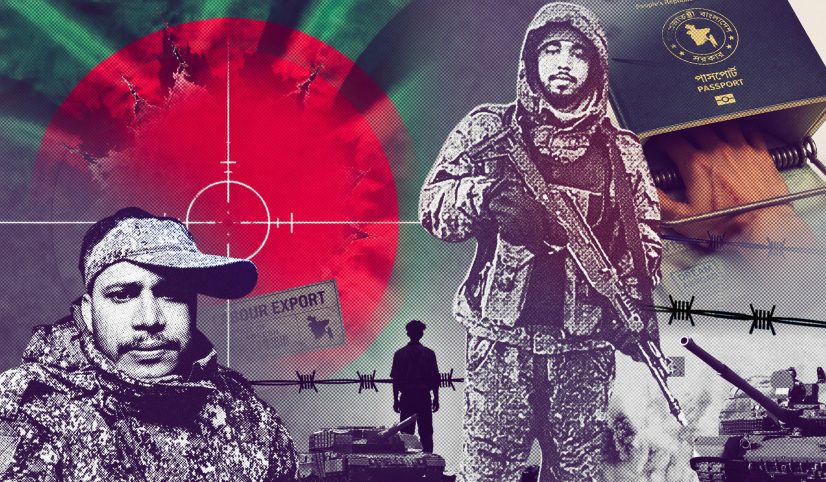
A UN investigation has found evidence that nationals from 29 countries, including Bangladesh, were recruited into Russia’s armed forces through deception and coercion after being promised civilian jobs. Many were subsequently sent to the front lines in Ukraine, where some were killed, injured, captured or reported missing.
The Independent International Commission of Inquiry on Ukraine found evidence of deceptive or coercive recruitment involving nationals of 29 of the 48 countries examined. The findings were presented in a report prepared for the 81st session of the UN General Assembly on 19 October and made public on 26 October.
The countries affected include Bangladesh, India, Sri Lanka, Nepal, the Philippines, Ghana, Nigeria, Kenya and Uzbekistan, alongside other nations in Asia, Africa, Europe and Latin America.
According to the report, all the identified victims of deception or coercion were men aged between 18 and 60. Most were economically disadvantaged, belonged to marginalised communities or had limited access to education. Recruiters exploited their financial vulnerabilities by offering attractive salaries for jobs in Russia.
In the case of Bangladeshi nationals, the commission obtained copies of several business visas used to travel to Russia. The visas showed that a Russian civilian company had invited Bangladeshi citizens to the country. Although the stated purpose of travel was civilian employment, the commission’s broader investigation found that such arrangements were used to recruit foreign nationals into the Russian armed forces.
Recruitment agents and organisations operating in different countries advertised well-paid jobs in Russia through social media and other channels. Positions included security guards, drivers, construction workers, mechanics, electricians, factory workers and cleaners. In some cases, recruiters also promised Russian citizenship and other benefits.
The agents presented themselves as legitimate or government-approved organisations and used invitation letters and other documents to make their offers appear credible. They then arranged visas, air tickets and other travel requirements to send recruits to Russia. Some agents reportedly accompanied recruits on their journeys.
Interviews concerning Bangladeshi nationals revealed similar patterns of alleged deception. According to the commission, many foreign nationals were made to sign military contracts with Russia’s Defence Ministry after arriving in the country. As the contracts were written in Russian, many recruits could not understand their terms.
Some had their passports and mobile phones confiscated and their freedom of movement restricted. They eventually discovered that, instead of the civilian jobs they had been promised, they were expected to serve in Russia’s armed forces.
The report quoted the wife of a Bangladeshi victim as saying that her husband’s passport was taken away and he was instructed to sign various parts of a contract written entirely in Russian. According to her account, he was under severe pressure and had virtually no choice.
The commission found that foreign recruits were subsequently sent to the front lines in Ukraine and assigned dangerous duties. Some were killed or injured, while others were captured or went missing.
The consequences have extended to the victims’ families, many of whom have faced prolonged uncertainty and financial hardship. Some recruits paid substantial fees to agents, forcing their families to borrow money or sell property in the hope of securing overseas employment.
In some cases, families received news of their relatives’ deaths but were unable to bring their bodies home. Others struggled to obtain reliable information about missing relatives. The commission observed that recruitment agents often stopped responding to calls from victims’ families.
The investigation also found evidence of extensive coordination between recruitment networks operating in different countries and Russian authorities. According to the commission, false job promises, deception, exploitation of financial and social vulnerabilities, and coercion into signing military contracts were directly linked to the trafficking of foreign nationals for military recruitment.
Based on the evidence gathered, the commission identified human trafficking and other human rights violations involving Russian authorities. It called on Russia to end such recruitment practices, release trafficking victims from military service, and investigate and prosecute those responsible.
The commission also recommended that governments in affected countries engage with Russian authorities to secure the release of victims, take action against trafficking networks and conduct public awareness campaigns to prevent deceptive recruitment.
Shariful Islam Hasan, associate director for migration at BRAC, said the organisation had published a report last year warning about the recruitment of Bangladeshis for Russia’s war. Many Bangladeshis had been taken to Russia with promises of employment and subsequently recruited into the fighting, he said.
Some had travelled on work visas, while others had entered Russia on tourist visas. The latest UN investigation had highlighted similar concerns, he added.
Hasan said the government needed to take urgent action to prevent more Bangladeshis from becoming involved in the war. He called for a detailed investigation into the current whereabouts and circumstances of around 8,500 Bangladeshis who had legally travelled to Russia over the past two years.
Authorities should establish how many were still working in Russia, how many had been drawn into the war and how many remained alive, he said.
He also urged the government to examine the circumstances of Bangladeshis who travelled to Russia on tourist visas, including how many had died, how many remained missing and how many families had reported losing contact with relatives.
Hasan further suggested collecting information on the number of visas issued to Bangladeshi citizens by the Russian embassy over the past several years.
Describing the reported deaths of Bangladeshis in the war as deeply distressing, he said the government should conduct a comprehensive investigation and take necessary measures to protect its citizens.
He expressed hope that the publication of the UN commission’s findings would prompt effective action to safeguard Bangladeshis from deceptive recruitment and trafficking into military service.