Play store

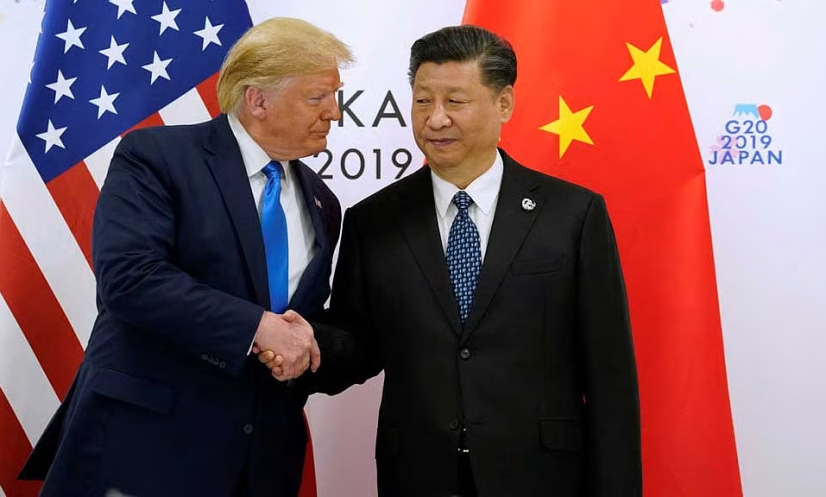
China has warned the United States not to cross four “red lines” ahead of President Xi Jinping’s meeting with US President Donald Trump in Washington, with Taiwan, human rights, China’s political system and its right to development identified as core issues.
Chinese Ambassador to the US Xie Feng issued the warning in an article published in the Communist Party’s official People’s Daily on Wednesday. He said China’s sovereignty, security and development interests must not be violated.
The four issues identified by Xie are the Taiwan question; democracy and human rights; China’s development path and political system; and its development rights.
Xie said differences between Beijing and Washington should be managed in good faith and urged the US to stop using what he described as pretexts such as national security, economic imbalances and forced labour to constrain China.
“When China and the US cooperate, both benefit, but when they confront each other, both suffer,” he said, adding that China remained committed to peaceful development.
Xi arrived in Washington on Wednesday for a three-day state visit and is scheduled to meet Trump at the White House on Thursday. The summit is expected to address trade, tariffs, artificial intelligence and Taiwan, among other issues.
The visit is Xi’s first to the United States in more than a decade and the third meeting between the two leaders since Trump returned to office.
Trade is expected to be a major focus, with the two countries seeking to maintain a trade truce reached in 2025. The agreement eased some US tariffs on Chinese goods and saw Beijing relax restrictions on exports of rare-earth minerals, which are important to several technology industries.
Artificial intelligence is also emerging as a key issue. Both countries are competing for leadership in AI technology, while officials on both sides have discussed mechanisms to manage potential risks and prevent technological competition from escalating into broader conflict.
Taiwan remains another major point of disagreement. Beijing considers Taiwan part of China and opposes US arms sales to the island, while Washington remains a major supplier of weapons to Taipei.
Against this backdrop, Xie said China and the US should expand cooperation while managing their differences and respecting each other’s core interests.