


 Play store

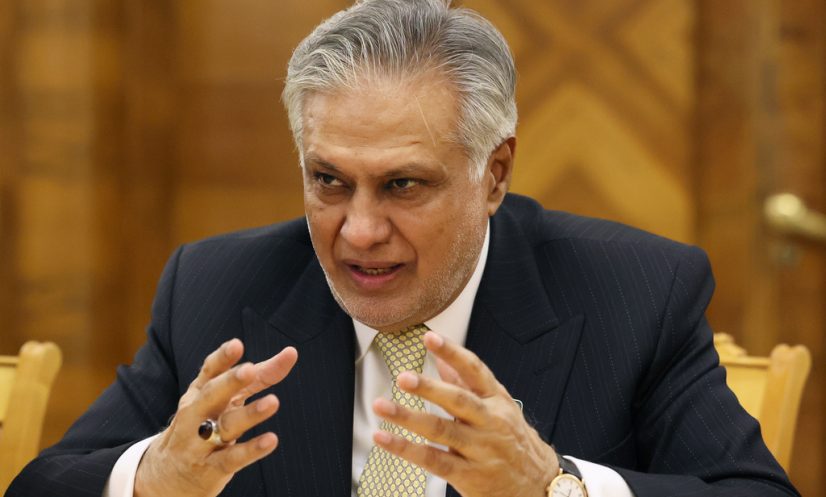
ISLAMABAD: Pakistan on Monday urged Afghanistan’s Taliban government to prevent militants from using Afghan territory to launch attacks inside Pakistan, warning that the armed groups could eventually pose a threat to the Taliban’s own rule.
Tensions between the two neighbours have escalated amid repeated border clashes and Pakistani airstrikes in Afghanistan, intensifying a longstanding dispute over militant activity along their shared border.
The United Nations Assistance Mission in Afghanistan (UNAMA) said in September that it had documented more than 1,100 civilian deaths and injuries resulting from cross-border violence in Afghanistan this year.
Speaking at a think tank event broadcast on Pakistani television, Foreign Minister Ishaq Dar said he had warned Afghan Prime Minister Mullah Mohammad Hasan Akhund about the threat during a visit to Kabul in July 2025.
“I politely reminded him that if the Afghan authorities failed to take appropriate action against terrorist groups operating from their territory, the day would come when these very groups would threaten his government as well,” Dar said.
He did not disclose how the Afghan authorities had responded to his warning.
Afghan government spokesman Zabihullah Mujahid rejected Pakistan’s accusations in a post on X, accusing Pakistani officials of undermining negotiations and prioritising propaganda over solutions.
“Blaming Afghanistan for its own failures by Pakistani officials is no solution to any problem,” Mujahid wrote.
Pakistan’s Information Ministry responded that Islamabad remained committed to dialogue but said progress depended on Kabul fulfilling its counterterrorism commitments and taking verifiable action against militant sanctuaries and support networks.
Pakistan has repeatedly accused Afghanistan of sheltering the Tehrik-e-Taliban Pakistan (TTP), the outlawed Baloch Liberation Army (BLA) and al-Qaida in the Indian Subcontinent. The TTP is separate from, but closely allied with, Afghanistan’s ruling Taliban.
The Afghan Taliban government has consistently denied providing safe havens to militants targeting Pakistan.
Dar said Pakistan’s diplomatic and economic engagement with Kabul had failed to produce meaningful progress on its central security demand: action against militant groups operating from Afghan territory.
“Good neighbourly relations are a two-way responsibility,” he said. “They cannot mean silently absorbing one attack after another.”
He said he had visited Kabul three times in 2025 as Pakistan sought to expand bilateral trade, upgraded diplomatic representation to the ambassadorial level and pursued plans for a railway linking Pakistan with Central Asia through Afghanistan.
Pakistan wanted Afghanistan to become stable and prosperous, Dar said, but Islamabad could no longer ignore what it described as a continuing militant threat across the border.
“Attacks inside Pakistan are planned, directed and launched from across the border,” he said. “Terrorists infiltrate through mountainous terrain, target our soldiers and civilians, and retreat to their sanctuaries.”
Dar added that Pakistan’s military had completed nearly 95 per cent of a border fence extending more than 2,600 kilometres along the Afghan frontier. Construction began in 2017 following cross-border attacks on Pakistani military posts.
He described the TTP as one of Pakistan’s most serious security threats, citing attacks on schools, mosques, markets and security installations. He also accused the BLA of targeting civilians, security personnel and economic infrastructure.
According to Pakistani authorities, more than 2,800 militant attacks since January had killed or injured around 3,000 people.
Information Minister Attaullah Tarar, who spoke at the same event on Monday, also blamed the escalation in violence on militants based in Afghanistan, including the TTP.
Citing United Nations and independent assessments, Tarar said Afghanistan hosted more than 6,000 TTP fighters and over 20,000 militants in total.
He accused the TTP of using Afghan territory to recruit fighters, conduct training and plan attacks in Pakistan since the Taliban returned to power in Afghanistan in 2021.
The accusations and counter-accusations underscore the persistent security dispute between the neighbours, with Pakistan demanding verifiable action against militant groups and Kabul rejecting claims that it allows its territory to be used for attacks across the border.