Play store


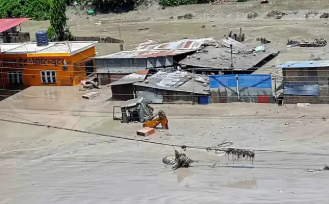
More than a week after devastating floods struck the Nepal-China border region, rescue operations are continuing in full swing. The death toll from the disaster has risen to 1,280, with 1,252 bodies recovered in Nepal alone. Chinese authorities have confirmed 21 deaths in the Tibet region.
According to Nepal’s National Disaster Risk Reduction and Management Authority (NDRRMA), more than 5,620 people remain missing in the two countries, including at least 550 foreign nationals.
Scientists and experts initially believe the disaster was triggered by a massive glacier collapse near the Langtang Lirung mountain peak. Torrents of rocks, mud and water swept through large areas of Nepal and Tibet, destroying villages, bridges and connecting roads within minutes.
Rasuwa district in Nepal has been among the worst-hit areas. Hundreds of workers are feared trapped inside underground tunnels at hydropower plants there.
Sanjay KC, a Nepal Army officer involved in rescue operations in Rasuwa, said heavy bulldozers were being used to clear huge piles of mud blocking the tunnel entrances. Rescuers are working around the clock in the hope of finding survivors, believing that water may not have entered large power-house chambers inside the tunnels.
Helicopters and zip lines are being used to evacuate people stranded in remote disaster-hit areas. According to the United Nations Development Programme (UNDP), around 2.2 million tonnes of waste and debris have accumulated across the affected region.
In Kathmandu, DNA testing and forensic teams are facing enormous challenges in identifying decomposed bodies.
On relief and rehabilitation efforts, Nepal Prime Minister Balendra Shah said searches for survivors would continue alongside efforts to begin rebuilding damaged homes as quickly as possible.
NDRRMA chief Dharma Raj Upreti said around 20,000 houses would need to be rebuilt, including 7,500 that were completely destroyed. The government has decided not to allow settlements to be rebuilt in high-risk areas.
Thousands of displaced people are currently taking shelter in schools and temporary camps.
Following the disaster, Nepal has also highlighted the historical responsibility of developed countries for greenhouse gas emissions. Foreign Minister Shishir Khanal said formal letters had been sent to international partners seeking compensation for Nepal, one of the countries most vulnerable to the impacts of climate change.
Source: Al Jazeera