


 Play store

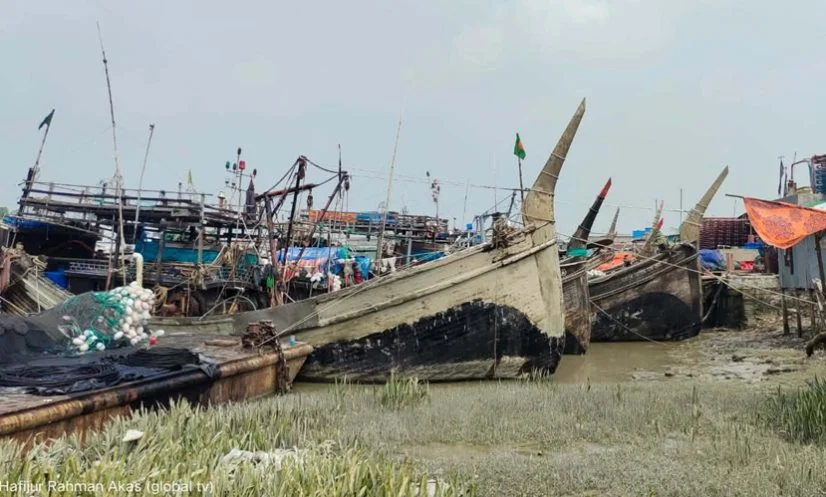
Illegal and converted artisanal trawling boats are operating freely in the Bay of Bengal off the fishing ports in Patuakhali, in violation of government restrictions and fisheries laws.
Experts and local fishermen warn that the indiscriminate use of banned fine-mesh nets and advanced fishing technology is destroying fish fry, larvae, egg-bearing brood fish, crab and shrimp juveniles, as well as marine organisms that form the base of the ocean food chain.
The illegal fishing activities are largely concentrated around the fishing ports of Mahipur, Alipur, Kuakata, and Ashakhali in Kalapara, Patuakhali, where converted artisanal trawling boats continue to operate in violation of government restrictions and fisheries laws.
This is severely damaging the sea’s natural breeding system and raising concerns over declining fish stocks, including hilsa, threatening the livelihoods of thousands of coastal fishermen.
Worldwide, 90 to 100 million tonnes of fish are pulled from our oceans each year with some sources even estimating 150 million tonnes.
Between the 1950s to 2011, worldwide catches increased fivefold, while the amount of fish in sea was reduced by one-half. Three-quarters of the world’s fisheries are exploited or depleted and some scientists predict that we will see fishless oceans by 2048.
According to local fishermen and fisheries-related sources, the number of converted trawling boats operating in the Mahipur-Alipur area has increased from around 40–45 last year to nearly 60 this year.
Driven by the prospect of higher profits, many owners are reportedly spending Tk 3–4 million to illegally convert ordinary wooden fishing vessels into trawlers.
Under existing regulations, large trawlers are allowed to fish only in deep waters.
However, they are allegedly entering shallow coastal waters and operating just a few nautical miles from shore, encroaching on breeding grounds and marine sanctuaries that are vital for fish reproduction.
Marine experts say the bottom trawling method used by these vessels is highly destructive to the seabed.
Heavy nets scrape the ocean floor, damaging coral habitats, seagrass beds, shellfish habitats, and other marine ecosystems. This disrupts the marine food chain and could have long-term impacts on fish breeding and production.
The trawlers are also equipped with modern technologies such as fish finders, GPS, radar, echo sounders, and winch machines, enabling operators to quickly locate and harvest large schools of fish.
Small-scale fishermen using traditional boats and gear say they are unable to compete with such sophisticated operations.
Fishermen from Mahipur and Alipur allege that large trawlers frequently pass over and destroy their fishing nets, causing losses worth hundreds of thousands of taka.
They also claim that protests are often met with intimidation and threats.
“We return empty-handed after spending days at sea, while influential trawler owners continue to destroy fish stocks through illegal trawling,” said trawler skipper Samsu Bepari.
“If the authorities wanted, they could stop this in a single day. If no action is taken, the Bay of Bengal may face a serious hilsa crisis within the next few years.”
Another fisherman, Shahjalal, said juvenile fish are being destroyed before they can mature.
“Millions of fish larvae are being wiped out every day. If this continues, there will be nothing left for future generations of fishermen to catch.”
Fisheries experts warn that climate change, marine pollution, and illegal trawling have become the three biggest threats to Bangladesh’s marine fisheries.
The destruction of brood fish and juvenile fish is disrupting natural reproduction, potentially affecting not only hilsa but also commercially valuable species such as laksha, poa, pomfret, and shrimp.
They caution that continued depletion of marine resources could undermine the country’s food security, export earnings, and blue economy potential.
Fishermen further allege that illegal trawling has continued for years due to the tacit support of some dishonest officials at the district and upazila levels, as well as members of the river police. However, no concrete evidence has been presented to substantiate these allegations.
Raju Ahmed Raja, vice-president of the Mahipur Fish Traders’ Association, said repeated discussions on curbing illegal trawling have yielded little progress. “Instead, the number of illegal trawlers continues to rise. Without strict monitoring by the authorities, this problem cannot be solved,” he said.
Fisheries officer Bakhtiar Ahmed said illegal fishing gear is causing widespread destruction of brood fish and juveniles, resulting in declining fish production and threatening the country’s fisheries resources.
He stressed that strict enforcement of fisheries laws is essential to safeguard food security, biodiversity, and the livelihoods of millions of people.
Moniruzzaman, officer-in-charge of the Kuakata River Police Outpost, said legal proceedings involving trawling boats are currently underway in court.
While operations against illegal fishing and banned nets continue, he acknowledged that logistical limitations hamper enforcement efforts in deep-sea areas.
Patuakhali District Fisheries Officer Bijon Kumar Nandi said the issue is being treated with utmost importance. He said surveillance and enforcement operations would be intensified through coordinated efforts involving the Coast Guard, river police, relevant government agencies, local representatives, and fishermen’s representatives.