Play store

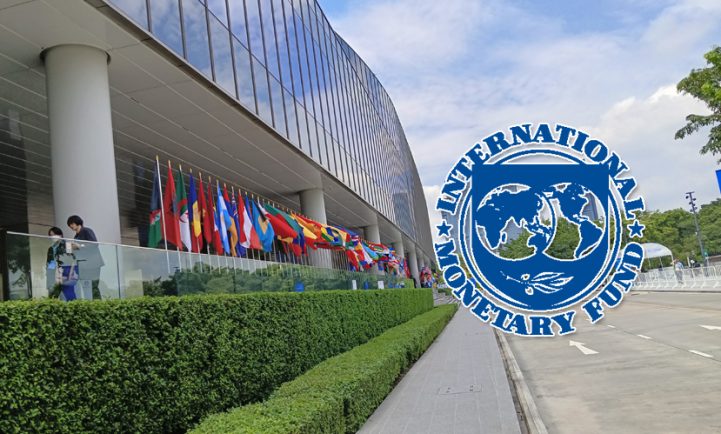
Mohsin Hossain, Bangkok: The International Monetary Fund (IMF) has lowered its growth forecast for Bangladesh’s economy to 3.2 per cent for the current fiscal year 2026-27, while projecting average inflation to rise to 10.9 per cent, signalling mounting pressure on economic activity and household purchasing power.
The latest growth projection is 1.1 percentage points lower than the fund’s previous forecast, raising concerns over investment, production, employment and real income.
The projections were released in the IMF’s latest World Economic Outlook report on Tuesday during the annual meetings of the IMF and the World Bank Group in Bangkok, Thailand. The meetings began on Monday and will continue until October 18.
The Asian Development Bank (ADB) has projected Bangladesh’s economic growth at 4.0 per cent, while the World Bank has forecast 3.4 per cent.
Meanwhile, Bangladesh has sought support from development partners to address its economic challenges. Finance Minister Amir Khosru Mahmud Chowdhury held meetings with IMF officials, including Urjit Patel, and World Bank Managing Director Anna Bjerde on the sidelines of the annual meetings in Bangkok.
The lower growth outlook, coupled with persistently high inflation, points to a difficult economic environment for Bangladesh, where rising living costs could further squeeze household budgets while slower economic activity threatens job creation and income growth.
Global growth faces mounting risks
The IMF said the global economy had demonstrated resilience despite multiple headwinds, but maintaining that resilience was becoming increasingly costly.
Conflict in the Middle East is creating fresh pressure on energy and food markets, with potential repercussions for production, trade and broader economic activity. Meanwhile, investment in artificial intelligence (AI) is helping sustain global growth.
The fund projected global economic growth at 3.1 per cent in 2026, rising to 3.4 per cent in 2027. Global inflation is expected to increase to 4.7 per cent in 2026 before easing to 4.1 per cent the following year.
Growth in advanced economies is projected at 2.1 per cent in 2026.
China’s economy is expected to expand by 4.5 per cent, with the IMF citing weak domestic demand as a factor behind its reduced growth outlook.
Economies such as Taiwan and South Korea, which are integrated into global AI supply chains, could perform relatively well, according to the report.
Inflation threatens purchasing power
Bangladesh’s projected inflation rate of 10.9 per cent poses a significant challenge for households, particularly low-income families, salaried employees and people dependent on limited savings.
When food, rent, transport and other essential expenses rise faster than incomes, households are forced to cut consumption or draw on savings to meet basic needs. Prolonged price pressures could further erode living standards.
Higher global energy and food prices could also increase Bangladesh’s import bills, raising production and transportation costs and putting additional pressure on domestic prices.
The extent of the impact will depend on exchange-rate movements, import costs, domestic supply conditions and government policy measures. Ensuring adequate supplies of essential commodities and effective market management will therefore remain important in containing inflation.
Middle East conflict adds uncertainty
The IMF warned that an escalation of the Middle East conflict could further weaken the global economic outlook. Disruptions to energy supplies and higher international oil prices could intensify inflationary pressures and economic uncertainty.
The global economy could also face setbacks if expectations surrounding AI investment weaken. Sustained investment in the sector, however, could improve productivity and generate fresh momentum over the longer term.
The report stressed the importance of rebuilding fiscal capacity, strengthening energy security, preparing economies to harness AI and expanding international trade and cooperation.
Policy challenges for Bangladesh
The latest projections highlight the challenge facing Bangladesh in reviving economic growth while bringing inflation under control.
Restoring momentum in investment and productive activities, improving revenue collection, strengthening the financial sector and maintaining stable supplies of essential goods will be important in addressing the economic slowdown.
Effective social protection programmes will also be needed to ease the burden of rising living costs on vulnerable households.
Without coordinated measures to control inflation, expand production and create jobs, the benefits of economic growth may remain limited for ordinary people.
The IMF’s outlook therefore underscores the need for policies that support economic stability, encourage investment and employment, and protect household purchasing power amid persistent domestic and global uncertainties.