


 Play store

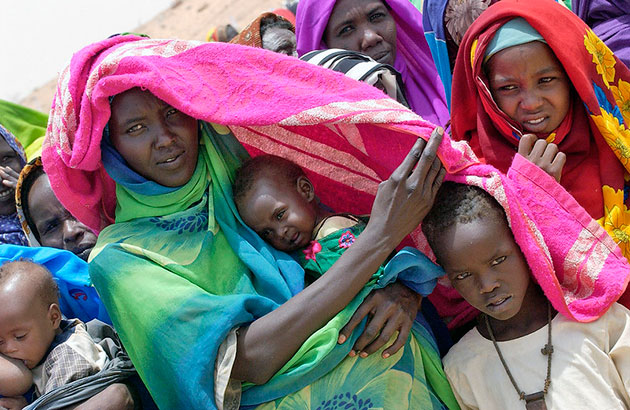
The United Nations is unlikely to achieve its ambitious goal of eradicating extreme poverty by 2030, with hundreds of millions of people still struggling to meet their basic needs amid widening inequality, armed conflicts, mounting debt and declining development aid.
The International Day for the Eradication of Poverty, observed on October 17, served as a stark reminder of the scale of the challenge facing the international community as the deadline for achieving the Sustainable Development Goals (SDGs) approaches.
UN Secretary-General António Guterres has called for urgent political will, massive investment and a commitment to justice rather than charity to eliminate poverty in all its forms.
However, the prospects of meeting the target within the remaining years appear increasingly bleak.
UN Deputy Spokesperson Farhan Haq told reporters last week that donors and development partners must prioritise aid that delivers the greatest possible impact on poverty reduction.
“It’s a disgrace that so many people, really, hundreds of millions of people around the world, still face acute poverty,” Haq said, warning that the gap between existing needs and available resources made it unlikely that the world would meet its 2030 targets.
He said Guterres remained determined to continue the fight, despite the disappointing outlook.
The Secretary-General, Haq added, was neither hopeful nor pessimistic, but determined to press ahead with efforts to eradicate poverty.
Guterres has repeatedly described poverty as an insult to human dignity, a denial of fundamental human rights and a question of social justice.
Ending poverty in all its forms everywhere is the first of the 17 Sustainable Development Goals adopted by UN member states in September 2015 under the 2030 Agenda for Sustainable Development.
The goals include ending hunger, ensuring healthy lives, expanding access to quality education and building more inclusive and sustainable societies. Yet progress towards several of these objectives has slowed, while multiple crises have placed additional pressure on vulnerable communities.
According to estimates cited in the supplied material, around 826 million people were living in extreme poverty in 2026, equivalent to roughly one in every 10 people worldwide. If current trends continue, about 9 per cent of the global population could still be living in extreme poverty in 2030.
The figures underline the distance between the international community’s commitments and the reality faced by millions of households.
Richard Ponzio, director of the Global Governance, Justice and Security Programme and a senior fellow at the Washington-based Stimson Center, told Inter Press Service (IPS) that the world had made substantial progress in reducing poverty during the Millennium Development Goals period from 2000 to 2015.
Much of that progress, he said, was driven by economic and social advances in China and India, two of the world’s largest developing countries at the time.
Progress during the current SDG period, covering 2015 to 2030, has been less impressive for several reasons, including growing debt burdens, the COVID-19 pandemic, environmental degradation and slower global economic growth associated with tariffs and major wars.
Despite these setbacks, Ponzio said, the determination of Guterres and the wider UN system to combat acute poverty deserved the support and commitment of the organisation’s 193 member states.
With the next SDG Summit scheduled for September 2027 in New York, he called for renewed international efforts, innovative development strategies and new financing approaches to support the No Poverty goal.
He also stressed that eliminating extreme poverty must remain a central priority in the emerging post-2030 development agenda.
Max Lawson, Oxfam International’s head of inequality policy, argued that extreme poverty could still be ended by 2030, but only if governments took radical action to reduce inequality.
He pointed to the highly unequal distribution of newly created wealth, saying that the richest one per cent captured 41 cents of every additional dollar of wealth, while the poorest half of humanity received just one cent.
Lawson said ordinary people continued to face the consequences of rising prices, wars and pandemics, even as billionaires more than doubled their fortunes.
The figures, he argued, reflected a global economic system in which wealth was increasingly concentrated among a small number of individuals while large sections of the population struggled to secure adequate food, housing, healthcare and education.
Poverty is not simply a matter of insufficient income. It is also linked to unemployment, social exclusion and people’s vulnerability to disasters, disease and other crises that prevent them from earning a sustainable living.
These overlapping disadvantages can trap families in poverty for generations, particularly where public services are weak and opportunities for decent employment are limited.
Reducing inequality, therefore, requires more than short-term financial assistance. It also calls for fairer taxation, access to quality public services, decent work and effective social protection systems.
Anuradha Mittal, executive director of the Oakland Institute, said efforts to end poverty must address its underlying causes rather than focus primarily on the provision of aid.
She argued that the International Day for the Eradication of Poverty should also serve as a call to end wars around the world.
Global military spending continues to rise, diverting resources that could otherwise support healthcare, education, food security and social protection.
Mittal pointed to US President Donald Trump’s proposed defence budget of $1.5 trillion for 2027, describing it as a record level of spending that could contribute to a further expansion of the military-industrial complex.
She cited estimates suggesting that global military expenditure could reach $6.6 trillion by 2035.
A relatively small share of military spending, she argued, could make a substantial contribution to tackling extreme poverty and hunger.
According to Mittal, less than $300 billion a year could help eliminate extreme poverty, while $93 billion annually, less than 4 per cent of yearly global military spending, could help address global hunger.
The human cost of conflict is particularly severe in countries where war destroys infrastructure, displaces communities and weakens already fragile public institutions.
Mittal said more than half of the world’s 1.1 billion people living in poverty were in conflict situations.
“War diverts necessary funds for public health, education, and social safety nets. Destruction and pillage of war manufactures poverty and then maintains it,” she said.
Conflict can push families into poverty by destroying homes and livelihoods, interrupting education and healthcare, and forcing people to flee their communities. Recovery can take years, while the loss of infrastructure and employment opportunities can leave entire regions dependent on humanitarian assistance.
Danielle Nierenberg, president and founder of Food Tank, said determination alone would not be enough to eliminate poverty without the political courage to defend development assistance.
She expressed concern about reductions in international aid, including the dismantling of major parts of the US Agency for International Development (USAID).
Nierenberg urged governments and the public to challenge claims that foreign aid was simply a waste of money, arguing that relatively small contributions from wealthy countries could save millions of lives.
Aid, she said, was not only a moral responsibility but could also contribute to national security by reducing the instability associated with deprivation and inequality.
The decline in development assistance has become an additional concern for countries that depend on external financing to provide essential services and support vulnerable populations.
According to the figures cited in the SDG 2026 material, development aid focused on poverty reduction has fallen sharply, reversing a decade of progress and returning to levels last seen in 2015.
For low-income countries facing heavy debt-servicing costs and limited domestic revenue, declining aid can make it harder to finance schools, hospitals, social safety nets and programmes designed to improve rural livelihoods.
Frederic Mousseau, policy director at the Oakland Institute, said relying on donors alone to address poverty and the climate crisis was a misguided approach.
Poverty, he argued, was inseparable from growing inequality, and the world had sufficient financial resources to make substantial progress on both challenges.
Mousseau cited Oxfam estimates suggesting that around $9 trillion could be raised through higher taxes on the wealth and income of the richest one per cent and the profits of 722 of the world’s largest corporations.
He argued that the growing fortunes of billionaires and major corporations made stronger taxation and wealth redistribution essential to any serious effort to eradicate poverty.
“The UN should lead the way on an international tax reform that will allow a redistribution of the wealth towards the poor and the adaptation to the climate crisis,” he said.
Calls for greater taxation of wealth reflect a broader debate over how governments can mobilise domestic resources and ensure that economic growth benefits a wider section of society.
Supporters of reform argue that progressive taxation could provide additional funding for public services, social protection and climate adaptation, particularly in countries where poverty and exposure to climate-related disasters reinforce one another.
Social protection is another critical element in the effort to prevent people from falling into poverty.
Such systems include income support, pensions, unemployment benefits, child benefits and other measures designed to protect households from economic shocks and help people meet essential needs.
Although social protection expanded during the COVID-19 crisis, an estimated 46 per cent of the world’s population, around 3.8 billion people, remained entirely without social protection in 2023, including approximately 1.4 billion children.
In response to the subsequent cost-of-living crisis, 105 countries and territories announced nearly 350 social protection measures between February 2022 and February 2023. However, about 80 per cent of those programmes were short-term interventions.
The figures suggest that emergency assistance, while essential during crises, is not a substitute for permanent and reliable systems.
The SDG 2026 figures also point to a milestone: for the first time on record, more than half of the world’s population receives at least one social protection benefit. Nevertheless, billions of people remain completely uncovered.
Guaranteeing basic social security floors in low- and middle-income countries would require an additional $1.4 trillion annually, equivalent to 3.3 per cent of their combined gross domestic product in 2024.
The burden is particularly difficult for developing economies, which often have narrower tax bases and fewer resources to finance essential services. Advanced economies generally allocate a larger share of government spending to education, healthcare and social protection than emerging and developing countries.
Building universal and sustainable protection systems would help households withstand unemployment, illness, inflation, natural disasters and other shocks without falling into extreme deprivation.
Science and technological advances have also contributed to poverty reduction, particularly by improving access to safe drinking water, sanitation and healthcare.
Access to clean water has helped reduce deaths from waterborne diseases, while improved hygiene and sanitation have lowered health risks in communities where unsafe water remains a serious problem.
Such advances demonstrate how investment in public infrastructure and essential services can improve living standards while reducing the financial burden of illness on poor households.
However, access remains uneven. Many vulnerable communities continue to face inadequate sanitation, limited healthcare, poor educational facilities and a lack of reliable employment opportunities.
According to the SDG 2026 figures, 7.9 per cent of the global workforce, or approximately 284 million workers, lived in extreme poverty in 2025, down from 11 per cent in 2015.
Although the decline represents progress, it also shows that having a job does not necessarily guarantee an adequate standard of living.
Low wages, insecure employment, rising living costs and limited access to social protection can leave working people unable to meet their basic needs.
The figures also suggest that only about one in five countries is on track to halve its national poverty levels, highlighting the uneven pace of progress across the world.
Poverty is not an isolated problem affecting only those who experience it directly. Its consequences can spread across societies and undermine economic growth, political stability and social cohesion.
Growing inequality can deepen mistrust, intensify political and social tensions and, in some circumstances, contribute to instability and conflict.
Strong social protection systems, fair access to education and healthcare, decent employment and effective public institutions can help reduce these risks while improving people’s ability to participate in economic and social life.
The challenge is particularly urgent as countries confront overlapping pressures from climate change, conflict, debt and economic uncertainty.
Meeting the 2030 poverty target would require coordinated action by governments, international institutions, businesses and civil society. It would also demand a shift from short-term responses towards sustained investment in public services, employment opportunities, social security and more equitable economic systems.
The warnings from UN officials and development experts suggest that the world is unlikely to eradicate extreme poverty by the current deadline. But the prospect of missing the target does not diminish the urgency of the task.
The remaining years before 2030 offer an opportunity to accelerate progress, strengthen international cooperation and ensure that poverty reduction remains central to future development policies.
Ultimately, ending extreme poverty will depend not only on the amount of money available, but also on how resources are raised, distributed and invested. Without stronger political commitment, fairer economic arrangements and lasting protection for vulnerable people, the promise of leaving no one behind will remain far from reality. Source: IPS News