


 Play store

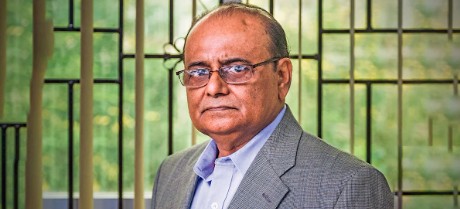
DHAKA: Bangladesh must undertake comprehensive banking sector reforms to restore economic growth, while higher interest rates alone cannot bring inflation under control, Dr Zaidi Sattar, chairman of the Policy Research Institute of Bangladesh (PRI), said on Tuesday.
He called for a coordinated policy framework combining banking sector restructuring, fiscal discipline, greater exchange rate flexibility and tariff rationalisation to rein in inflation, revive investment and strengthen the country’s economic competitiveness.
Sattar made the remarks while presenting the keynote paper at the inaugural session of the 11th Annual Banking Conference, organised by the Bangladesh Institute of Bank Management (BIBM) at its premises in Mirpur, Dhaka.
He said weaknesses in the banking system had undermined the effectiveness of monetary policy, limiting its ability to control inflation and support sustainable economic growth. High levels of non-performing loans (NPLs), capital shortfalls and poor governance had left banks struggling to perform their role as financial intermediaries.
“Bangladesh cannot restore growth with a weak banking system,” was the central message of his presentation, in which he emphasised that restoring confidence in banks and ensuring the efficient allocation of credit were essential to economic recovery.
Rebuilding banks’ balance sheets, strengthening corporate governance and ensuring that credit reached productive sectors should therefore be priorities for policymakers, he said.
Bangladesh’s banking sector is burdened with a large volume of NPLs, provisioning shortfalls and capital deficiencies. Sattar attributed the accumulated risks and losses to years of weak supervision, concentrated lending, loans to related parties by influential business groups and repeated concessions to weak borrowers.
These longstanding problems have weakened banks’ financial positions and reduced their capacity to finance productive investment, he indicated. Without addressing the underlying causes of bad loans and ensuring stronger accountability, monetary policy alone would have limited success.
Sattar also said Bangladesh had the weakest banking sector capital adequacy position among South Asian countries, highlighting the urgent need to strengthen banks’ financial foundations. Banking reforms, he argued, were not merely a matter of improving individual institutions but were also necessary to restore the effectiveness of monetary policy across the economy.
On inflation, he cautioned against relying excessively on interest rate increases. While tighter monetary policy could help restrain demand, inflation in Bangladesh was also being driven by currency depreciation, higher food and energy prices and rising costs of imported inputs.
A weaker taka makes imports more expensive and increases the effective burden of tariffs, adding to production costs and consumer prices, he said. These pressures cannot be addressed through interest rate adjustments alone.
Sattar said monetary policy needed to be supported by fiscal discipline, appropriate exchange rate management and supply-side measures. A coordinated approach would be more effective in containing inflation while avoiding unnecessary constraints on investment and economic activity.
He also raised concerns over the financing of the government’s budget deficit, saying a substantial portion was financed through domestic sources, including significant borrowing from the banking system. Such borrowing can place additional pressure on the banking sector and complicate efforts to manage liquidity and inflation, he said.
Calling for closer coordination between fiscal and monetary policies, Sattar cautioned against making the central bank the primary source of financing the government’s deficit. Maintaining an appropriate balance between government financing needs and monetary stability is essential to ensuring the independence and effectiveness of monetary policy, he indicated.
Referring to the Mundell-Fleming framework, Sattar explained that the effectiveness of monetary and fiscal policies varies under fixed, flexible and managed exchange rate regimes.
For Bangladesh, where capital mobility remains limited, the exchange rate regime should be managed in a way that supports price stability, external balance and economic growth, he said. Policymakers must consider the combined effects of exchange rate movements, import costs, trade policy and domestic financial conditions rather than treating them as separate issues.
Sattar said the taka had depreciated from around Tk 86 per US dollar in May 2022 to Tk 123, representing a decline of about 40 per cent in its value against the US currency.
The depreciation had substantially increased import costs and the effective tariff burden, placing additional pressure on businesses and consumers. Meanwhile, import growth had slowed to around 5-6 per cent, constraining economic activity and limiting the availability of imported inputs needed for production and exports, he said.
Against this backdrop, Sattar proposed a policy of “compensated depreciation”, under which exchange rate adjustments would be accompanied by reductions in import tariffs.
The approach, he suggested, could help offset some of the inflationary effects of currency depreciation while improving the competitiveness of domestic producers and exporters. Lower tariffs on imported inputs could reduce production costs, encourage imports of essential raw materials and machinery, and help businesses expand output.
Sattar said there was scope to reduce existing tariffs by 10-20 per cent. Such reductions could stimulate imports, strengthen production and export capacity, and ease inflationary pressures, he said.
The proposal links exchange rate management with trade policy, suggesting that currency adjustments should not be considered in isolation from the cost of imported goods and inputs. A weaker currency may support export competitiveness, but the benefits can be undermined when higher import costs and tariffs raise production expenses, particularly for businesses dependent on imported materials.
Sattar’s proposed approach would seek to balance these competing effects by combining exchange rate flexibility with tariff reductions. However, its effectiveness would depend on the design and implementation of the measures and their coordination with wider fiscal and monetary policies.
He reiterated that high interest rates alone could not defeat inflation and that economic recovery would remain difficult without a sound banking system. Financial sector restructuring, stronger governance and productive lending would be needed alongside disciplined public finances and a more flexible approach to exchange rate management.
Taken together, these measures could help restore confidence in the financial system, encourage private investment, strengthen export capacity and put Bangladesh on a more sustainable growth path, he said.
Former interim government adviser Dr Wahiduddin Mahmud, Association of Bankers, Bangladesh (ABB) Chairman Abdus Hai Sarker and Bangladesh Association of Banks (BAB) Chairman Mashrur Arefin attended the conference as special guests.