


 Play store

Economic growth depends not only on capital, technology and policy but also on the age structure of a population. When the working-age population outnumbers dependent children and elderly people, it creates opportunities to boost production, savings and investment. Economists call this a ‘demographic dividend’.
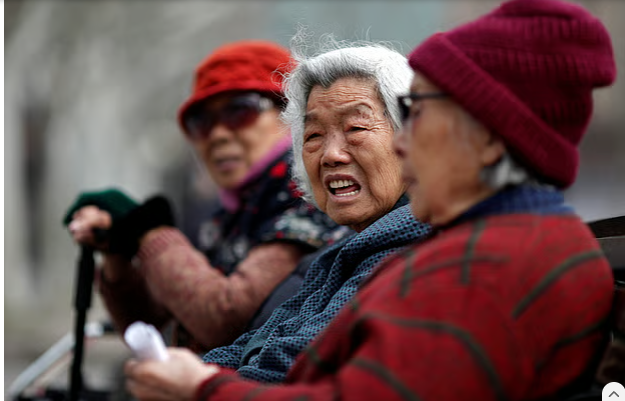
China once capitalised on this advantage to fuel industrialisation and economic growth. But its population structure is now changing. For the first time, the number of elderly people has surpassed the number of children. As a result, the demographic advantage that once helped drive China’s economic expansion is creating new challenges.
A shrinking working-age population means more pensioners, higher healthcare spending and greater pressure on families. This raises a key question: how will China sustain economic growth as its demographic dividend fades?
According to Chinese government statistics, people aged 65 and above accounted for 23% of every 100 working-age people in 2025, while children aged 14 and below accounted for 22%. Although the gap is just one percentage point, the shift could have far-reaching implications for the world’s second-largest economy, affecting its labour market, social security system and government spending priorities.
Fewer young people, more elderly citizens
According to China’s National Bureau of Statistics, the number of people aged 65 and above has exceeded 223 million, accounting for around 16% of the total population. Meanwhile, the number of children aged 14 and below stands at approximately 213 million.
Today’s children will become tomorrow’s workers, taxpayers and productive citizens. A decline in their numbers will eventually reduce the size of the working-age population. Meanwhile, an ageing population will increase demand for pensions, medical care and elderly support services, placing a growing financial burden on both the state and families.
Stuart Gietel-Basten, a professor at the Hong Kong University of Science and Technology, told the BBC that the demographic shift carries symbolic significance and could change government spending priorities. More funding may be needed for pensions and healthcare, alongside adjustments to family policies and the education system.
The legacy of the one-child policy
China’s demographic shift did not happen overnight. It reflects decades of policy decisions, rapid urbanisation, rising life expectancy and declining birth rates.
China enforced its one-child policy from 1980 until the end of 2015 to curb population growth. According to the Chinese government, the policy resulted in a population around 400 million smaller than it would otherwise have been had the previous growth rate continued. However, that estimate remains disputed.
By restricting family size over an extended period, the policy reduced the size of younger generations. At the same time, improvements in healthcare and rising life expectancy increased the elderly population. As a result, a relatively small younger generation now faces greater responsibility for supporting older family members.
The Chinese government has since relaxed restrictions on family formation. Beijing is encouraging young people to marry and couples to have more children. However, living costs, childcare expenses, housing prices, expanding access to higher education and the difficulty of balancing careers with family responsibilities continue to affect birth rates.
Who will bear the cost?
As the elderly population grows, ensuring their financial and social security has become increasingly important. Families may have to shoulder much of the cost of medical treatment and care for older relatives. At the same time, the government faces mounting pressure to spend more on pensions, public healthcare and long-term care.
The pension system could also come under strain because many social protection programmes depend on the earnings and taxes of working people. If the number of beneficiaries rises relative to the working-age population, maintaining the financial balance of these programmes could become more difficult.
Mu Zheng, a lecturer in sociology at the National University of Singapore, believes the demographic shift could pose a challenge to China’s economic ambitions. A shrinking workforce may constrain economic growth, while higher family spending on elderly care could leave households with less money to spend on other goods and services.
The government has already increased support for older citizens. Official figures show that more than 53 million elderly people received various forms of financial assistance and benefits by the end of 2025. A five-year economic plan announced earlier this year also includes measures to expand support for the elderly.
Lessons from other countries
Japan is often the first country that comes to mind when discussing ageing populations. It has made considerable progress in developing employment opportunities and care arrangements for older people. However, ensuring financial security for all elderly citizens remains a challenge.
According to the OECD’s Pensions at a Glance 2025 report, the relative poverty rate among Japan’s elderly population is 20% or higher. A substantial share of older people also remain in employment. This suggests that although Japan has made progress in keeping older people in the workforce, financial security is far from universal.
South Korea faces an even more severe challenge, with nearly 40% of its elderly population living in poverty despite the country’s economic development.
By contrast, the relative poverty rate among older people is 5% or lower in Denmark, Finland, Iceland, the Netherlands and Norway, according to the same OECD report.
These experiences highlight the importance of effective pension systems, accessible healthcare and reliable elderly care in ensuring financial security in old age.
Ageing can also create economic opportunities
A growing elderly population increases spending on pensions and healthcare, but it can also create new markets. The ‘silver economy’, encompassing healthcare, elderly care, housing and assistive technologies, is expanding.
According to China’s state-run Global Times, many older Chinese people have higher incomes and greater purchasing power than previous generations. They are therefore not merely recipients of social protection but also an important consumer group for goods and services.
Although this market offers investment opportunities, ensuring affordable healthcare and elderly care remains essential. At the same time, boosting labour productivity and making the pension system financially sustainable will be crucial to maintaining China’s economic growth in the years ahead. Source: BBC.