


 Play store

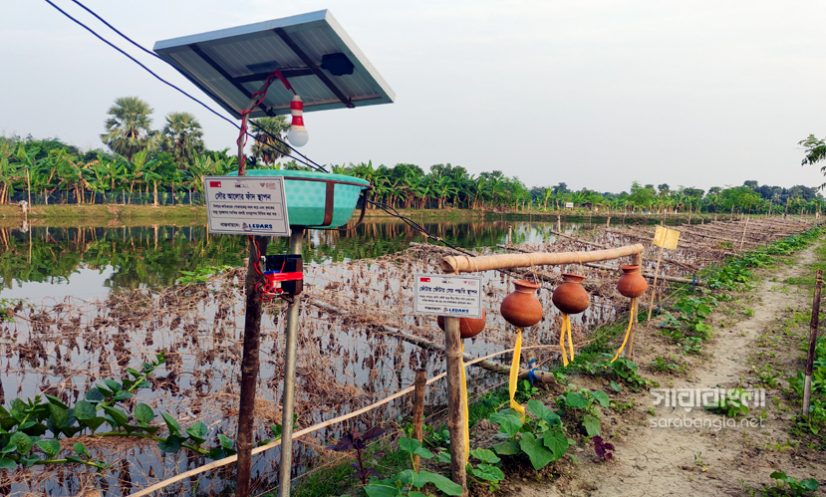
SATKHIRA, Nov 2: Women in the coastal areas of Shyamnagar upazila in Satkhira are turning saline-prone homesteads into productive vegetable farms by adopting modern farming techniques, offering new hope for agriculture amid climate change and freshwater scarcity.
Surrounded by saline water and salt-affected soil, communities near the Sundarbans have long struggled with shortages of safe drinking water and water for farming and household activities.
Vegetable cultivation was once a major challenge, as crops often withered in saline soil. But local women are now overcoming the obstacles through innovative farming methods, rainwater conservation and training.
Dipika Rani, a homemaker from Kultali village under Munshiganj Union, has established a vegetable farm in her homestead using modern techniques.
“The Sundarbans region is affected by salinity. Earlier, we could not grow vegetables properly as plants would die because of saline soil. But after receiving training from LEADERS, we started farming using modern methods,” she said.
Dipika has developed a freshwater reservoir in her homestead to collect and store rainwater throughout the year. The water meets her drinking and household needs and is also used for vegetable cultivation.
She said she had adopted 12 farming techniques, including trellis, raised-bed, mulching, bag cultivation, vertical tower farming, drip irrigation through vertical towers and light traps.
By supplying vegetables to her husband for sale in the market, she sells more than 10 to 12 kilograms of produce a day, she added.
Inspired by Dipika, another resident, Iti Biswas, has also started growing vegetables in her homestead.
“Initially, the seedlings died, but after several attempts, I succeeded. I now grow okra, Malabar spinach, bitter gourd, bottle gourd, sweet pumpkin, spinach and red amaranth, along with ginger in bags,” she said.
She said the vegetables were cultivated using modern techniques to prevent saline water from coming into contact with the soil. Rainwater stored in excavated ponds is used for irrigation.
Climate change, irregular rainfall, excessive rain, drought, waterlogging and rising salinity, compounded by shrimp enclosures and saline water bodies, have made farming increasingly difficult in the southwestern coastal region.
Ashalata, a sub-assistant agriculture officer responsible for Atulia Union in Shyamnagar, said most unions in the upazila had saline-affected farmland.
The Department of Agricultural Extension is working with non-governmental organisation LEADERS to promote farming and encourage local farmers, she said.
Salinity-tolerant crop varieties, improved fertiliser use, trellis farming, mulching and vegetable cultivation in bags are among the techniques being promoted to expand production, she added.
LEADERS Executive Director Mohan Kumar Mondal said climate change had severely affected traditional agriculture in Bangladesh’s southwestern coastal belt.
Through various projects, the organisation is training marginal farmers in producing salinity-tolerant rice and vegetable seeds, preparing organic fertilisers and biological pesticides, and promoting ecological agriculture.
The organisation is also providing equipment and materials, including containers, earthworms and cow dung, to help farmers develop their own resources for sustainable cultivation.
Mondal said the initiative seeks to combine local knowledge with scientific information and practical technologies to strengthen agricultural resilience in salinity-affected communities.