Play store

Despite years of promises to implement the Teesta mega plan, the project has yet to take off, leaving thousands of people along the river vulnerable to relentless erosion every year.
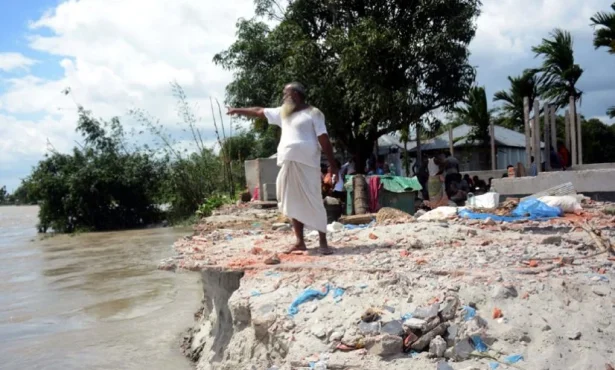
Homes, trees, croplands, educational institutions, mosques, madrasas and temples are disappearing into the river. Thousands of hectares of cultivable land have also been lost, increasing displacement and reducing agricultural land and livelihood opportunities.
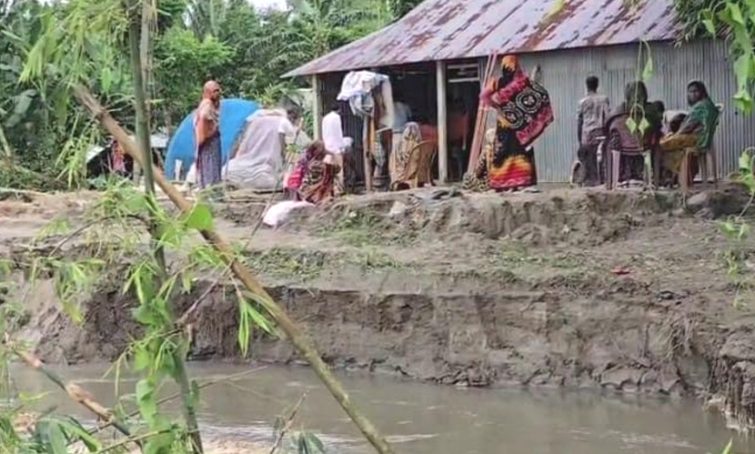
For people living along the Teesta, river erosion has become a constant reality. Many families have been forced to relocate their homes several times over the years. While some move their houses to safer places, others, having lost their last possessions, take shelter on embankments or on other people’s land.
Residents complain that despite repeated demands for the implementation of the mega plan to protect them permanently from erosion and floods, little tangible progress has been made.
They also said political parties and different organisations were vocal about implementing the project before the elections, but their activities and advocacy had largely faded since the polls.
Renu Begum, 60, of Char Khitabkhan village in Ghorialdanga, has lost her cropland, pond, orchard and homestead to river erosion. A former three-time union parishad member, she now lives with her family on an embankment.
“The river has turned us from rich people into paupers,” she said.
Another erosion-affected resident, 65-year-old Sabur Ali, said his homestead had been swallowed by the river 17 times.
“My house has been eroded 17 times, but no effective permanent measures have been taken to prevent erosion. The situation is deteriorating day by day,” he said.
The government, however, has recently offered fresh hope for the project. On October 1, Disaster Management and Relief Minister Asadul Habib Dulu said work on implementing the Teesta mega plan would begin in the next fiscal year after the completion of technical surveys.
The project is expected to improve the lives of around two crore people living on both sides of the river.
Under the proposed plan, local residents expect river management, erosion control, flood prevention, improved navigability and better livelihood opportunities.
They insist that the government should move beyond announcing pilot projects and begin visible implementation without further delay.
Residents say every monsoon brings renewed fear of losing their homes. Even when a family relocates to what appears to be a safe place, erosion often threatens the new settlement the following year. They fear that continued neglect will eventually wipe out not only their homesteads but also agricultural land and permanent settlements.
Announcements about the Teesta mega plan are nothing new to people living along the river, who have received similar assurances at different times in the past. They now want the latest promise of launching a pilot project in the next fiscal year to translate into concrete action.
Their question remains: How many more homes, croplands and public facilities must disappear into the river before the full implementation of the Teesta mega plan becomes a reality?
The Teesta originates in India’s Sikkim and flows through West Bengal before entering Bangladesh. The river is 315 kilometres long, of which 115 kilometres flow through Bangladesh, passing through Lalmonirhat and Rangpur before joining the Brahmaputra in Kurigram. Within Kurigram, the river stretches across a 40-kilometre area covering parts of Rajarhat, Ulipur and Chilmari.