


 Play store

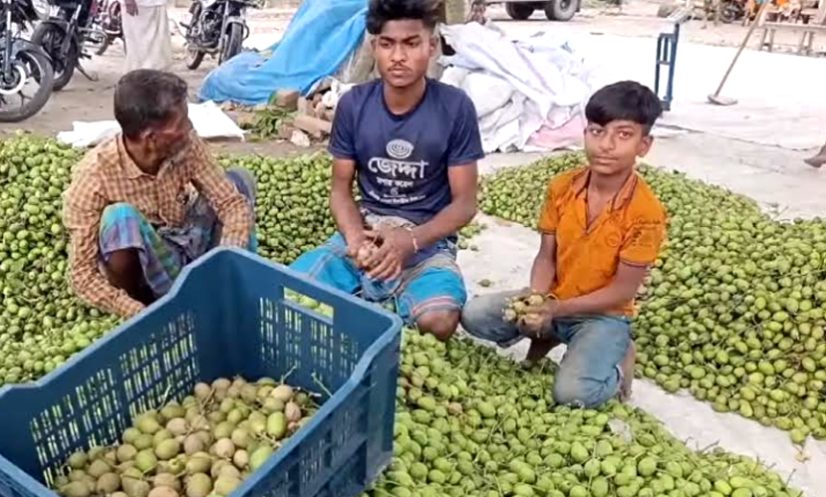
A bumper harvest of seasonal olives has brought fresh activity to fruit markets in Sirajganj, with traders and buyers gathering in large numbers at local markets amid increased supplies.
Favourable weather conditions have resulted in a good yield this season, raising hopes among seasonal traders. Olives are being collected daily from different villages and brought to Bagbati Haat, from where wholesalers are distributing the fruit to various districts across the country.
Depending on size and quality, olives are selling for Tk 600 to Tk 1,000 per maund (40 kg).
Numerous olive trees can be found in household yards, along roadsides and around homesteads in Bagbati, Phulkucha, Dhaldop, Bhadurghat and Ghorachara villages under Sirajganj Sadar upazila.
Although there are no large-scale, commercially planned olive orchards in these areas, trees around private residences and homesteads produce a significant quantity of fruit every year. This season, favourable weather has resulted in an abundant harvest, creating fresh business opportunities around the seasonal fruit.
Traders said local intermediaries and seasonal businessmen purchase trees in different villages on a one-year basis before the olive season begins. Once the fruits mature, workers are hired to harvest them.
Each tree yields an estimated eight to 10 maunds of olives. The harvested fruits are packed into sacks and transported to Bagbati Haat, where they are thoroughly washed, sorted and prepared for wholesale sales.
Bagbati Haat has emerged as a well-known trading centre for olives in the locality. Trading continues for around three months every year during the season.
From noon until evening, the market remains busy with traders, wholesalers and retail buyers from different areas. Local labourers are also engaged in harvesting, transporting, washing and packing the fruits, creating seasonal employment and adding momentum to the rural economy.
Olive trader Abdul Hai said large quantities of olives were traded at Bagbati Haat every year during the season.
“We purchase the trees in advance and collect the fruits once they mature. We then bring them to the market, clean them and sell them to wholesalers. Supplies are higher this year because of the good harvest,” he said.
Another wholesaler, Azahar Ali, said olives purchased at Bagbati Haat were cleaned, sorted and packed into sacks before being transported to different districts.
Prices range from Tk 600 to Tk 1,000 per maund depending on size, he said, adding that higher transportation and other operating costs had reduced traders’ profit margins somewhat.
Anwar Sadat, additional director of the Department of Agricultural Extension in Sirajganj, said the department was encouraging farmers to increase olive production and expand commercial cultivation.
Necessary training and agricultural advice were being provided to farmers, he said, adding that planned cultivation could increase farmers’ incomes and create new business opportunities locally.
According to the agriculture department, the production target for Sirajganj district this season has been set at around 905 tonnes of olives from 101 hectares of land.
At prices ranging from Tk 600 to Tk 1,000 per maund, the targeted output could have an estimated market value of Tk 13.6 million to Tk 22.6 million, equivalent to around Tk 1.36 crore to Tk 2.26 crore.
This creates the potential for nearly Tk 2 crore in olive-related trade in the district during the current season.
Agriculture officials and market participants believe Sirajganj’s olives could develop into a larger commercial venture in the coming years if opportunities for production, preservation, processing and marketing are expanded.