Play store

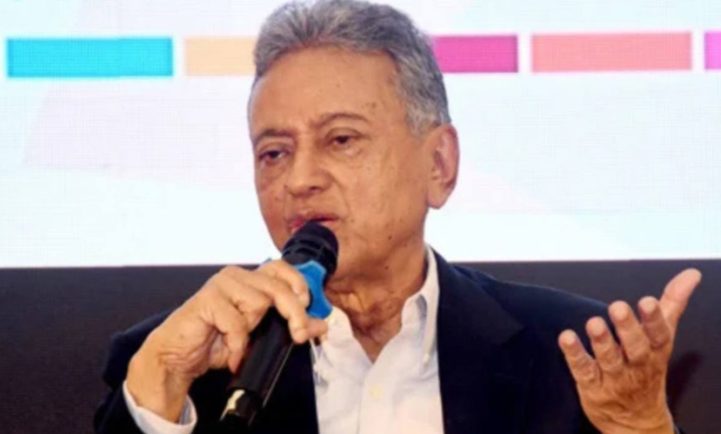
The government is bringing banks, insurance companies, capital market institutions and other financial entities under an integrated digital system to increase transparency, reduce business costs and ensure real-time transactions, Finance and Planning Minister Amir Khasru Mahmud Chowdhury has said.
He made the remarks on Saturday while inaugurating ‘Barta’, an online platform for exchanging information on local letter of credit (LC)-related transactions, at the Bangladesh Bank Training Academy in Mirpur, Dhaka.
The minister said global trade and investment were increasingly operating in real time, and Bangladesh’s economy needed to keep pace with this changing environment.
It would be difficult to reduce business costs and ensure transparency if government ministries and financial institutions continued to operate through disconnected information systems, he said, stressing the need for interconnectivity among the central bank, capital market regulators and other financial institutions.
Highlighting irregularities in the insurance sector, Amir Khasru said cover notes had often been issued without payment of insurance premiums.
He cited instances where cover notes were issued for imported goods worth Tk 1,000 crore without the corresponding premiums being paid. Such practices resulted in revenue losses for the government, harmed insurance company shareholders and created problems for other stakeholders.
To prevent such irregularities, the government is establishing digital connectivity among Bangladesh Bank, banks handling LCs and insurance companies. Similar arrangements will be introduced to ensure transparency in back-to-back LCs.
The initiative will also bring the Bangladesh Securities and Exchange Commission (BSEC), Dhaka and Chittagong stock exchanges, listed companies and brokerage houses under the integrated digital system.
Emphasising consultation with stakeholders, the minister said reforms must be discussed with all relevant parties before implementation. Without their participation and cooperation, even well-designed reform initiatives would be difficult to implement.
Lower costs through Barta
Bangladesh Bank officials said the existing system relied on the Society for Worldwide Interbank Financial Telecommunication (SWIFT) to exchange information on both domestic and international LCs.
As a result, information relating to local LCs was first routed through SWIFT’s overseas network before reaching the concerned bank, which then forwarded it to the supplier.
The process cost around Tk 1,500 per LC, with the payment made in foreign currency. Moreover, there was no centralised facility to preserve all transaction records within Bangladesh. Banks had to apply separately to SWIFT to retrieve old information.
Under the new Barta platform, information will be exchanged directly through the networks of commercial banks and Bangladesh Bank, eliminating the need for foreign intermediaries.
All LC-related information will be stored centrally and can be retrieved instantly from the central bank whenever required.
According to Bangladesh Bank data, a total of 579,110 local LCs were opened in the 2025-26 fiscal year.
At an average messaging cost of Tk 1,500 per LC, the total expenditure amounted to Tk 86.86 crore, equivalent to $7.24 million in foreign currency. After adjusting for commercial banks’ earnings, the net foreign currency expenditure stood at around $6.15 million.
The new platform will eliminate messaging fees for domestic LCs, allowing the country to save this amount.
It will also enable the supplier’s bank to receive immediate notification when an LC is opened. Any necessary amendments can be communicated quickly, reducing the time required for opening, amending and confirming LCs and exchanging related documents.
Centralised storage of transaction records is also expected to make dispute resolution easier by ensuring quick access to relevant documents.
The platform is expected to improve coordination between exporters and local suppliers, strengthen domestic backward linkages and increase local value addition in exports.
Security and stakeholder reactions
Bangladesh Bank officials said the platform would incorporate several security measures, including encrypted virtual private networks (VPNs), firewalls, token-based verification for every application programming interface (API) call and two-factor login authentication.
Each transaction will require approval through three stages: maker, checker and authoriser.
Each designated official will also have separate power-on and system-access passwords. As a result, a total of six password-based security layers will be involved in approving a message, reducing the risks of unauthorised access and misuse of information.
Federation of Bangladesh Chambers of Commerce and Industry (FBCCI) Administrator Md Fazlul Haque said the significance of the initiative went beyond saving $6.15 million annually.
He said the project demonstrated Bangladesh’s growing confidence in developing technological solutions independently to meet its own needs.
If a similar system could be introduced for international LCs in the future, monitoring import-export prices and transactions would become easier, potentially facilitating the work of the Bangladesh Financial Intelligence Unit (BFIU), he added.
Bangladesh Garment Manufacturers and Exporters Association (BGMEA) President Mahmud Hasan Khan said the Tk 1,500 charge for each local LC had been a significant burden on the garment industry.
After receiving export orders, garment manufacturers often need to open numerous small-value local LCs. Some are worth only $700, $1,000 or $1,500, but the number of such transactions is substantial.
He said the new platform would reduce costs, improve transparency and simplify dispute resolution.
However, LC opening and acceptance charges imposed by banks remained a major business expense, particularly for small and medium-sized enterprises (SMEs), which often lack the bargaining power to negotiate with banks.
He urged Bangladesh Bank to issue guidelines to keep such charges at affordable levels.
Bangladesh Bank Governor Mostakur Rahman said reducing business costs was one of the central bank’s key priorities, adding that the benefits would ultimately reach ordinary consumers through lower prices of goods and services.
He said the central bank had taken several initiatives to reduce financial costs for businesses. A decline in inflation could create room for further reductions in the policy interest rate.
The central bank has also introduced a Tk 7,000-crore scheme called the SME Development Programme (SDP), providing interest subsidies to businesses, he said.
Bangladesh Bank is also working to digitise documents related to international LCs to reduce courier expenses and processing time. The initiative is expected to bring document delivery time down to one or two days.
The governor urged businesspeople and bankers to adopt and use the new Barta platform.
Finance and Planning Minister Amir Khasru Mahmud Chowdhury attended the programme as the chief guest, while Bangladesh Bank Governor Mostakur Rahman chaired it.
Deputy Governor Habib ur Rahman, FBCCI Administrator Md Fazlul Haque, BGMEA President Mahmud Hasan Khan, senior bank executives and business representatives were also present.