Play store

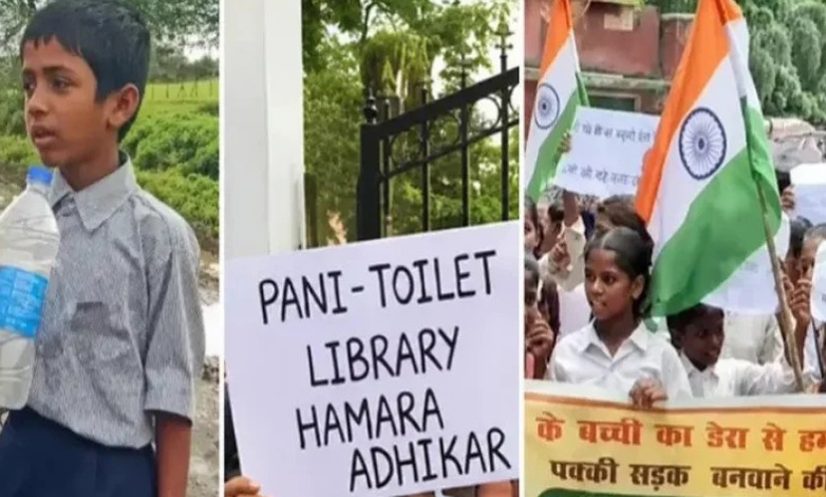
Inspired by the success of Gen Z-led digital protests, India’s younger generation, Gen Alpha, is increasingly taking to the streets to demand better schools, roads, drinking water and other basic civic facilities.
Students in several Indian states have recently staged demonstrations, marches and sit-ins, challenging local authorities over poor infrastructure and inadequate public services.
The latest wave follows a digital campaign that began with protests over irregularities in the National Eligibility-cum-Entrance Test (NEET). The campaign eventually contributed to the resignation of India’s then Union Education Minister Dharmendra Pradhan on July 25, after sustained protests demanding accountability over the alleged question-paper leak.
The movement was initially driven by a satirical Instagram page called the Cockroach Janata Party (CJP), which emerged on May 17 after comments referring to young people as “cockroaches” during a Supreme Court hearing triggered an online backlash.
As the controversy over the NEET-UG examination grew, including reports of student suicides, CJP supporters moved their protest to Jantar Mantar in New Delhi.
Although the education minister’s resignation brought that campaign to an end, it appears to have inspired a broader wave of student activism across the country.
In Jharkhand, students have protested alleged irregularities in examinations conducted by the Jharkhand Public Service Commission and the Jharkhand Staff Selection Commission.
CJP founder Abhijit Deep has also launched a campaign called “Fix the School”, focusing on improving government schools in rural areas.
Students demand basic facilities
In Uttar Pradesh, a group of young students in Hamirpur marched towards the district magistrate’s office on August 11, carrying the national flag and demanding a paved road.
The students entered the district magistrate’s office after an alternative route was closed by the forest department and heavy rain turned the existing road into mud.
Earlier, around 1,500 students of Sarvodaya Inter College in Kishanpur, Fatehpur, staged a four-hour sit-in on July 28 demanding safe drinking water, functioning classroom fans, infrastructure repairs and proper mid-day meals.
Education officials subsequently gave written assurances to meet their demands, including installing four fans in every classroom and water coolers.
In Rajasthan, students in Barmer locked the gates of a government school and staged a protest demanding more teachers. Students with hearing and speech disabilities in Jaipur and Megalawa village in Jalore also staged symbolic protests over deteriorating school conditions.
In Bihar, more than 40 students of Simiwara Middle School in Gaya submitted a memorandum and staged a protest at the Tikri sub-divisional office on July 30 over poor-quality food, broken hand pumps, unhygienic toilets and a lack of sports equipment.
Sub-Divisional Magistrate Praveen Kundan ordered the problems to be addressed within five days and formed a three-member committee to investigate the complaints.
From transport to teachers
In Madhya Pradesh, students of Kaniya Higher Secondary School in Sironj protested at a bus stand for around 30 minutes, alleging that excessive fare increases were making it difficult for them to travel to school.
In Maharashtra, Class 10 students of a Zilla Parishad school in Sonari village, Dharashiv, launched an indefinite sit-in outside the district education officer’s office, demanding that long-standing teacher vacancies be filled.
Students in Khetapur, Nagpur, meanwhile, have demanded bus services after being forced to travel along a seven-kilometre muddy route.
In Nashik district, students attracted attention by turning plastic bottles into makeshift “microphones” and producing their own video reports highlighting damaged roads.
In Uttarakhand, visually impaired students at the National Institute for the Empowerment of Persons with Visual Disabilities in Dehradun staged protests for several days in August, demanding modern facilities on campus, financial assistance and the appointment of a permanent director.
The growing protests suggest that student activism in India is no longer confined to university campuses or major political movements. A younger generation is increasingly using demonstrations, social media and creative forms of protest to demand basic services and accountability from local administrations.