


 Play store

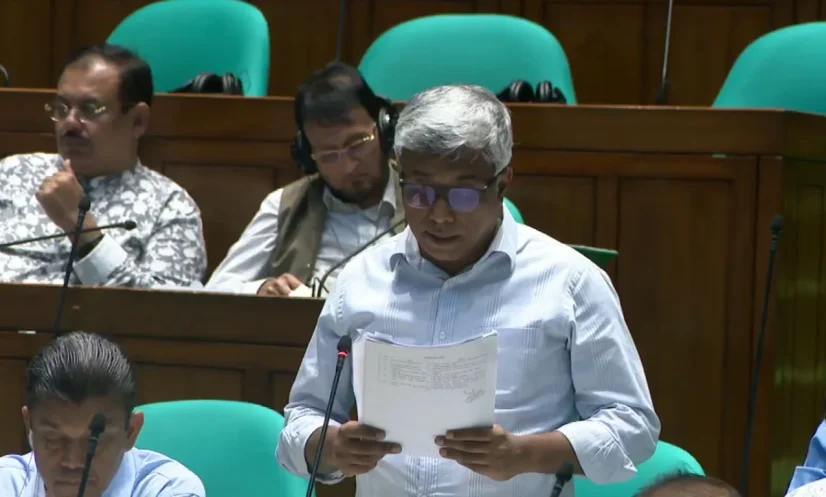
The country’s power situation is expected to show visible improvement within the next 15 days, State Minister for Power and Energy Anindya Islam Amit told Parliament on Wednesday.
He said the government was making every possible effort to ensure that people do not face a repeat of the hardship caused by shortages of electricity and gas in August.
The state minister made the remarks while responding to a supplementary question from opposition lawmaker Nurul Islam Bulbul regarding the ongoing power crisis. The parliamentary session began at 3:30pm with Speaker Hafiz Uddin Ahmed in the chair.
Expressing regret over the shortages of electricity and gas, Anindya Islam Amit said, “I am saying this with responsibility. I do not want to hide the truth behind mere words. Recently, people across the country have been suffering due to disruptions in electricity and gas supplies.”
He described the current crisis as an inevitable consequence of flawed policies in the power and energy sector over many years, adding that the recent Middle East crisis had created additional pressure.
Highlighting the limitations of the country’s heavy reliance on gas-fired power generation, the state minister said gas-based power plants have a combined generation capacity of around 12,000MW. Operating these plants at full capacity requires about 1,900 million cubic feet (mmcf) of gas a day.
However, only 2,300-2,700 mmcf of gas, including domestic production and imported LNG, is currently available, he said.
He warned that increasing gas supplies to power plants could create shortages for industries and households. Therefore, the government has to maintain a balance in gas allocation among power generation, industrial and household users, he said.
The state minister also attributed the power shortage to several plants being out of operation. A 616MW unit of the Payra Power Plant is currently shut down due to a technical problem, while a unit of the same capacity at the Matarbari Power Plant is undergoing maintenance.
He also said Bangladesh was not receiving the full amount of electricity from India’s Adani Group as stipulated in the agreement. Against the contracted 1,600MW, Bangladesh is currently receiving around 900MW during the day and about 1,100MW in the evening.
In addition, faults in two floating storage and regasification units (FSRUs) used for supplying imported LNG had put significant pressure on the country’s fuel supply system, he said.
One of the FSRUs developed a fault on July 21 and took around 21-22 days to repair, affecting power generation. However, around 88% of the crisis has been resolved, the state minister claimed.
He said the government had taken urgent steps to bring the affected units at the Payra and Matarbari power plants back into operation and expressed hope that the power situation would improve within the next 15 days.
“We are making every effort to ensure that the people of Bangladesh do not have to suffer in September as they did in August,” he said.
The government is also taking long-term measures, including rooftop solar initiatives, to tackle power shortages during next summer, Anindya Islam Amit said.
He expressed hope that the government’s new rooftop solar policy would prevent people from facing power-related hardships next summer similar to those experienced recently.
The state minister said concerns raised by lawmakers over the power and energy sector were understandable, adding that the government would seek to provide elected representatives with accurate information and clear up misunderstandings about the sector.