Play store

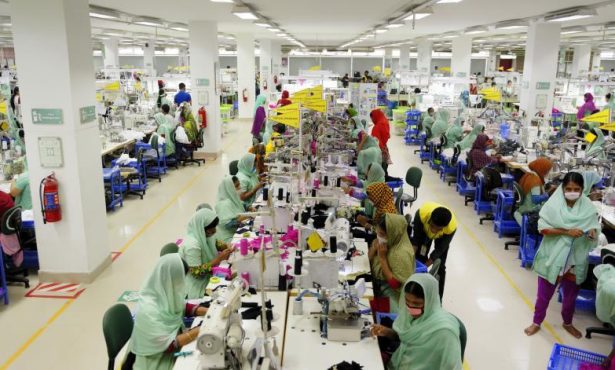
Gas supply to Bangladesh’s garment industry has improved and no garment factory has so far shut down due to the recent energy crisis, Bangladesh Garment Manufacturers and Exporters Association (BGMEA) President Mahmud Hasan Khan said on Thursday.
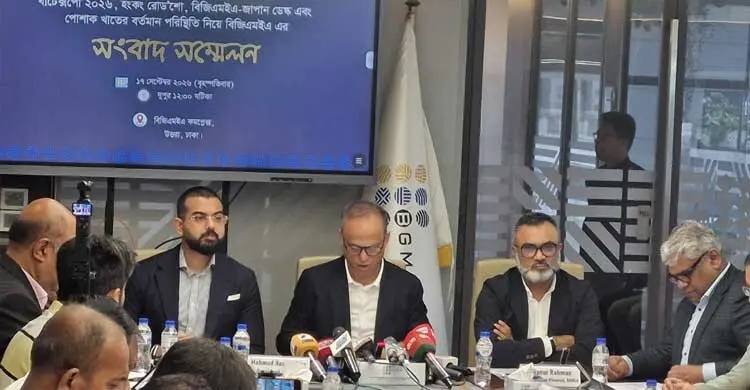
“Gas supply has improved. It is higher than in recent days, and no factory has closed because of the electricity or fuel crisis,” he said at a press conference at the BGMEA Complex in Uttara, Dhaka.
The press conference was organised to discuss Batexpo 2026, a roadshow in Hong Kong and the current state of the garment sector.
Mahmud said the full impact of the energy crisis would become clear only after another three to four months.
He explained that the effects of disruptions in the garment sector are not immediate and that closing a factory requires extensive planning. Factories need to complete existing orders, settle workers’ legal compensation and meet outstanding bank obligations, among other matters.
According to BGMEA data, no factory had closed over the past two months because of the energy crisis. However, he said any closure resulting from an incident six months or a year earlier should not be attributed to the current energy crisis.
Gas supply improves
Mahmud said reduced gas pressure had severely disrupted dyeing, washing and other backward-linkage industries. Following a recent meeting between the business community and the prime minister, the government announced that industrial gas supplies would be restored to previous levels, and the decision has been implemented.
Garment factories normally operate for eight to 10 hours a day, but the energy crisis has forced many to spend an additional five hours and use alternative fuels, increasing operating costs.
He said short-, medium- and long-term plans were needed to ensure stable gas supplies. BGMEA has presented a proposal to the Energy Ministry and believes the major energy problems could be addressed within two years if the plan is implemented.
BGMEA seeks land-based gas storage
BGMEA has called for two additional floating storage and regasification units (FSRUs) to strengthen energy security, while also urging the government to develop land-based storage terminals as a long-term solution.
Mahmud said an agreement had already been reached with China to bring in an FSRU under a government-to-government arrangement. However, BGMEA prefers land-based storage rather than relying on multiple FSRUs.
He said installing three to five FSRUs would not deliver the expected benefits without improvements to the gas distribution network. Both FSRU capacity and gas distribution infrastructure therefore need to be developed simultaneously.
BGMEA also called for priority in gas connections and rationing for SME factories, priority connections for factories with boilers operating at 100-500 psi, low-interest green loans for renewable energy and faster gas exploration in coastal areas.
Focus on solar power
Mahmud highlighted efforts to expand solar power use in the sector, saying he had been using rooftop solar at his own businesses since 2019, with a combined capacity of around 14MW.
According to BGMEA, member factories have significant potential for large-scale solar power generation. The association has discussed low-interest green financing with Bangladesh Bank, as long payback periods and high interest rates remain major barriers to investment.
Hope for three-year LDC transition extension
On Bangladesh’s graduation from the least developed country (LDC) category, Mahmud said the government’s initiative to seek a three-year extension was important for the business community.
He expressed hope that the proposal would be approved at the UN General Assembly this month, saying the additional time would help Bangladesh prepare for post-LDC challenges.
The private sector has been included in a committee led by the Economic Relations Division (ERD) under the Finance Ministry, with progress being reviewed regularly.
EU FTA a priority
Mahmud said securing a free trade agreement (FTA) with the European Union was more important for Bangladesh’s garment exports after LDC graduation than obtaining GSP Plus.
“Our most important task is to secure an FTA with the European Union, not GSP Plus,” he said, adding that the Commerce Ministry was working on the issue and negotiations had progressed considerably.
BGMEA also called for modernising company and customs laws, concluding FTAs and economic partnership agreements (EPAs) quickly, and maintaining policy support and continuity in tariffs and taxes for at least five years after LDC graduation.
Efforts to diversify export markets
Mahmud said Bangladesh had been working for a decade to diversify garment export markets. Of the country’s garment exports of around $40 billion, about $8 billion currently comes from markets outside the United States, European Union and Canada.
He said new international brands would be invited to do business in Bangladesh at a roadshow organised by HSBC in Hong Kong.
BGMEA is also preparing to launch a “Japan Desk” to facilitate communication with Japanese buyers, with officials capable of communicating in Japanese appointed to the desk.
Mahmud said Bangladesh’s exports to Japan, currently worth around $500 million, could be increased to $2 billion-$2.5 billion in the future.
He also announced a strategic agreement with Bangladesh Brand Forum to promote Bangladesh’s garment industry globally as an innovation-driven and modern industry rather than merely a low-cost manufacturing destination.