Play store

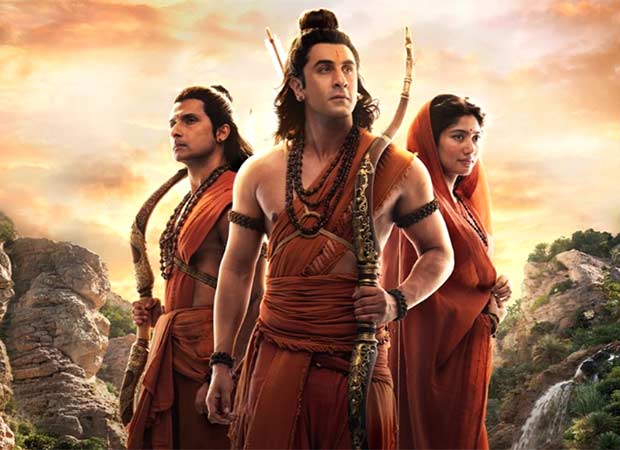
India’s film industry is banking on one of its most celebrated mythological stories to achieve global blockbuster status, but a massive production budget, mixed reviews and questions over the use of artificial intelligence (AI) have raised the stakes.
With a reported budget of 40 billion Indian rupees (about $420 million), the two-part Ramayana is the most expensive film ever produced in India.
The epic retells the story of Prince Rama’s journey to rescue his wife Sita from the demon king Ravana. It is based on the ancient Sanskrit epic, which is regarded as a sacred text in Hinduism.
The film had its global premiere in Los Angeles on October 27, attracting praise for its visual effects and performances. However, critics have also raised concerns about its slow pacing and a musical score that has divided opinions.
The film currently holds a 77 per cent critics’ score and a 94 per cent audience score on Rotten Tomatoes.
Despite the mixed critical response, Ramayana has generated more than $100 million at the global box office, including $67 million in India. It has also made history as the first Indian film to top the UK box office.
The first instalment, titled Ramayana: Rise of a Legend, made its global debut on November 5, followed by its US release on November 6, according to Box Office Mojo. Variety reported that the film earned $55.7 million worldwide during its opening weekend.
The two-part production represents one of the biggest financial gambles in Indian cinema. Its performance will test whether a story deeply rooted in India’s religious and cultural traditions can attract audiences across international markets.
The filmmakers are targeting a wider global audience through dubbed versions and an effects-driven cinematic spectacle.
Indian films have a long history of international popularity, particularly in markets beyond the Western world.
Tejaswini Ganti, a New York University professor specialising in Indian cinema, said films by legendary director Raj Kapoor, including Awara (1951), enjoyed huge success in the Soviet Union, Eastern Europe, China, Turkey and North Africa.
Similarly, Mehboob Khan’s Aan (1952) and Mother India (1957) attracted audiences in several international markets, even where there were no significant Indian diaspora communities.
Indian cinema maintained its international appeal during the 1980s. Disco Dancer (1982) became particularly popular in the Soviet Union, while Mard (1985) found considerable success in West Africa.
In the following two decades, romantic dramas such as Dilwale Dulhania Le Jayenge (1995) and Kal Ho Naa Ho (2003) became major favourites among overseas Indian communities.
Now, with Ramayana, India’s film industry is seeking to move beyond its traditional overseas audience and establish a stronger presence in the global entertainment market.