


 Play store

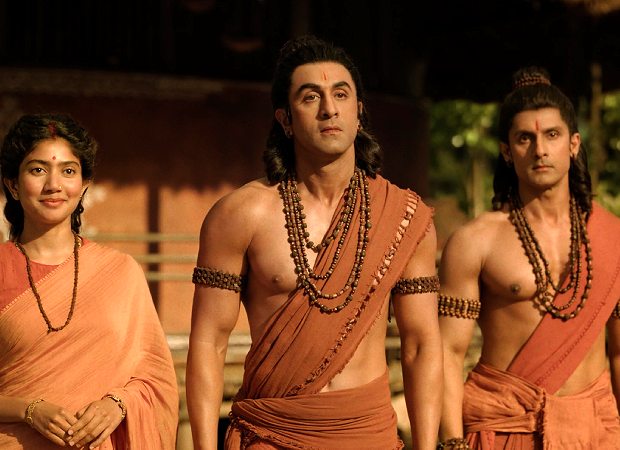
A lavish new film adaptation of the ancient Hindu epic Ramayana has sparked debate in India and abroad over its portrayal of one of Hinduism’s most revered religious stories, with audiences divided over its creative liberties and faithfulness to traditional versions.
Titled “Ramayana: Rise of a Legend”, the film was released earlier this month to coincide with Diwali. Directed by Nitesh Tiwari, it is the most expensive Indian film ever made, bringing together Bollywood stars, two Oscar-winning music composers and Hollywood visual effects in an ambitious effort to introduce the epic to a global audience.
The second instalment is scheduled for release next year.
The Ramayana, traditionally attributed to the poet Valmiki, tells the story of Lord Rama’s battle against the demon king Ravana to rescue his wife Sita. For millions of Hindus, however, it is much more than an ancient tale of gods, demons and supernatural battles. Its stories, songs and prayers are deeply embedded in religious rituals and cultural traditions.
Over centuries, different versions of the epic have crossed national, linguistic, religious and cultural boundaries. The story has also inspired religious and political movements in India, including the campaign for a grand temple dedicated to Rama in Ayodhya.
The latest film has revived questions about how the sacred narrative should be adapted for contemporary audiences.
In India, reactions have been divided. Some viewers have praised its spectacular production and visual effects, saying it presents Indian culture to international audiences in an engaging way. Others have criticised what they consider distortions of a religious narrative passed down through generations.
Ashish Agarwal, a 29-year-old IT professional from New Delhi, said he had watched the film twice and was impressed by its production quality, particularly its visual effects, which he compared to those of Marvel films.
He also welcomed the presentation of Indian culture on the big screen, saying the film could introduce younger Indians to their heritage and help international audiences understand Indian traditions.
However, Shweta Gehlot, a 46-year-old schoolteacher, said she found several aspects inconsistent with the traditional versions of the epic she had grown up reading.
She particularly objected to the portrayal of Ravana as a just ruler, arguing that traditional accounts depict him as an evil and arrogant demon who persecuted sages.
“The filmmakers should have remained more true to the source material,” she said.
Although the criticism has yet to develop into a major controversy in India, a Hindu organisation has called for a boycott of the film and threatened nationwide protests if similar alleged distortions appear in the second instalment.
The debate has also revived comparisons with Ramanand Sagar’s celebrated television adaptation, “Ramayan”, broadcast in the 1980s. The series attracted millions of viewers and turned its Sunday morning broadcasts into a shared cultural experience, with streets emptying, shops closing and traffic slowing as people gathered to watch it.
In the United States, the film has also attracted considerable attention. By its third weekend, it had grossed $28 million at the US box office, becoming the highest-grossing Indian production in the country, according to the report.
Mallika Iyer, a 31-year-old Indian American living in New Hampshire, said she had learned much of the Ramayana through Amar Chitra Katha comics, a popular series founded in the 1960s that retells Indian mythology, history, folklore and biographies.
Having watched the film twice, Iyer described it as entertaining, engaging and sometimes magical.
She also appreciated the more balanced and nuanced portrayal of Ravana and his sister, rather than presenting them as entirely evil characters.
The contrasting reactions highlight the challenge of adapting an ancient religious epic for modern cinema: filmmakers must balance creative interpretation and spectacular storytelling with the cultural and religious significance the Ramayana holds for millions of people.