Play store

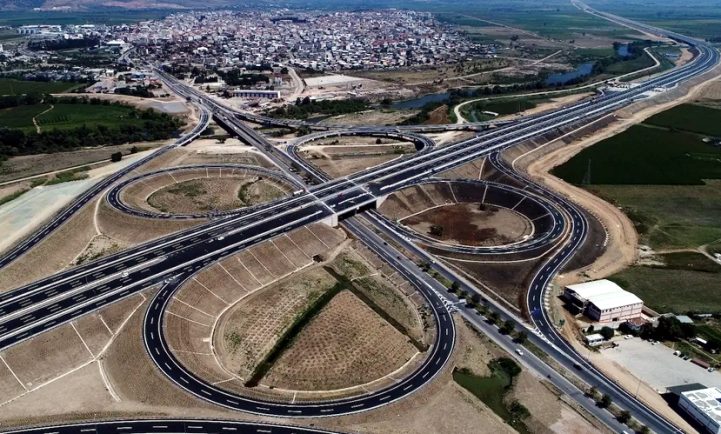
A country’s development cannot be assessed simply by visiting its capital or major cities. The roads connecting those cities, the condition of highways, construction techniques and the comfort of passengers also offer an important picture of its progress.
A recent road trip across Turkey provided an opportunity to experience the country’s intercity transport system firsthand. The quality of its highways, their width, cleanliness, maintenance and modern toll management were particularly impressive.
The journey covered nearly 800 kilometres from Istanbul to Antalya, around 500 kilometres from Antalya to the capital Ankara, another 450 kilometres from Ankara to Bursa and approximately 250 kilometres from Bursa back to Istanbul.
Covering several thousand kilometres across different regions offered a close look at Turkey’s planned road infrastructure and engineering capabilities.
Turkey has an extensive road network. According to statistics from the country’s General Directorate of Highways (KGM) as of January 1, 2026, the agency manages a total of 68,517 kilometres of roads.
Of this, 3,796 kilometres are motorways or toll highways, 30,789 kilometres are state highways and 33,932 kilometres are provincial roads. In addition, there are roads managed by municipalities, villages and forestry authorities.
Official figures show that the country has around 28,297 kilometres of divided roads, meaning separate carriageways are available for traffic travelling in opposite directions across a substantial part of the network.
Not all roads have six or eight lanes. The number of lanes varies according to a road’s importance, traffic volume and location. However, some sections of major highways connecting large cities have six, eight or even more lanes.
Engineering roads through mountains
One of the most striking features of Turkey’s road network is the way highways have been built through mountainous terrain.
Given the country’s diverse geography, engineers have had to construct roads across mountains, uneven landscapes and challenging natural environments.
During the journey, roads could be seen climbing high along mountain slopes before descending into valleys. In some places, mountains had been cut through to make wide highways, while elsewhere long tunnels passed through the hills. Tall bridges and viaducts had also been built to cross deep valleys and other geographical obstacles.
Such projects require more than engineering expertise. They also involve geological surveys, landslide risk assessments, drainage planning and environmental considerations.
The General Directorate of Highways has also highlighted the use of tunnels, viaducts and bridges to overcome difficult geographical conditions.
Highways largely free of visible potholes
What impressed me most during the long journey was the smooth condition of the roads.
On the routes from Istanbul to Antalya, then to Ankara and Bursa before returning to Istanbul, there were hardly any noticeable potholes or badly damaged sections. The asphalt surfaces remained smooth and suitable for travel throughout most of the journey.
There were also no major disruptions caused by prolonged construction work or road repairs along the routes I travelled.
This does not mean that all roads in Turkey are always in such condition. However, the standard of maintenance and the overall driving experience on these highways were commendable.
The width of the roads, lane markings, directional signs and orderly movement of vehicles were also noticeable. Although the number of lanes varied, the quality of the roads remained relatively consistent over long distances.
Fast bus journeys with less fatigue
Intercity buses in Turkey generally travelled at speeds of around 80 to 110 kilometres per hour, depending on road conditions and designated speed limits.
The landscape outside the windows passed quickly, but the speed was hardly noticeable inside the bus. Smooth roads, wide lanes and comfortable seats made long-distance journeys considerably less tiring.
Even in mountainous areas, the roads appeared to have been designed with curves, gradients and elevation changes that allowed buses to maintain relatively steady speeds.
At different points, buses travelled along mountain slopes, through tunnels and across high bridges. The journey offered not only views of diverse landscapes but also examples of modern engineering.
Automated toll collection
Another notable feature of Turkey’s highways is its modern toll collection system.
Unlike conventional toll plazas, where every vehicle has to stop and pay manually, Turkey uses an electronic system known as HGS (Hizli Geçiş Sistemi).
The system identifies registered vehicle tags or number plates and automatically deducts the toll. At many toll points, vehicles can pass through designated lanes without stopping.
This reduces long queues at toll plazas and saves travel time. The country’s highway authority has highlighted non-stop tolling as a way to reduce delays and ensure smoother traffic movement.
Better connections between cities and urban transport
Another important feature of Turkey’s intercity transport system is the integration of highways with urban transport networks.
Bus terminals located outside major cities are connected to metro rail, trams and city bus services. This allows passengers to travel from one part of a city to a bus terminal using public transport, continue their journey to another city and then use the same type of transport to reach their final destination.
In this way, highways, intercity buses, urban public transport and modern toll management work together to make journeys easier.
The development effort therefore extends beyond highway construction to improving the overall travel experience.
Lessons for Bangladesh
Turkey’s road transport system naturally brings Bangladesh to mind.
Major development projects are also being implemented on important highways such as Dhaka-Chattogram, Dhaka-Sylhet and Dhaka-Khulna. The Padma Bridge, Karnaphuli River Tunnel and several expressways have added new dimensions to the country’s transport infrastructure.
However, building large infrastructure projects alone is not enough. Regular maintenance, road safety, traffic discipline and modern management systems are equally important.
One of the key lessons from Turkey is the need to ensure the durability and usability of roads alongside their construction. Engineering plans must be adapted to different geographical conditions, whether mountainous or flat. The use of technology in toll collection should be expanded, while intercity transport needs better integration with urban public transport.
The long journey from Istanbul to Antalya, Ankara and Bursa before returning to Istanbul was more than an opportunity to visit several cities. It offered a firsthand experience of how a country has developed its road infrastructure and organised its intercity transport system.
Highways cutting through mountains, smooth road surfaces, fast and comfortable buses and automated toll collection together provide an impressive example of modern road connectivity in Turkey—and offer useful lessons for Bangladesh.