


 Play store

Promising land restoration initiatives are offering hope as degradation and drought affect 40 percent of the world’s land, threatening the livelihoods of more than three billion people, according to the UN Convention to Combat Desertification (UNCCD).
The UNCCD announced three winners of its World Restoration Flagships awards on Wednesday, highlighting programmes in Brazil, Saudi Arabia and the Sahel that together aim to restore nearly five million hectares of degraded land by 2030—an area equivalent to almost seven million football fields.
“These programmes show that restoration works,” UNCCD chief Yasmine Fouad said. “They demonstrate that investing in nature strengthens resilience, supports livelihoods and delivers tangible benefits for people and communities.”
The awards were announced during the UN desertification conference, being held in Mongolia from August 17 to 28.
Fouad said land degradation, drought and ecosystem loss were no longer merely environmental concerns but had become fundamental challenges to food security, water security and economic stability.
The UN has set a global target of restoring one billion hectares of degraded land by 2030.
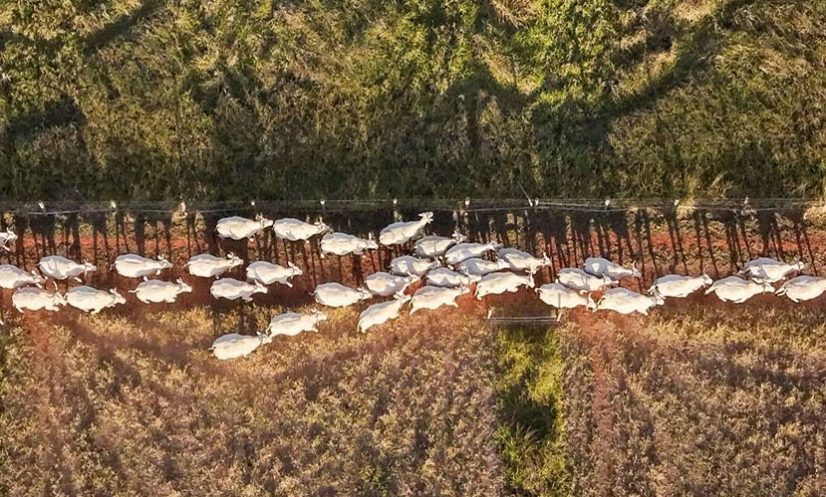
Brazil’s Cerrado, covering about a quarter of the country’s territory, is the world’s most biodiverse tropical savannah. However, more than half of its native vegetation has been lost to large-scale land conversion and climate change.
The loss has affected Indigenous Peoples’ rights, food production and water availability.
The Restoring Brazil’s Cerrado Savannah initiative brings together more than 180 partners across nine states, using natural regeneration, direct seeding, ecological restoration and agroforestry with native species.
More than 27,000 hectares have already been placed under restoration, with seeds from over 150 native plant species used in the efforts.
The initiative aims to restore two million hectares by 2030.
Saudi Arabia has set a national target of restoring 40 million hectares by 2100 across rangelands, forests, deserts, urban areas and coastal ecosystems, while planting 10 billion trees.
The National Greening Programme has already brought one million hectares of degraded land under restoration and planted 159 million trees.
Its activities include reforestation, natural regeneration, controlled grazing, reintroduction of native wildlife, rainwater harvesting and the use of treated wastewater in water-scarce areas.
By 2030, the programme aims to restore 2.5 million hectares and plant 215 million trees. It is also expected to generate up to 187,000 jobs and improve urban air quality.
Across the Sahel, conflict, land degradation, drought and climate change are placing growing pressure on ecosystems and communities.
Since 2018, the Sahel Integrated Resilience Initiative, led by the World Food Programme (WFP), has helped strengthen food security and livelihoods for more than four million people across Burkina Faso, Chad, Mali, Mauritania and Niger.
The programme has rehabilitated more than 335,000 hectares and helped improve agricultural production.
Monitoring shows that 75 percent of the programme’s monitored sites have recorded improved soil and vegetation conditions. The number of households requiring humanitarian assistance in these areas has also declined by about 11 percent during the lean season.
By 2030, the initiative aims to restore 470,000 hectares, enhance biodiversity and lock away up to 20 million tonnes of carbon dioxide.
Together, the three initiatives demonstrate how land restoration can combine environmental recovery with stronger livelihoods, food security and resilience to climate change. Source: UN News