Play store

At least 97 Muslim Americans have won their races in this week’s midterm elections, encompassing the federal, state, and local levels, according to the Council on American Islamic Relations (Cair).
It’s hard to imagine that New York City Mayor Zohran Mamdani’s landslide win last year didn’t have an impact on his fellow Muslims who hadn’t entertained the possibilities.
More than a dozen other candidates are still awaiting the full ballot count – depending on individual county rules and the way mail-in votes are handled – but they are ahead of their opponents as of Friday morning.
They come from a pool of 168 Muslim-American candidates who made it past the primary stage of their races, which is when they compete within their own party to earn the nomination.
Seven Muslim Americans are headed to Washington, DC.
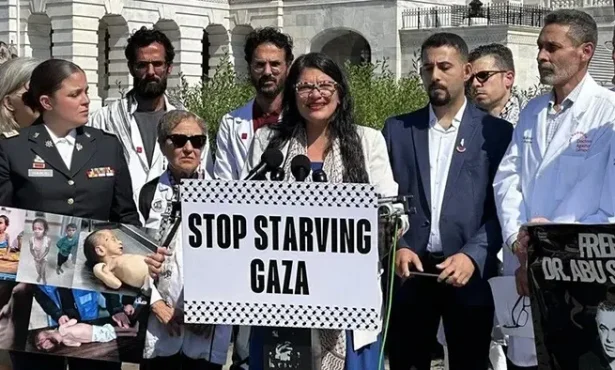
Six are going to the House of Representatives, including incumbents Ilhan Omar, Rashida Tlaib, Andre Carson, and Lateefah Simon; and they will be joined by freshmen Adam Hamawy and Darializa Avila Chevalier.
If Aisha Wahab secures her win, which had not been decided by Friday morning local time, she would also join the incumbent House members.
One Muslim American is going to the Senate: Abdul El-Sayed. He will be the first to ever serve a six-year term in the upper chamber.
Cair has tracked 39 other statewide offices where Muslim Americans won, ranging from attorney general to the state legislature and the state senate.
At the county and municipal level, there are 16 winners, and education and school boards saw 27 Muslim-Americans elected.
Eight were elected to be judges.
The wins make for an all-time record, and come as anti-Muslim sentiment and rhetoric, particularly among Republicans, is at its highest in a generation, according to groups like Muslim Public Affairs Council (Mpac), the Center for the Study of Organized Hate (CSO), and the Institute for Social Policy and Understanding (ISPU).
Policy over party
Muslims make up just one percent of the US population, at some 5.5 million people. But they receive an outsized amount of media scrutiny and online attacks.
Mpac had warned prior to Tuesday’s elections that voter intimidation tactics may also keep Muslim American voters from going to the polls.
But Muslim voter registration rose by at least 25 percent over the past year, and at least one survey showed a 93 percent turnout to the ballot box.
Eighty percent said they primarily voted for Democrats, compared with six percent for Republicans, Cair found.
NBC’s exit polling takes that further and shows that it was Muslims, out of all the faith groups or none at all, who voted the most for Democrats.
For comparison, in 2024, the ISPU said more than 20 percent of Muslim Americans voted for Donald Trump, as he pledged to end all wars and boost affordability.
“From our field programme… we are seeing that Muslims tend to vote more based on policy than party lines. So a lot of them actually identify as independent rather with the Democratic Party or with the Republican Party,” Urooj Ali, the communications director for the non-partisan Georgia Voter Project, told Middle East Eye.
Georgia is a highly coveted swing state in the American South, and as of Tuesday, it has two Democratic senators and a Democratic governor – the first black woman to win the office.
“Georgia actually broke a midterm election record for early voting this year, so it was the highest voter turnout for early voting in a midterm election,” Ali said. “Around 30,000 Muslims voted early this election cycle, and for context, in 2022, only 36,000 Muslims voted total, including election day.”
Of the four hijab-wearing Muslims who are now state senators-elect, Georgia’s Ruwa Romman is among them.
In the US, citizens have to be registered to vote, and in most cases before election day – otherwise they will be turned away. Some states, like Michigan, allow for same-day registration. Source: MEE.