


 Play store

As the global HIV response moves towards more sustainable, nationally led and rights-based models of care, a new UNAIDS framework is calling for a more cautious approach to integrating HIV services into national health systems.
The report, “Operationalizing HIV Integration,” published on August 17, introduces the concept of “protective verticality”, recognising that countries are at different stages of health-system development and face varying epidemiological, financial and operational realities.
Under the framework, integration should not follow a one-size-fits-all model. Instead, countries should begin integrating HIV services according to their readiness, disease patterns, financing capacity and the strength of their health systems.
The approach is particularly important in countries affected by armed conflict, fragile health systems and disease outbreaks. In such settings, UNAIDS says, maintaining dedicated HIV infrastructure may be essential to prevent interruptions in treatment and other critical services.
The report warns that integrating HIV services too quickly into national health systems that are themselves unstable or close to collapse could put people living with HIV at greater risk.
The principle of “protective verticality” therefore prioritises protecting essential HIV services before integrating them into broader health systems.
The framework argues that the objective should not be a rapid transfer of HIV functions to weak or unstable platforms. Instead, countries should protect essential services while gradually strengthening health systems, partnerships, financing mechanisms and safeguards needed for successful integration.
The framework proposes a three-phase approach:
Stabilization: Protect continuity of HIV services and prevent disruption to treatment and care.
Connection: Strengthen links between HIV services, broader healthcare systems and communities.
Embed: Integrate HIV functions into national health planning and systems once the necessary conditions are in place.
The emphasis on careful integration comes at a critical time for the global HIV response, as international funding for HIV programmes has fallen sharply.
In July, UNAIDS reported that international HIV financing declined by 18 percent in 2025, falling from US$8.8 billion in 2024 to US$7.3 billion. The figure represents the lowest level of international HIV funding in more than two decades.
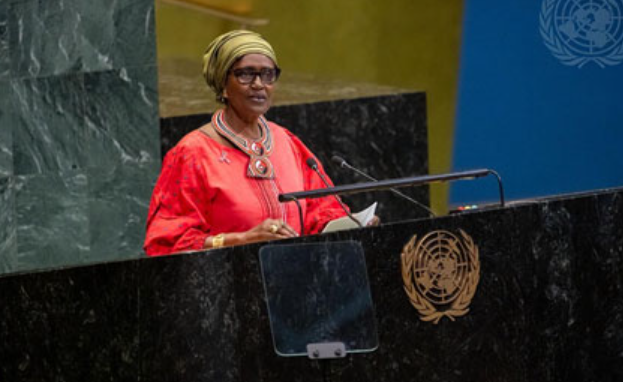
“The era of relying on international aid is over,” UNAIDS Executive Director Winnie Byanyima said.
UNAIDS estimates that 1.2 million people acquired HIV in 2025, while 570,000 people died from AIDS-related illnesses. The decline in international financing, combined with the vulnerability of health systems in many countries, has increased pressure to find sustainable approaches to HIV services.
The new framework seeks to address that challenge without compromising access to treatment and prevention.
Recent crises in the Democratic Republic of the Congo (DRC) and Sudan illustrate why such flexibility is necessary.
In the eastern DRC, the HIV and Ebola crises demonstrated the risks of disrupting established HIV services during a public health emergency. In May, as an Ebola outbreak spread across Ituri, North Kivu and South Kivu provinces, fear of exposure to the virus at healthcare facilities reportedly led some people living with HIV to avoid community antiretroviral therapy distribution points and miss clinic appointments.
In response, UNAIDS worked to incorporate HIV safeguards into the DRC’s National Ebola Preparedness and Response Plan. It also supported an HIV Mitigation Plan aimed at maintaining treatment continuity in the affected areas and protecting people living with HIV.
The response reflected elements of the framework’s first two phases, stabilising essential services while strengthening connections between HIV programmes and the wider emergency response.
Sudan presents an even more severe and prolonged challenge.
Since war broke out in April 2023, medical supply chains have been disrupted and around 75 percent of hospitals in conflict-affected areas have reportedly closed, severely affecting access to HIV treatment.
More than 1,000 days into the conflict, the UN Development Programme (UNDP) reported in January on efforts undertaken with the Global Fund and the National Medical Supply Fund to maintain HIV treatment for patients in hard-to-reach areas.
The response has included mobile primary healthcare facilities for HIV testing and the establishment of cross-border routes to deliver HIV medicines into Darfur.
Years of conflict, mass displacement and shortages of medicines and healthcare workers have left Sudan’s health system severely damaged. Under such circumstances, rapidly transferring HIV services into the national system could risk further disrupting access to essential care.
The experiences of the DRC and Sudan demonstrate why UNAIDS is advocating a country-specific approach rather than a uniform global model for HIV integration.
For countries with functioning and resilient health systems, greater integration can improve efficiency, sustainability and coordination. But in fragile and conflict-affected settings, specialised HIV programmes may remain essential for protecting continuity of care.
The framework therefore cautions against dismantling HIV-specific infrastructure simply to meet an integration objective.
Instead, it calls for strategic health-system transformation in which integration is pursued when countries have the necessary safeguards, capacity and financing in place.
The central message is clear: integration should be a process driven by readiness, not a deadline imposed on every country. Protecting HIV services today, while strengthening the systems needed for sustainable integration tomorrow, may be crucial to preserving the progress made in the global fight against HIV and AIDS.