


 Play store

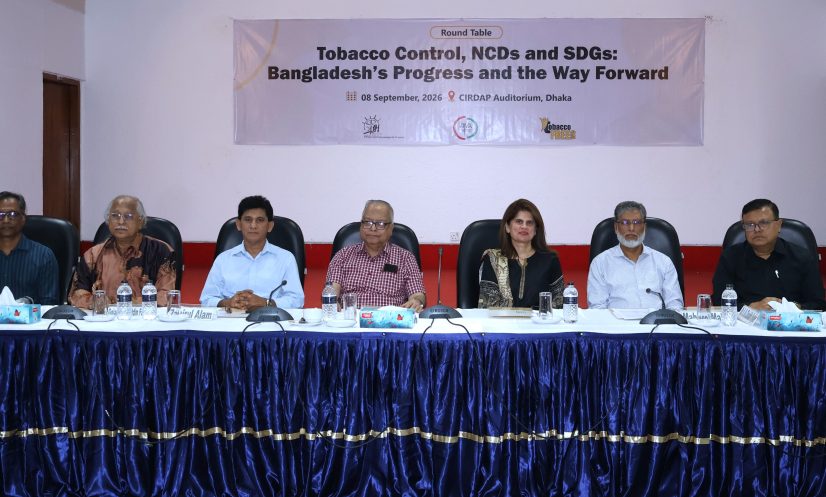
Tobacco and nicotine products pose a major obstacle to Bangladesh’s efforts to achieve the Sustainable Development Goals (SDGs), particularly the target of reducing premature deaths from non-communicable diseases (NCDs), experts said at a roundtable in Dhaka on Tuesday.
Nearly 71 per cent of all deaths in Bangladesh are attributed to NCDs, including cardiovascular diseases, stroke and cancer, with tobacco and nicotine use among the major contributing factors, they said.
The experts made the observations at a roundtable titled Tobacco Control, NCDs and SDGs: Bangladesh’s Progress and Way Forward”, organised by PROGGA (Knowledge for Progress) and the Anti-Tobacco Media Alliance (ATMA) at the CIRDAP Auditorium.
The discussion highlighted that around 200,000 people die every year in Bangladesh from tobacco-related diseases, making tobacco use a major barrier to achieving SDG 3, which focuses on ensuring healthy lives and promoting well-being for all.
Speakers said tobacco also undermines progress towards several other SDGs, including poverty eradication, food security, quality education, gender equality, environmental protection, climate action and biodiversity conservation.
They welcomed the government’s recent amendment to the tobacco control law but expressed concern that e-cigarettes, vapes, nicotine pouches and other emerging tobacco and nicotine products had been left outside the scope of the amended legislation.
The speakers called for urgent legal measures to regulate or restrict such products to protect public health. They noted that several countries had already banned e-cigarettes and vaping products because of their harmful health impacts.
They also urged the government to formulate the necessary rules under the amended law as soon as possible and implement Article 5.3 of the Framework Convention on Tobacco Control (FCTC) to protect tobacco control policies from interference by the tobacco industry.
National Professor Dr Mahbub Ullah, who chaired the event and was the chief guest, said tobacco control extended beyond the health sector and was directly linked to the country’s development, economy and protection of future generations.
“Translating political and institutional commitments to tobacco control into action would help accelerate progress toward achieving the SDGs,” he said.
Professor Dr Golam Mohiuddin Faruque, president of the Bangladesh Cancer Society, said the suffering of cancer patients demonstrated the devastating consequences of tobacco use and called for stronger tobacco control measures.
Zahirul Alam, executive director of Channel24, said the media could play an important role in creating mass awareness about tobacco control and accelerating implementation of the law.
Reaz Ahmad, editor of Dhaka Tribune, said media outlets should publish more reports and articles highlighting the links between tobacco control, NCD prevention and the achievement of the SDGs.
ATMA Convener Mortuza Haider Liton and PROGGA Executive Director ABM Zubair also addressed the event, along with representatives of various tobacco control organisations.
Hasan Shahriar, head of programmes at PROGGA, delivered the keynote presentation, while ATMA Co-Convener Nadira Kiron moderated the session.