Play store

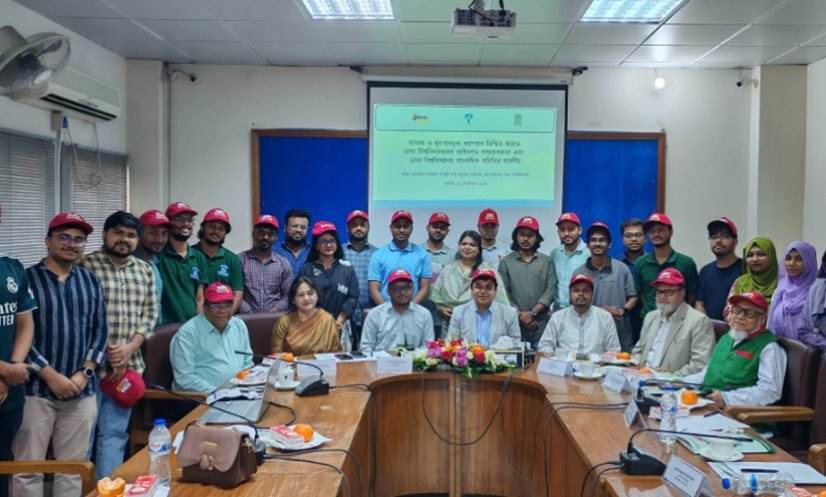
DHAKA: The Dhaka University Journalists’ Association (DUJA) has called for effective implementation of the relevant provisions of the Smoking and Tobacco Products Usage (Control) Act, 2005, as amended in 2026, to ensure a tobacco- and smoke-free campus at the University of Dhaka.
The association also pledged to support the enforcement of tobacco control laws on campus and contribute to public health protection through responsible journalism.
The call came at a discussion meeting titled “Legal Obligations of Dhaka University and the Role of the Dhaka University Journalists’ Association in Ensuring a Tobacco- and Smoke-Free Campus”, jointly organised by DUJA and the Development Organisation of the Rural Poor (DORP) on Tuesday (September 29) at the Shaheed Mofazzal Haider Chowdhury Auditorium of the Faculty of Arts.
Professor Dr Mohammad Almozaddedi Alfechani, Pro-Vice-Chancellor (Administration) of the University of Dhaka, attended the event as the chief guest, while Dr Md Abul Kalam Sarker, Dean of the Faculty of Arts, was present as the special guest. Jeba Afroza, programme coordinator at DORP, delivered a presentation.
According to the presentation, around 37.8 million adults in Bangladesh use tobacco, while approximately 38.4 million adults are exposed to secondhand smoke in workplaces, public places and public transport, according to the Global Adult Tobacco Survey 2017.
A study published in _The Lancet_ found that secondhand smoke was associated with around 1.7 million deaths worldwide in 2023.
The meeting discussed relevant provisions of the Smoking and Tobacco Products Usage (Control) Act, 2005, as amended in 2026. Under Section 4, smoking and the use of tobacco products are prohibited in public places and public transport, including educational institutions. The law also does not permit designated smoking areas at such places.
Section 6(b) prohibits the sale of tobacco and tobacco products within 100 metres of educational institutions, hospitals, clinics, sports venues and children’s parks.
Speakers stressed that simply having laws in place is not enough to ensure a tobacco-free campus. Effective enforcement, installation of adequate “No Smoking” signs, prevention of tobacco sales and institutional measures to maintain a smoke-free environment are also necessary.
DUJA expressed its commitment to supporting tobacco-control efforts through responsible and evidence-based journalism. It will seek to highlight progress in enforcing tobacco-control laws, inform students about relevant laws and public-health issues, publish investigative and follow-up reports on the campus tobacco-control situation, and report on initiatives taken by the university administration.
The meeting also highlighted the role of the media in tobacco control. Speakers said evidence-based journalism, regular coverage of public-interest issues and ensuring institutional accountability are important for enforcing tobacco-control laws and protecting public health.
They called for coordinated efforts by the university administration, students, teachers, officials, employees and media professionals to establish the University of Dhaka as a safe, healthy and tobacco-free educational institution.
DUJA President Md Manzur Hossain chaired the meeting. DUJA General Secretary Liton Islam and other members of the association were also present.