


 Play store

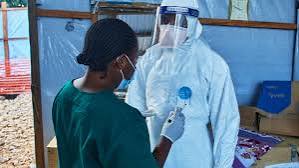
The Ebola outbreak in the eastern Democratic Republic of the Congo (DRC) is continuing to outpace response efforts, with most new infections now emerging from unknown chains of transmission, a senior World Health Organization (WHO) official warned on Tuesday.
Speaking after a visit to Bunia in Ituri Province, one of the worst-affected areas, WHO Emergencies Director Dr Chikwe Ihekweazu said the situation had become increasingly alarming despite improvements in treatment and laboratory capacity.
“Perhaps the most alarming finding is that many of the newly reported deaths are people who died in their communities without ever reaching a health facility and without receiving care,” Ihekweazu said.
He noted that around 80 percent of newly confirmed cases are not among known contacts of infected patients, indicating widespread undetected community transmission.
“As of today, 80% of new cases are outside our contact lists and are therefore coming from unknown chains of transmission,” he said.
The Democratic Republic of the Congo has been battling an outbreak of the rare Bundibugyo strain of Ebola since May. There is currently no approved vaccine or specific treatment for this strain.
According to Congolese health authorities, as of Monday at least 1,926 people have been infected and 702 have died across three provinces. Confirmed cases have also been reported in neighbouring Uganda.
The Africa Centres for Disease Control and Prevention (Africa CDC) last week described it as the fastest-growing Ebola outbreak currently affecting the continent.
The United States Centers for Disease Control and Prevention (CDC) also confirmed last week that a US citizen working for a humanitarian organisation in Congo had tested positive for the virus, although no further details were disclosed.
Despite the worsening outbreak, Ihekweazu said his visit revealed progress in several areas. Treatment capacity in Bunia has expanded to nearly 800 beds and continues to increase, while laboratory capacity has grown significantly from just one laboratory to 14.
However, he acknowledged that these gains have not been sufficient to keep pace with the rapidly spreading outbreak.
“Despite our best efforts, we have not caught up in the race,” he said.
The WHO said the response continues to face major challenges, including a severe funding shortfall, attacks on health facilities, ongoing armed conflict in eastern Congo and deep mistrust among affected communities.
Adding to the difficulties, dozens of workers at an Ebola treatment centre in northeastern Congo went on strike on Monday over unpaid salaries and bonuses.
The Congolese government officially declared the outbreak on May 15 after the virus had already been circulating for several weeks without being detected.
In a positive development, clinical trials of potential Ebola treatments began last week, raising hopes that new therapies could help contain the rapidly expanding outbreak.