


 Play store

Public health experts have called for stronger routine immunisation, evidence-based research and coordinated national action to curb the resurgence of measles in Bangladesh, warning that sustained vaccination coverage and improved disease surveillance are essential to prevent future outbreaks.
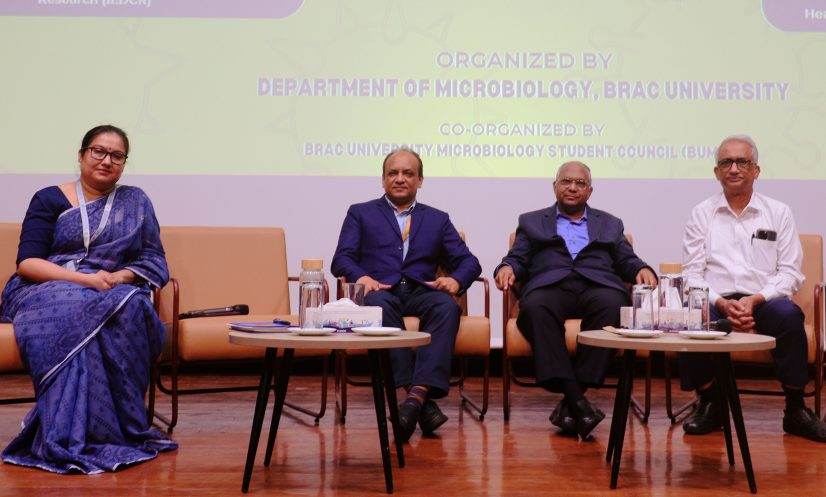
The recommendations came at a seminar titled “The Resurgence of Measles: Recent Outbreaks in Bangladesh and the Path Forward”, organised by the Department of Microbiology under the School of Life Sciences and the BRAC University Microbiology Student Council at the university auditorium on Saturday.
Speakers said the recent rise in measles cases underscores the need to strengthen routine vaccination programmes, improve early detection systems and deepen scientific research to better understand the factors driving the outbreak.
Professor Dr Mahmudur Rahman, former director of the Institute of Epidemiology, Disease Control and Research (IEDCR), stressed that maintaining high vaccination coverage remains the most effective defence against measles.
He also highlighted the importance of robust disease surveillance, rapid outbreak detection and active community engagement to build public confidence in vaccines. He recommended targeted supplementary immunisation campaigns in areas reporting higher numbers of cases to close immunity gaps.
Professor Dr Abid Hossain Molla, Senior Consultant at the Department of Pediatrics of BIRDEM Hospital, emphasised the need for early diagnosis and prompt treatment of suspected measles cases.
He said timely medical intervention could significantly reduce complications and prevent avoidable child deaths, urging parents and healthcare providers not to ignore early symptoms of the disease.
Dr Mostafizur Rahman, Senior Scientist and Senior Director of the Infectious Diseases Division at icddr,b and head of its Virology Laboratory and Genome Centre, underscored the importance of scientific research in responding to the outbreak.
He said researchers need to determine why measles cases have increased this year and investigate whether factors such as viral mutations, vaccine effectiveness or other epidemiological changes have contributed to the resurgence.
BRAC University Pro-Vice-Chancellor Professor Arshad Mahmud Chowdhury said the availability of vaccines alone is not enough unless they effectively reach target populations.
He stressed that raising public awareness and strengthening collaboration among experts in public health, microbiology and biotechnology would enhance research, policymaking and disease prevention efforts.
In her welcome address, School of Life Sciences Assistant Dean Professor Dr Aparna Islam encouraged students to engage in research and innovation to help address Bangladesh’s public health challenges.
The seminar also featured a panel discussion on the country’s current measles situation, vaccination strategies, prevention measures and the role of research in disease control.
Associate Professor and Chairperson of the Department of Microbiology Nadia Sultana Deen, who also moderated the session, highlighted the need for greater government support for measles-related research to generate evidence for effective prevention and control policies.
Faculty members, researchers and students attended the programme, which concluded with an award ceremony recognising winners of a poster presentation competition on measles awareness.