


 Play store

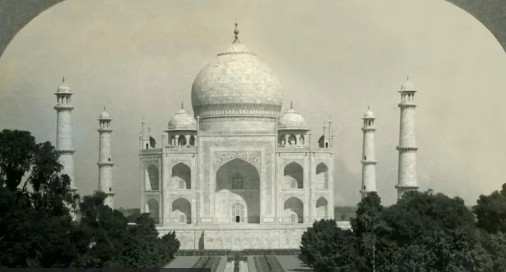
The centuries-old Taj Mahal, widely celebrated as a symbol of love and one of the world’s most recognisable monuments, has once again become the subject of legal and political controversy after a fresh claim that it was built over a Hindu temple reached the Allahabad High Court.
The petition, filed by a Bharatiya Janata Party (BJP) leader, seeks a court-directed archaeological survey of the Taj Mahal, alleging that evidence of an earlier temple remains hidden in the monument’s basement. The petitioner moved the High Court after a district court in Prayagraj (formerly Allahabad) dismissed the plea.
The Allahabad High Court has issued notices to the central government and the Archaeological Survey of India (ASI), asking them to state their position on the request for a survey.
The latest case revives a long-running claim that the Mughal-era mausoleum, built by Emperor Shah Jahan in memory of his wife Mumtaz Mahal, stands on the site of a pre-existing Hindu temple. Similar assertions have surfaced periodically over the past several decades but have not been accepted by Indian courts or mainstream historians.
Most professional historians and archaeologists reject the claim that the Taj Mahal was originally a temple.
Historical records, including Mughal court chronicles such as the Badshahnama, document that Shah Jahan commissioned the mausoleum after Mumtaz Mahal’s death in 1631. Construction began around 1632 and continued for more than two decades, with contemporary Persian accounts detailing the acquisition of land, the employment of architects and craftsmen, and the progress of construction.
The Archaeological Survey of India has consistently maintained that there is no archaeological or documentary evidence supporting the claim that the Taj Mahal was converted from a Hindu temple.
Historians also point out that the theory gained prominence only in the latter half of the 20th century, particularly after the publication of writer P. N. Oak’s 1989 book, Taj Mahal: The True Story, which claimed the monument had originally been a Shiva temple known as “Tejo Mahalaya.” His theory has been widely rejected by historians because it relies on speculation rather than verifiable historical or archaeological evidence.
According to scholars, there is no credible historical record indicating that the Taj Mahal site housed a temple before the Mughal mausoleum was built.
The latest petition is not the first legal challenge concerning the Taj Mahal’s origins. Similar petitions seeking access to sealed rooms or archaeological investigations have been filed in recent years but have generally been dismissed by courts for lack of supporting evidence.
As the High Court awaits responses from the central government and the ASI, historians say the extensive documentary record surrounding the construction of the Taj Mahal remains the strongest evidence of its origins as a 17th-century Mughal mausoleum rather than a repurposed temple. Sopurce: BBC Bangla