


 Play store

KUALA LUMPUR: Malaysian entrepreneurs have expressed interest in investing in Bangladesh’s ICT sector, while business leaders from both countries called for stronger trade, investment and private-sector cooperation.
The views were expressed at a business discussion titled “Bangladesh Business Forum: Connecting Businesses, Forging Partnership and Expanding Opportunities”, organised by the Klang Chinese Chamber of Commerce & Industry (KCCI) at its auditorium in Kuala Lumpur on September 23.
A 39-member business delegation led by Dhaka Chamber of Commerce & Industry (DCCI) President Taskeen Ahmed participated in the event. Chairman of SME Corp Malaysia Tan Ching Khim attended as the special guest.
In his welcome remarks, KCCI President Jeffery Tan said one of Malaysia’s largest seaports is located in Klang, making the area an attractive destination for business and trade because of its modern logistics facilities.
He suggested that Bangladeshi entrepreneurs consider investment opportunities in Malaysia, particularly in Klang. He also noted that Malaysia is shifting its focus from labour-intensive industries towards technology-driven sectors and said Malaysian entrepreneurs could consider investing in Bangladesh’s ICT sector if the necessary facilities and a conducive investment environment are ensured.
DCCI President Taskeen Ahmed thanked the Klang Chamber for inviting the Bangladeshi business delegation and said Bangladesh and Malaysia had long-standing friendly economic relations.
He said the private sectors of both countries needed to work together to further expand bilateral trade. Bangladesh, he noted, is the world’s second-largest exporter of ready-made garments, while its services and other manufacturing-oriented sectors also offer significant potential for foreign investors.
Taskeen Ahmed said Bangladesh offers promising investment opportunities for Malaysian entrepreneurs in energy infrastructure, digital financial services, telecommunications, semiconductors, halal food products, healthcare, tourism and human resource skills development.
He also called for Malaysia’s cooperation in increasing exports of Bangladeshi products to other countries in the ASEAN region.
The DCCI president said Bangladeshis spend approximately US$4–6 billion abroad each year on medical treatment. Against this backdrop, he said Malaysian healthcare-sector entrepreneurs could contribute to Bangladesh’s healthcare sector by establishing world-class hospitals and healthcare facilities in the country.
He also sought Malaysia’s cooperation in developing a world-class tourism industry in Bangladesh and promoting the growth of the halal industry.
Bangladesh High Commissioner to Malaysia Manjurul Karim Khan Chowdhury said Bangladesh was not only a major source of manpower but also a promising investment destination.
He said Bangladesh offers abundant investment opportunities across various potential sectors for Malaysian entrepreneurs to explore. He identified the absence of a bilateral trade agreement between the two countries as one of the major impediments to expanding trade and business.
Referring to discussions between the prime ministers of Bangladesh and Malaysia during the recent visit of the Bangladesh prime minister to Malaysia, he expressed hope that a Free Trade Agreement (FTA) between the two countries would be signed by December 2027.
He said such an agreement would contribute to further expanding bilateral trade, business and investment.
The high commissioner invited Malaysian entrepreneurs to invest in Bangladesh’s promising sectors, including aviation, medical services, ICT and agro-processing.
He said Bangladesh has a large market for Malaysian halal products and sought Malaysia’s cooperation in establishing an effective halal ecosystem in Bangladesh by leveraging Malaysia’s long-standing expertise and experience in the sector.
He also said Malaysian entrepreneurs could play an important role in developing skilled human resources in Bangladesh’s semiconductor sector through training and capacity-building initiatives.
In his speech as the special guest, SME Corp Malaysia Chairman Tan Ching Khim said Malaysia currently has 1.3 million SMEs.
He urged the DCCI and KCCI to work together to increase interaction between small and medium-sized entrepreneurs of Bangladesh and Malaysia, strengthen business cooperation and expand business opportunities.
He said Bangladeshi workers constitute the largest group among foreign workers employed in Malaysia and have made an important contribution to the Malaysian economy, particularly to infrastructure development, through their participation in various economic activities.
He also noted that Malaysians have a positive attitude towards expatriates from Bangladesh and expressed hope that the relationship would contribute further to expanding trade, business and investment between the two countries.
At the event, DCCI Senior Vice President Razeev H Chowdhury gave a presentation on Bangladesh’s trade and investment opportunities.
He emphasised the need to expedite initiatives to sign an FTA, enhance the halal economic partnership between Bangladesh and Malaysia, and provide technical assistance to Bangladeshi SME entrepreneurs to expand their exports and establish linkages with global entrepreneurs.
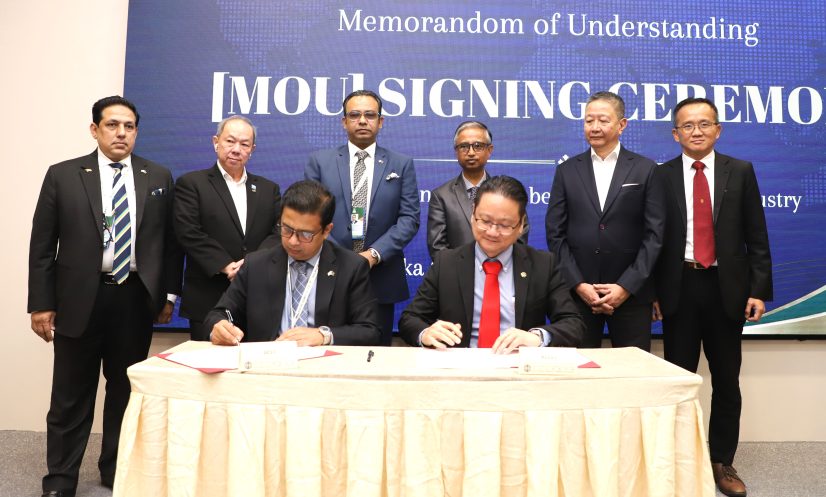
To further expand cooperation in bilateral trade and investment, the DCCI and KCCI signed a memorandum of understanding (MoU). DCCI President Taskeen Ahmed and KCCI President Jeffery Tan signed the agreement on behalf of their respective organisations.
A total of 40 B2B matchmaking sessions were held between members of the DCCI delegation and representatives of the Klang Chamber during the event.
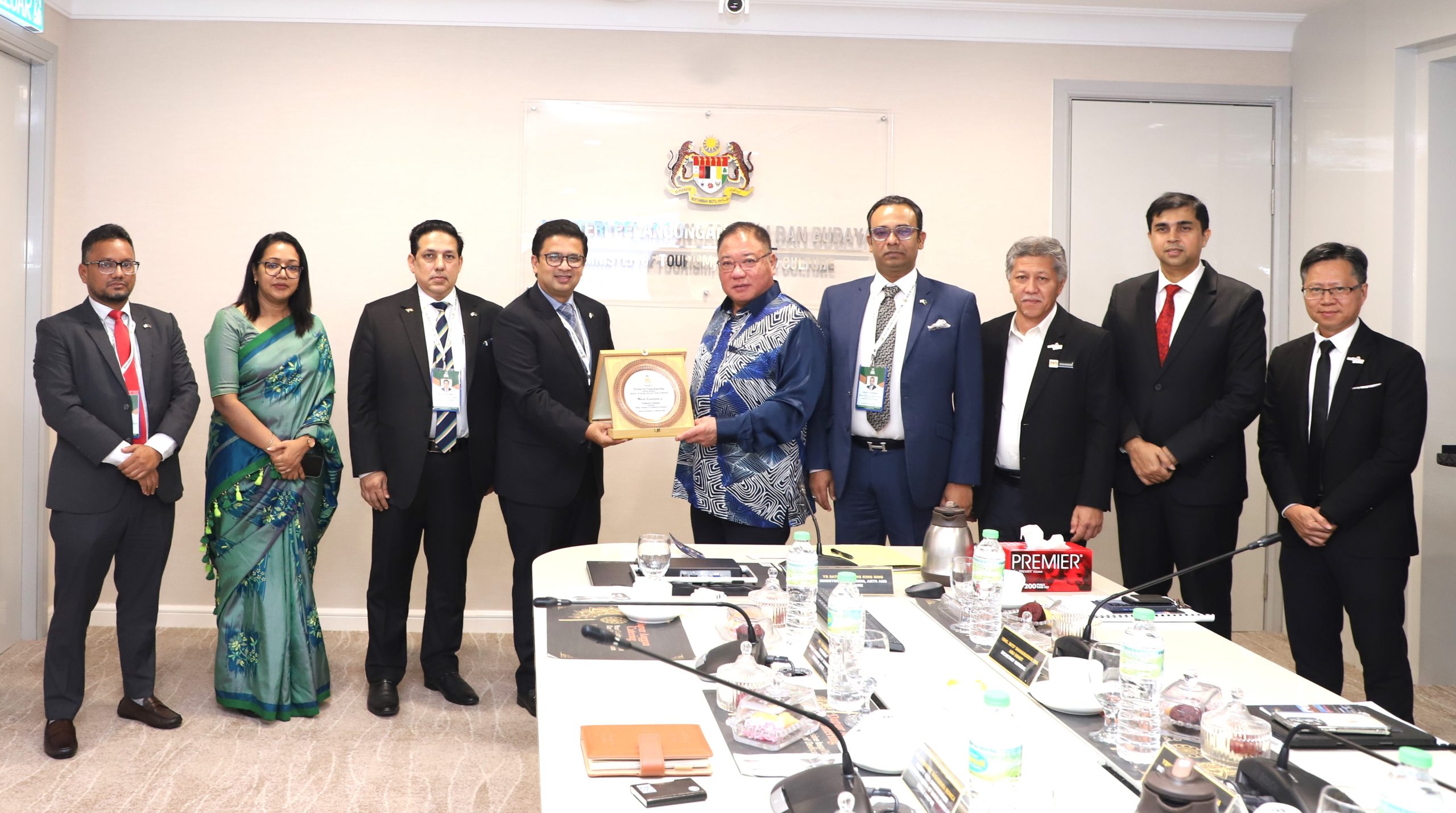
Later, DCCI President Taskeen Ahmed paid a courtesy call on Malaysian Minister of Tourism, Arts and Culture Tiong King Sing.
DCCI Senior Vice President Razeev H Chowdhury, Vice President Md Salem Sulaiman and Minister and Deputy High Commissioner of Bangladesh to Malaysia Mosammat Shahanara Monica were also present at the meeting.
During the meeting, Tiong said the number of tourists travelling to Malaysia from Bangladesh had been increasing every year, describing the trend as encouraging.
He said Malaysia was placing significant emphasis on promoting Muslim tourism and expressed hope that, as Bangladesh is home to one of the world’s largest Muslim populations, the number of Bangladeshi tourists visiting Malaysia would continue to grow.
He also said Malaysia was interested in providing necessary training to develop skilled human resources and strengthen management capacity for establishing an effective Muslim tourism ecosystem in Bangladesh.
Tiong further said the Malaysian government was considering establishing advanced hospitals and medical centres in Bangladesh to provide world-class healthcare services.
He also proposed signing an MoU between Malaysia’s Islamic Tourism Centre (ITC) and the DCCI to promote the tourism industries of both countries and strengthen mutual cooperation, says a press release issued by the DCCI.