


 Play store

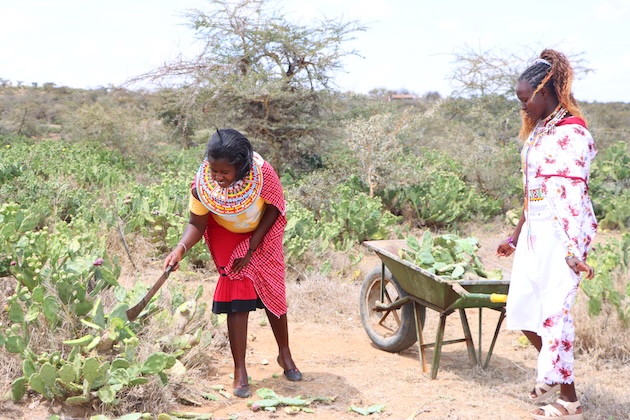
An international research partnership is transforming one of Kenya’s most destructive invasive plants into a source of livestock feed, clean energy and food security, offering new hope to pastoral communities struggling with drought, shrinking grazing land and recurring conflict.
The project, launched in 2017, is led by Jomo Kenyatta University of Agriculture and Technology (JKUAT) in partnership with the University of Florida’s Institute of Food and Agricultural Sciences (UF/IFAS).
The initiative focuses on Opuntia stricta, commonly known as the prickly pear cactus, which has spread across vast areas of Laikipia County in central Kenya, destroying grazing land, injuring livestock and disrupting rural livelihoods.
Project leader Prof Willis Owino, a lecturer at JKUAT, said the research has demonstrated how a highly invasive species can be converted into a valuable resource for communities.
“A plant that once caused enormous harm to both people and livestock has become a sustainable solution for livelihoods in one of Kenya’s most climate-stressed regions,” he said.
Laikipia, one of Kenya’s arid and semi-arid regions, relies heavily on livestock farming. Frequent droughts and diminishing pasture have fuelled long-running conflicts over grazing land.
According to Owino, the cactus now covers about 70 percent of Maasai grazing land in the area, with nearly half of affected households suffering annual economic losses of between US$500 and US$1,000.
The plant forms dense thickets that block access to homes, water sources and grazing areas while displacing native grasses and forage species essential for livestock and wildlife.
During droughts, animals often consume the cactus despite its sharp spines, leading to severe mouth injuries, digestive problems and, in some cases, death. The animals also help spread the invasive plant by dispersing its seeds across the rangelands.
Researchers say previous efforts to control the cactus, including mechanical removal and the introduction of cochineal insects, have produced limited success.
Instead, the project is focusing on putting the invasive plant to productive use.
Researchers have developed livestock feed made from processed cactus, which has significantly improved animal productivity.
Trials showed that supplementing camel diets with cactus-based feed doubled milk production, while goats fed cactus pellets gained substantially more weight during a three-month study.
The team has also installed cactus-powered biogas digesters in 30 households, providing clean cooking fuel while reducing dependence on firewood.
The digesters produce nutrient-rich slurry that is used to grow vegetables in household gardens, improving nutrition for women and children.
Beneficiary Petroline Masaine said access to biogas has improved daily life.
“Cooking with biogas has reduced smoke in our home and eliminated the constant need to collect firewood. With energy available and livestock feed produced locally, we can spend more time improving our livelihoods,” she said.
Researchers believe the project could also help reduce conflicts over grazing land.
By providing a reliable source of livestock feed during droughts, pastoralists are less likely to move their animals onto neighbouring ranches and conservancies, a major source of tension in the region.
The project also aims to replace the invasive cactus with spineless forage cactus, which is drought-resistant and safe for livestock.
Community nurseries are being established to promote the cultivation of the spineless variety, creating a sustainable feed source while gradually eliminating the invasive species.
UF/IFAS researcher José Dubeux said the project demonstrates how science can help communities adapt to climate change while improving livelihoods.
“The cactus feed pellets provide a drought-resilient alternative when pasture is scarce, helping protect livestock and strengthen food security for families whose livelihoods depend almost entirely on their animals,” he said. Source: IPS