Play store

Persistent increases in the prices of essential commodities are placing mounting financial pressure on low-income households across Bangladesh, with many families struggling to afford basic food items despite signs of easing overall inflation.
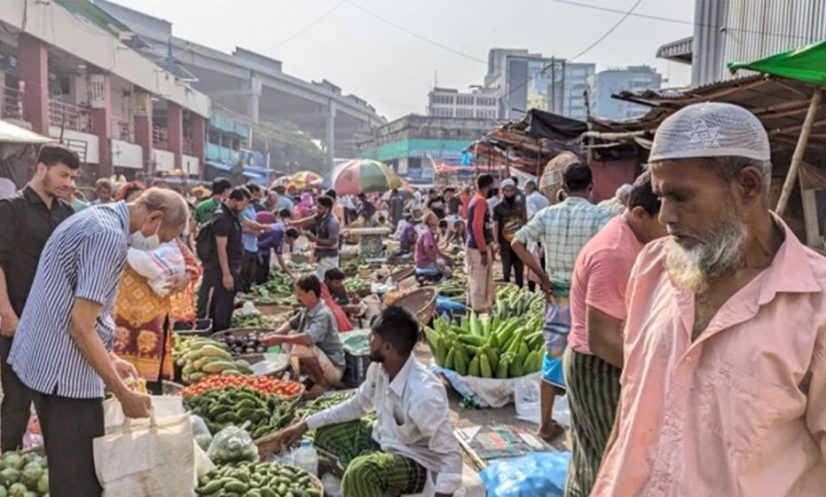
A visit to several markets in the capital on Friday found that the prices of broiler chicken, eggs and most varieties of fish have risen further over the past week, while beef prices remained largely unchanged.
Consumers say stagnant incomes and rising living costs have significantly eroded their purchasing power, forcing many to reduce food consumption or cut essential household expenses.
Daily wage earners, rickshaw pullers and small traders said meeting the costs of food, rent, healthcare and children’s education has become increasingly difficult.
Many reported relying on savings or borrowing money to manage household expenses.
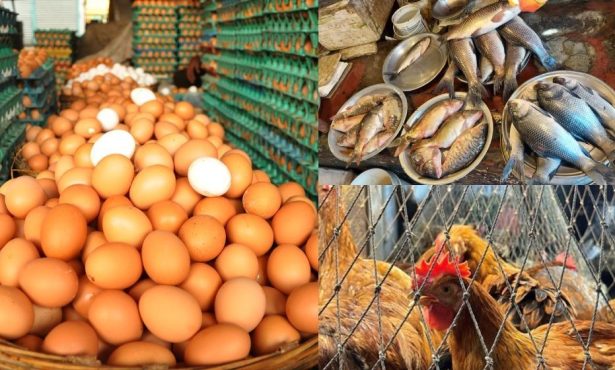
Market data show that broiler chicken prices increased by Tk10 per kilogram to around Tk200, while farm eggs were selling at Tk150-155 per dozen, up by Tk10-15 from a week earlier.
Prices of Sonali, hybrid and layer chickens remained stable at Tk320-340, Tk290-300 and Tk350 per kilogram, respectively.
Fish prices also recorded notable increases, with most farmed varieties becoming Tk20-30 more expensive per kilogram. Live pangas was selling attack around Tk230 per kg and tilapia at Tk260.
Depending on quality and size, shrimp was priced between Tk800 and Tk900 per kg, pabda Tk350-400, large-sized rui Tk450-500, tangra around Tk700, vetki Tk400-550, mrigel Tk250-300, baim Tk600-800, indigenous koi Tk700-800, farmed koi Tk300, poa Tk260 and shoal around Tk700 per kg.
Farmed shing fish was retailing at Tk300-450 per kg, while medium-sized rui sold for Tk300-350. Premium fish such as rupchanda and river-caught bele were priced above Tk1,000 per kg.
Beef was selling at Tk750-800 per kg, while mutton remained expensive at Tk1,100-1,200 per kg, keeping both items beyond the reach of many low-income consumers.
Traders attributed the latest price hikes, particularly for vegetables and fish, to supply disruptions caused by continuous rainfall and flooding in several northern districts.
Reduced arrivals at wholesale markets have pushed up procurement costs, which are now being passed on to consumers. They said prices are unlikely to ease until supplies return to normal.
Economists say food inflation disproportionately affects lower-income households because a large share of their earnings is spent on food. Even modest increases in the prices of essential items can therefore have a significant impact on their living standards.
They stressed the need for stronger market monitoring, uninterrupted supply chains and an expansion of social safety net programmes to cushion vulnerable groups from the impact of high food prices.
Although recent official data indicate that overall inflation has eased slightly, elevated food prices continue to weigh heavily on low-income families, with little visible improvement in their day-to-day cost of living.