


 Play store

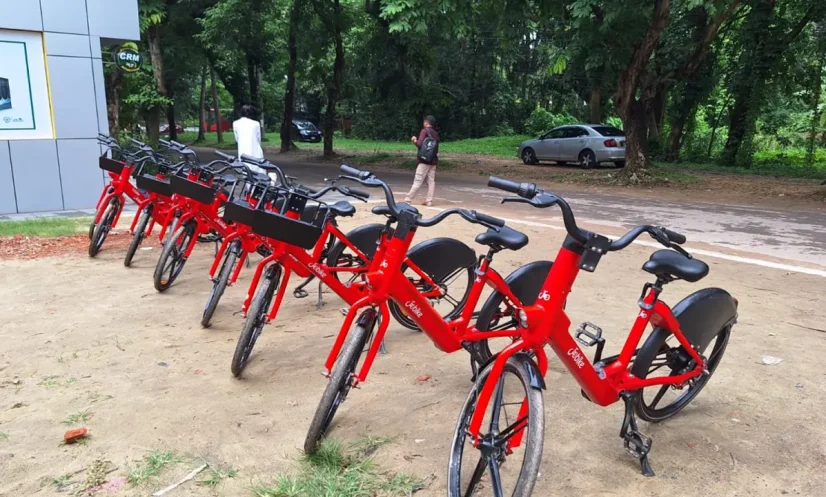
Dhaka’s metro commuters are set to benefit from a new, smarter way to travel short distances, as app-based bicycle-sharing platform Jobike launches a pilot service to ease first- and last-mile connectivity.
Under an agreement signed on August 6 with Dhaka Mass Transit Company Limited (DMTCL), Jobike will initially roll out its service at three Metro Rail Line-6 stations—Uttara North, Uttara Center, and Uttara South.
The six-month pilot project will deploy between 150 and 300 pedal bicycles across these locations, with plans to expand parking hubs and coverage based on demand.
Passengers can access bicycles from designated parking zones or nearby Jobike hubs. By scanning a QR code through the Jobike app, users can unlock a bike and begin their ride. After reaching their destination, the bicycle can be returned to any authorized Jobike parking point, making short-distance travel from metro stations to homes, workplaces, or campuses more convenient.
The service is designed to be budget-friendly. Each ride includes a 2 tk unlocking fee, along with a per-minute charge of 1 tk . For example, a 10-minute ride costs 12 tk , while a 20-minute ride totals 22 tk .
Residents of Uttara RAJUK Apartment Project (RUAP) and Uttara Rupayan City, metro depot staff, and students from nearby universities—including Shanto-Mariam University of Creative Technology, World University of Bangladesh, and BGMEA University of Fashion & Technology—are expected to benefit significantly from the service.
Jobike founder and CEO Mehedi Reza noted that nearly 400,000 passengers use the metro daily, yet many struggle with limited transport options after leaving stations. He emphasized that bicycles offer a healthy, affordable, and environmentally friendly alternative, while also helping reduce carbon emissions.
Founded in 2018 in Cox’s Bazar as an eco-friendly smart ride-sharing platform, Jobike faced setbacks during the COVID-19 pandemic but resumed operations in June this year with an e-bike service at Chattogram University.
Its integration with Dhaka’s metro system now marks a major step toward scaling sustainable urban mobility in the capital.