Play store

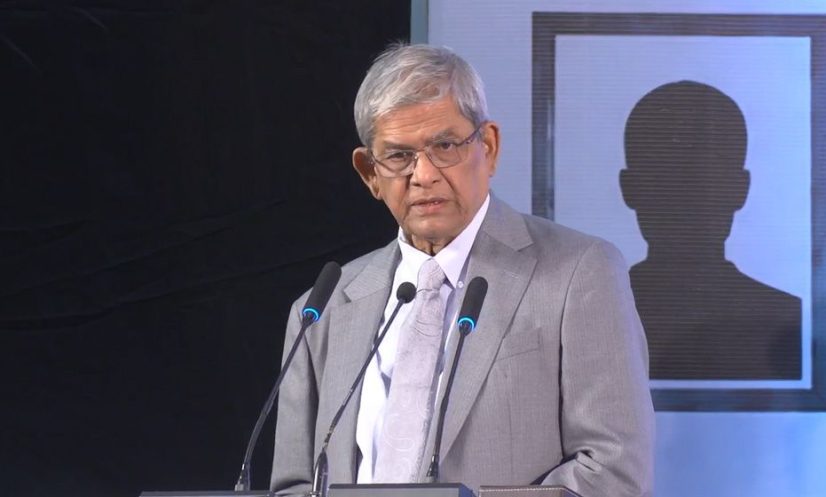
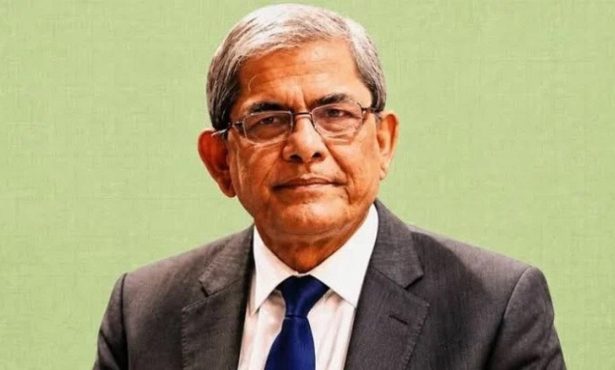
President Mirza Fakhrul Islam Alamgir has said there will be no more secret detention centres known as “Aynaghar” in independent Bangladesh, and no mother or wife will have to shed tears waiting for a missing son or husband.
He made the remarks at an event marking the International Day of the Victims of Enforced Disappearances 2026 at the Bangladesh-China Friendship Conference Centre in the capital on Sunday.
Referring to August 30 as a day of profound pain, the president paid tribute to all victims of enforced disappearance in Bangladesh and around the world.
He also expressed sympathy for the parents, siblings, wives and children who have spent years waiting for their loved ones to return.
Calling enforced disappearance a crime against humanity, Mirza Fakhrul said it is not an ordinary crime. It not only takes away a person but also destroys the happiness, peace, dreams and social and economic security of their families.
He said the Constitution guarantees every citizen the right to life, personal liberty, protection of law and human dignity, while enforced disappearance and torture violate all these rights.
Referring to the past 15 years, the president said the culture of enforced disappearance and secret detention centres had taken a “terrible grip” on Bangladesh during the previous “fascist government”.
He alleged that people who protested against injustice, expressed dissent or demanded democratic rights were abducted, forcibly disappeared and, in some cases, secretly killed.
He said state institutions loyal to the previous government had consistently denied the existence of such crimes.
The president recalled prominent BNP leader Ilias Ali, ward commissioner Chowdhury Alam and Sajedul Islam Suman, among many others, whose families spent years in uncertainty and anguish.
He also mentioned lawyer Barrister Arman, retired Lieutenant General Azmi and numerous dissidents, officials, writers, journalists, social workers, homemakers and ordinary citizens who were allegedly held for years in dark and inhumane conditions at secret detention facilities.
Referring to former Home Affairs State Minister Salahuddin Ahmed, he said he too had been forcibly disappeared and later left abroad. Some victims were fortunate enough to return, while many others have never been found.
The president said the culture of enforced disappearance and torture had established a reign of fear and injustice in a country that was liberated in 1971 through the sacrifices of freedom fighters for democracy, equality, freedom of expression, human dignity and justice.
He paid tribute to former Prime Minister Khaleda Zia, saying she had always spoken out against enforced disappearances and torture and believed that one day those responsible would face justice in Bangladesh.
He said the previous “fascism” was forced to flee the country in the face of an uprising by unarmed students and the public. “Now, we must pursue remedy, not revenge, and bring the actual perpetrators to justice,” he said.
Referring to the final report of the Commission of Inquiry on Enforced Disappearances, Mirza Fakhrul said its findings were not only painful but also “shameful and horrifying”.
According to the report, the commission identified 1,569 cases as enforced disappearances, including 287 people who were found to be missing or dead.
The report also showed an increase in disappearances ahead of elections and a pattern of enforced disappearance and secret killings targeting political opponents, he said.
The president said Bangladesh has signed the International Convention for the Protection of All Persons from Enforced Disappearance, while trials involving enforced disappearances and genocide are progressing through the International Crimes Tribunal in a transparent manner and in line with international standards.
He stressed that the state’s responsibility does not end with punishing perpetrators. Families who have endured years of uncertainty, financial hardship and mental anguish must also receive support in terms of dignity, social security, healthcare, education, livelihoods and rehabilitation.
“We want a Bangladesh where political differences exist, but political vengeance does not; where freedom of expression exists, but there is no culture of fear; and where state power is exercised under the control of the Constitution and the law,” he said.
The president said a country’s development should not be measured solely by economic growth. Its true success lies in how democratic, welfare-oriented, just and humane it is, and how safely and respectfully its citizens can live.
Concluding his speech, Mirza Fakhrul said, “I want to state clearly today, as the President of Bangladesh, that there will be no more ‘Aynaghar’ in this independent Bangladesh. No mother will have to shed tears for her child, and no wife for her husband.”
He vowed that everyone involved in enforced disappearances, regardless of how powerful they are, would be brought to justice and face the maximum punishment under the law.
He also pledged that every avenue for the return of fascism would be permanently closed and urged the government to stand sincerely beside the families of victims of enforced disappearance.