


 Play store

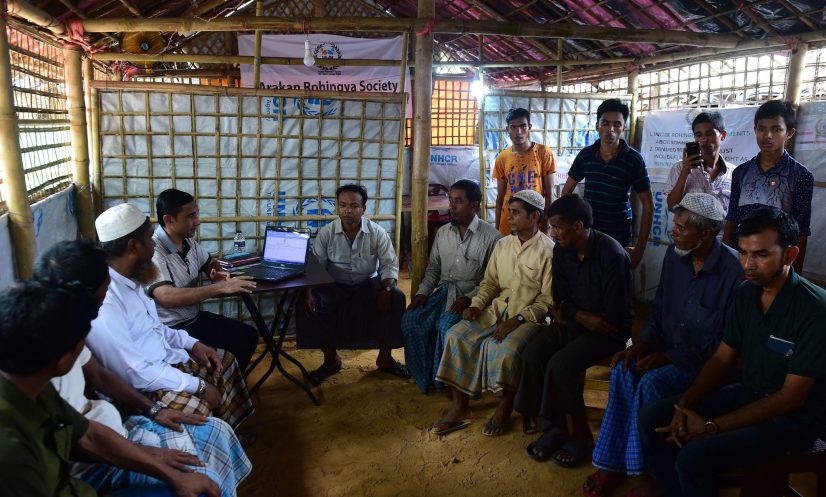
Rohingya refugees in Cox’s Bazar will now have access to virtual court hearings, reducing the risks, travel difficulties and delays associated with attending distant courts.
The initiative was formally launched on 1 September at Rohingya Camp-2 (West) in Ukhiya through a virtual hearing of an abduction case before the Women and Children Repression Prevention Tribunal. The service is also expected to benefit residents of remote and hilly areas in Cox’s Bazar and Teknaf.
Officials said virtual hearings could reduce long journeys, checkpoint delays and movement restrictions for refugees and local residents. In some cases, victims and witnesses may also avoid the need to appear physically in court.
The initiative was inaugurated by Supreme Court Registrar General Mohammad Habibur Rahman Siddiqui and senior officials from the Law Ministry, National Legal Aid Services Organization and the Refugee Relief and Repatriation Commissioner’s Office. Representatives of UNHCR and BLAST were also present.
Siddiqui stressed the need for stronger digital infrastructure, technical training for judges and lawyers, and safeguards to ensure confidentiality and fairness. He said the expansion of e-judiciary services could help remove existing barriers to access to justice.
Bangladesh introduced virtual courts during the Covid-19 pandemic in 2020 to keep judicial proceedings running. A new practice direction on virtual judicial proceedings was issued by the Supreme Court on 14 July 2025.