Play store

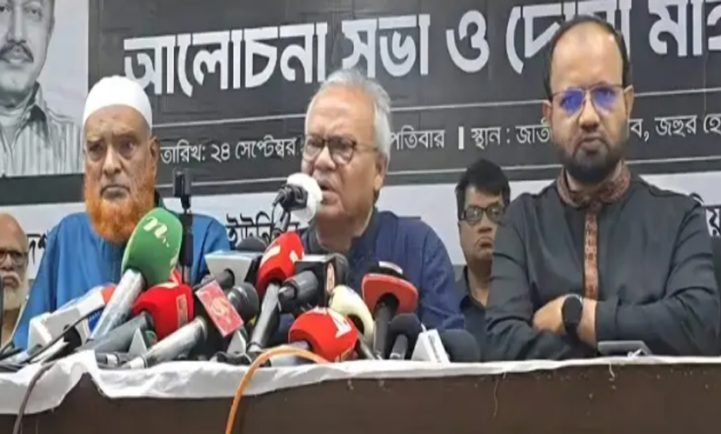
DHAKA: BNP Acting Secretary General Ruhul Kabir Rizvi has recalled the contribution of the late journalist leader Ruhul Amin Gazi saying he remained steadfast against autocracy and fought for democracy and freedom of the press throughout his career.
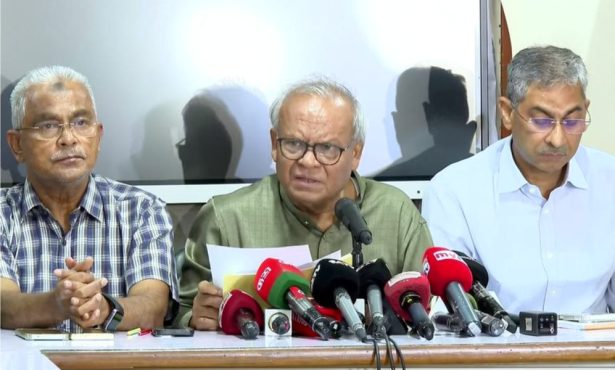
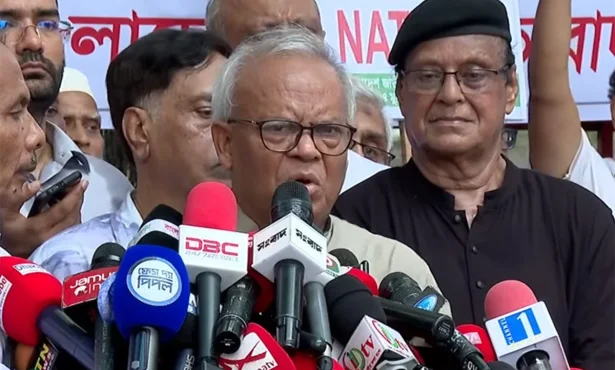
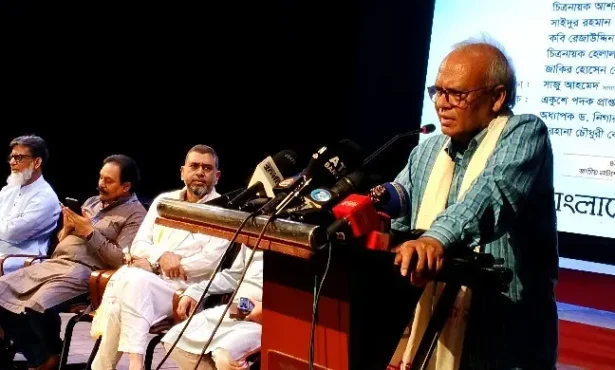
Rizvi made the comments on Thursday (September 24) at a discussion and prayer meeting at the National Press Club marking the second death anniversary of former Bangladesh Federal Union of Journalists (BFUJ) President Ruhul Amin Gazi.
Addressing the event, the ruling BNP leader stressed the importance of maintaining civility in political criticism, saying political opponents may be criticised strongly but should not be addressed in personally insulting or derogatory language.
He said the culture of using offensive language against political opponents that developed in the past should not be repeated. Political statements can be tough, he said, but they should be expressed in dignified language.
Rizvi made the remarks on Thursday (September 24) at a discussion and prayer meeting at the National Press Club marking the second death anniversary of former BFUJ president Ruhul Amin Gazi.
Recalling Gazi’s role, Rizvi said the journalist leader remained uncompromising in his support for democracy, freedom of expression and opposition to authoritarianism. Despite facing various forms of persecution and harassment, he did not abandon his position, he said.
Rizvi said Gazi’s death had created a deep void among journalists and his political colleagues. He added that it was a source of some consolation that Gazi had lived to see the fall of the Sheikh Hasina government.
He also recalled various programmes organised at the National Press Club and elsewhere demanding Gazi’s release during the period of political repression, saying he had taken part in some of them.
Rizvi said the Press Club had, at various times during periods of political crisis, provided space for expressing dissenting views and holding political programmes. However, he said, the club eventually came under government pressure as well.
The BNP leader said opposition parties must have the right to hold rallies, processions and other political programmes in a democratic system. Political disagreements over such programmes may exist, he said, but the right to hold them should be respected.
Referring to recent long-march programmes, Rizvi said the BNP had instructed its leaders and activists not to obstruct programmes organised by opposition parties. “If we believe in democracy, the opposition will hold its programmes and speak,” he said.
On Bangladesh’s foreign policy and sovereignty, Rizvi said the country should not become dependent on any other state or be turned into another country’s “backyard.” Bangladesh should determine its own foreign policy and address challenges, including economic difficulties, through its own capabilities, he said.
He said political parties would continue to have differences and organise political programmes, but there should be a minimum consensus on fundamental issues such as democracy, independence and sovereignty.
Whoever comes to power in the future, he said, should work to strengthen democratic institutions and protect the country’s independence and sovereignty while ensuring that authoritarian conditions of the past are not repeated.