Play store

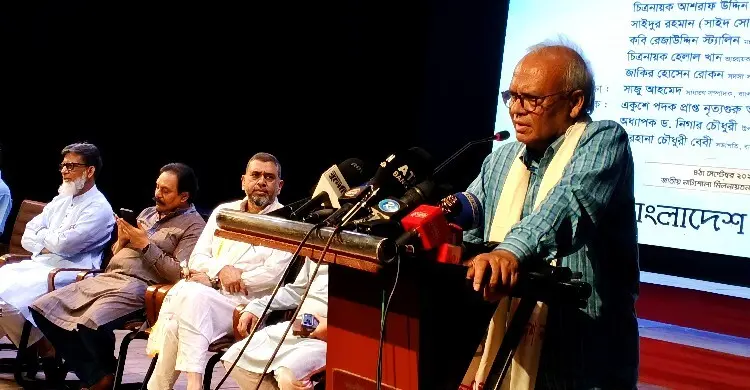
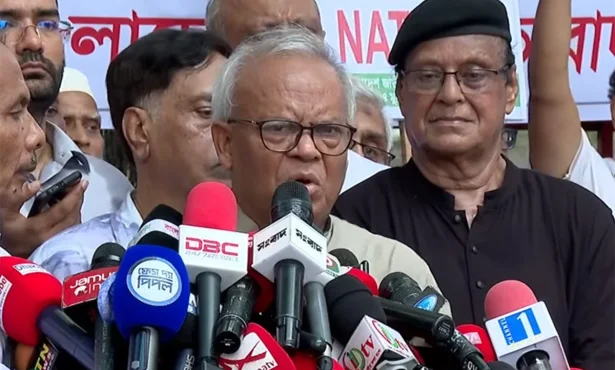
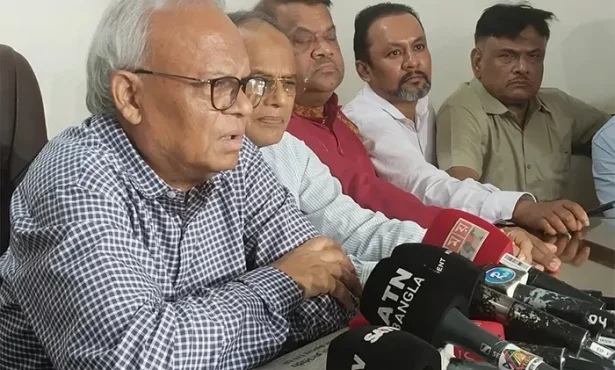
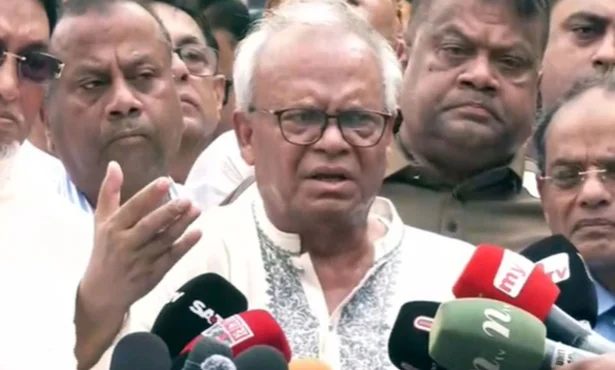
BNP Acting Secretary General and Prime Minister’s Political Adviser Advocate Ruhul Kabir Rizvi has urged opposition parties to offer alternative plans and recommendations for addressing the country’s crises instead of limiting themselves to political programmes and criticism of the government.
“In a democratic system, the opposition will have its programmes and will criticise the government—there is no objection to that. But alongside programmes, they should also provide alternative plans and suggestions to resolve the country’s problems,” he said.
“You may hold long marches or programmes over gas and electricity shortages—that is fine. But tell us how we can ensure gas and electricity supplies, where we can get them from and how we can obtain them. Give us a plan on what needs to be done to tackle this crisis,” Rizvi said.
He made the remarks as the chief guest at the induction ceremony of the newly elected executive committee of the Bangladesh Dance Artists Association at the National Theatre Hall of Bangladesh Shilpakala Academy in the capital on Friday (September 4).
Rizvi said opposition lawmakers have opportunities to speak in Parliament and that criticising the government and organising programmes outside Parliament are normal practices in a democracy.
“But alongside criticism, there should also be suggestions on how the government can deal with the crisis,” he said.
“We are hearing only about programmes. The opposition will have programmes—that is part of democracy. But if we repeat the practices of the past, it will take us back to the culture of the past. That will only make the darkness deeper,” he added.
On the gas and electricity crisis, Rizvi said the current situation was also linked to global conflicts and disruptions in energy supply chains.
He said difficulties in transporting fuel through the Strait of Hormuz had created problems in importing the energy needed by Bangladesh.
“This has not happened because of any fault of the government. There is a global war going on now. The United States and Iran are at war. Is the Bangladesh government responsible for that? No,” he said.
Rizvi said the fuel crisis was affecting power generation, industrial production and the supply of fuel needed for cooking in households.
“In this situation, we need a realistic alternative plan to deal with the crisis,” he said.
“I do not think creating a planned shutdown is the right approach. Instead, there should be plans on how this crisis can be alleviated,” Rizvi added.
Speaking about dance, Rizvi said he did not have specialised knowledge of the art but noted that dance performed alongside music and instruments was pleasing to watch and had the power to uplift the human mind.
He described dance as a fine art in which emotions, feelings and imagery are expressed through bodily movements in rhythm with music.
“Dance has developed in various forms in different countries around the world over the centuries. Bangladesh also has a rich folk and cultural heritage,” he said.
Rizvi said classical, folk and modern dance, as well as traditions such as leto performances, kabigan, ghumura and Baul culture, combine music, acting and bodily movements.
“We have to preserve these traditions and allow our culture to develop with time,” he said.
Rizvi described dance as a powerful cultural medium, saying music and dance could generate enthusiasm among people and sometimes strengthen major movements.
Referring to cultural performances during the July movement, he said songs and dances had generated enthusiasm among people and strengthened the momentum of the movement.
“When ‘Karar Oi Louho Kopat’ is performed with dance, it creates a kind of enthusiasm among people. It gives them the courage to overcome any obstacle or barricade in front of them,” he said.
Rizvi said Bangladesh should move forward by preserving the positive aspects of its folk traditions while abandoning inhumane and discriminatory practices that exist in the name of tradition.