


 Play store

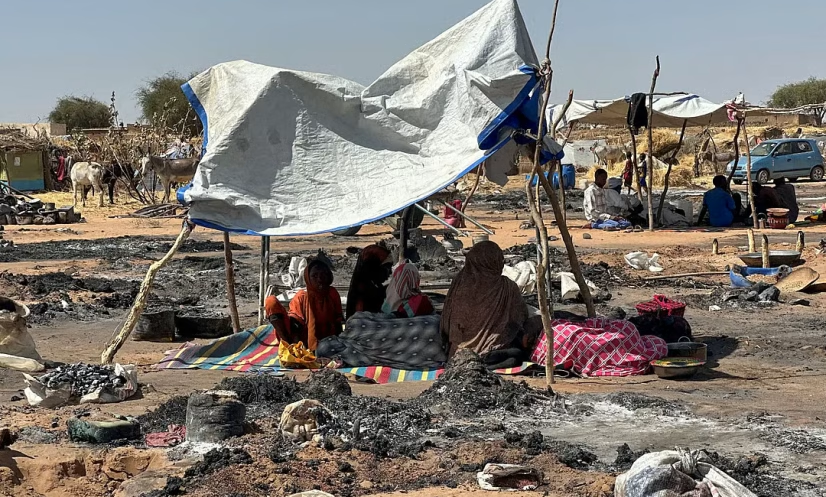
The number of people living in acute poverty worldwide has reached 1.2 billion, with a United Nations global poverty index rising for the first time since its introduction in 2010, according to a report released on Monday.
The 2026 edition of the annual report by the United Nations Development Programme (UNDP) and the Oxford Poverty and Human Development Initiative found that 51.5 million more people were living in acute poverty than in the previous year.
UNDP Administrator Alexander De Croo described the increase as a “wake-up call for the world”.
“Behind these figures are 1.2 billion people facing hardships that reinforce one another: hunger, missed schooling and a lack of clean water or electricity. This is unacceptable,” he said in a press release.
Children account for more than half of those living in acute poverty, the report found.
However, the UNDP cautioned that population growth was a major factor behind the increase in the total number of people affected. It also noted that new data were available for only 13 of the 108 developing countries covered by the report.
Despite the global increase, the report highlighted progress in several countries. Over the past 15 years, 33 countries have cut by half the proportion of their populations experiencing multidimensional poverty, including six in sub-Saharan Africa.
China and Vietnam were among the Asian countries that made particularly rapid progress, according to the UNDP.
Sub-Saharan Africa and South Asia, particularly the Indian subcontinent, continue to account for the majority of the world’s poorest people.
The report also found significant declines in both poverty rates and the number of people experiencing multidimensional poverty in Egypt, Nepal and Tajikistan.
In Angola and Zambia, poverty rates have fallen, but population growth has more than offset the reductions, increasing the total number of people living in poverty.
The global Multidimensional Poverty Index measures overlapping disadvantages, including inadequate housing, poor sanitation, lack of electricity and clean cooking fuel, food deprivation and limited access to education.