


 Play store


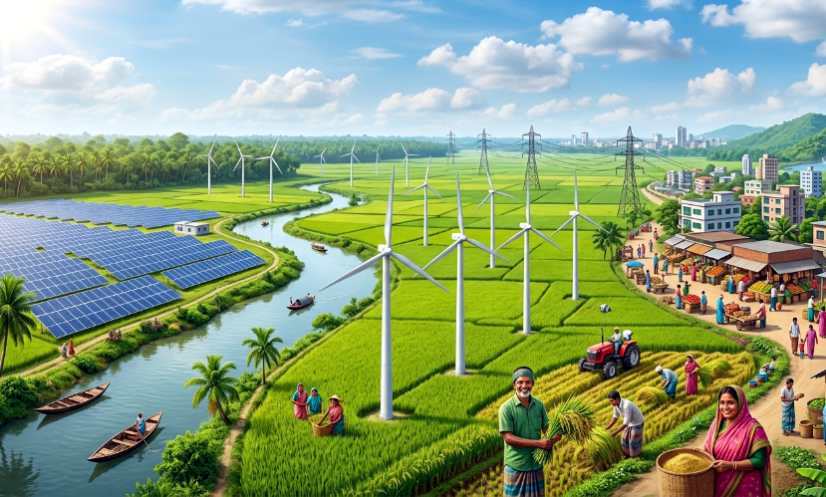
Bangladesh’s energy challenge is not simply how to generate more electricity. The deeper question is how to secure sufficient, affordable and reliable energy without sacrificing nature, livelihoods, fiscal stability or national autonomy. Nature-Smart Energy Sovereignty, rooted in Natural Rights Led Governance (NRLG) and its vision of “Sovereignty for Nature, Survival for All,” offers such a pathway.
NRLG treats energy not merely as a commodity or extractive input but as a foundational domain of sovereignty that must uphold human natural rights, life, dignity, security and prosperity, while recognizing nature’s inherent standing to exist, regenerating and flourishing. Energy sovereignty therefore goes beyond conventional energy security, independence or self-sufficiency. It means the capacity to govern energy systems strategically and transparently, strengthen community participation and local ownership, reduce dangerous external dependence, and operate within nature’s regenerative limits.
Importantly, domestic control cannot justify domestic ecological destruction. A country cannot claim genuine energy sovereignty by destroying its forests, rivers, wetlands, agricultural land or biodiversity to produce energy. Renewable energy is a technology category; nature-smart energy is a governance standard.
From Energy Poverty to Regenerative Prosperity
Least Developed Countries (LDCs) have historically consumed very little energy per person. This should not be mistaken for environmental success. It largely reflects energy poverty, insufficient infrastructure and limited productive opportunities. Hundreds of millions of people in LDCs still lack electricity, constraining healthcare, education, livelihoods, industry and climate adaptation.
The objective should therefore not be to preserve low consumption, but to provide sufficient energy for dignified living and productive prosperity within ecological limits.
Modern renewable technologies create an unprecedented opportunity. Distributed solar, rooftop systems, energy efficiency, storage, carefully governed solar irrigation, community microgrids and other low-conflict technologies can allow developing countries to leapfrog parts of the fossil-intensive pathway followed by today’s industrialized economies.
For Bangladesh, this means prioritizing rooftop and public-building solar, industrial solar, energy efficiency and storage before sacrificing scarce agricultural or ecologically valuable land. Floating solar, agrivoltaics and offshore wind can contribute where rigorous assessments demonstrate compatibility with water, biodiversity, food security and livelihoods.
Energy Sovereignty in an Era of Global Conflict
Dependence on imported fossil fuels creates structural vulnerability to geopolitical conflict, price volatility and supply disruption. Bangladesh’s growing reliance on imported oil, LNG and coal means conflicts thousands of kilometers away can rapidly increase import costs, drain foreign exchange, fuel inflation and disrupt industrial production.
Recent wars and instability affecting major energy-producing regions and maritime chokepoints have demonstrated that energy security purchased from volatile international fossil-fuel markets can disappear remarkably quickly. Bangladesh cannot control global conflicts, commodity markets or shipping routes. It can, however, reduce its exposure to them.
Every economically viable megawatt generated from indigenous sunlight or wind can reduce part of that vulnerability. Energy efficiency can reduce the amount of fuel and generation required. Distributed systems can improve resilience, while diversified regional electricity trade can complement domestic renewables.
Energy sovereignty does not mean autarky. It means strategic autonomy and freedom from dangerous dependency.
Why Bangladesh Must Act Now
The urgency is particularly acute for Bangladesh. Climate change, salinity intrusion, floods, cyclones, heat stress and ecosystem degradation already threaten livelihoods across its densely populated delta. Conventional energy expansion that destroys wetlands, agricultural land or biodiversity would further weaken the natural systems protecting the country.
At the same time, Bangladesh requires reliable and affordable energy to sustain economic transformation after LDC graduation. Yet substantial installed generation capacity coexists with fuel shortages, financial stress, grid constraints and unreliable supply. Domestic gas resources are declining while renewable electricity still represents only a small proportion of actual generation.
The problem is increasingly not the absence of technology but institutional architecture: fragmented governance, financing constraints, regulatory uncertainty, grid limitations and fiscal structures that can disadvantage renewable investment.
Bangladesh should therefore progressively convert recurring fossil-fuel import expenditure into productive domestic energy assets. Industrial and commercial rooftop solar is particularly attractive because it can reduce fuel dependence, conserve foreign exchange and help exporters meet increasingly stringent low-carbon requirements in international markets.
Change Initiative has advanced a roadmap for mobilizing from approximately $32.82 billion towards renewable-led energy sovereignty and a just transition, emphasizing decentralized renewable power, storage, grid flexibility, local manufacturing, innovative finance and community-centred models.
Financial Sovereignty Matters
The transition must not replace an energy-dependency problem with a debt-dependency problem. Change Initiative’s climate-debt research highlights the structural injustice facing LDCs, despite their small contribution to historical and current global emissions, vulnerable countries face rising debt-service pressures while much climate finance continues to arrive as loans rather than grants.
Bangladesh should consequently priorities grants and highly concessional resources alongside guarantees, blended finance, domestic capital and local-currency instruments. The quality of finance matters as much as its quantity. A solar or wind project that lowers carbon emissions but creates unsustainable sovereign liabilities cannot be considered fully sustainable.
Energy sovereignty also requires local economic capabilities. Bangladesh should develop competitive capacity in installation, engineering, maintenance, testing, certification, repair, recycling and selected manufacturing. Otherwise, dependence on imported fossil fuels could simply evolve into dependence on imported renewable technologies.
Circularity must therefore be mandatory. Panel and battery registries, producer responsibility, reuse and repair markets, recycling systems and safe end-of-life management should be established before today’s renewable technologies become tomorrow’s environmental burden.
A Nature-Smart Energy Economy
Bangladesh needs to move beyond measuring energy success primarily through installed megawatts and GDP. Progress should also be judged by foreign exchange conserved, fossil-fuel imports avoided, affordability and reliability improved, pollution reduced, local jobs created, ecosystems protected, community ownership expanded, waste recovered and fiscal risks avoided.
Communities must become producers, investors and stewards rather than passive energy consumers. Local participation, benefit-sharing, transparent land decisions, grievance mechanisms and gender-inclusive governance should therefore be integral to energy planning.
The ultimate objective is not maximum energy consumption or conventional growth at any cost. It is sufficient, reliable and affordable energy that enables shared prosperity within nature’s regenerative limits. Nature-Smart Energy Sovereignty can thus transform Bangladesh’s energy system from a source of external vulnerability into an engine of ecological, economic and intergenerational prosperity.
Nature-Smart Renewable Power is the operational engine of energy sovereignty, protecting natural rights, securing livelihoods, conserving foreign exchange and transforming indigenous renewable resources into lasting national prosperity.
For Bangladesh, this represents a fundamental transition, from dependence to strategic autonomy, from extraction to regeneration, and from short-term growth to shared and enduring prosperity.
The views expressed in this article are the author’s own and do not necessarily reflect Sarabangla English Edition’s editorial stance.