


 Play store


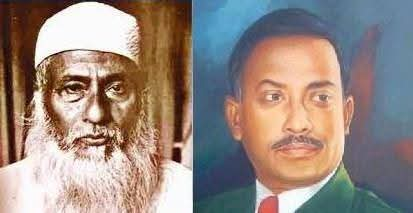
November 7 occupies an important place in Bangladesh’s national history. On this day in 1975, what is widely described as the Sipahi-Janata, or soldiers-and-people’s uprising, brought a dramatic turn in the country’s turbulent political landscape.
Supporters of the National Revolution and Solidarity Day believe that the uprising foiled conspiracies against Bangladesh’s independence and sovereignty. On that day, soldiers and civilians joined hands to free the then Army chief and proclaimer of independence, Major General Ziaur Rahman, from confinement at Dhaka Cantonment.
Every year, November 7 is observed by many as National Revolution and Solidarity Day. Any discussion of the political background and consequences of that day should also take into account the role and political legacy of Maulana Abdul Hamid Khan Bhashani, the legendary leader widely known as Mazlum Jananeta.
Bhashani did not directly participate in the events of November 7 in the way Ziaur Rahman did. Yet his long political struggle, his emphasis on national interests and his opposition to domination by foreign powers formed an important part of the political environment in which the events unfolded. Many political observers believe that Bhashani’s ideas also influenced the political course pursued by Ziaur Rahman after November 7.
Bangladesh emerged as an independent and sovereign state on December 16, 1971, after a bloody nine-month Liberation War. The country was born through enormous sacrifice, including the lives of millions of martyrs and the suffering of countless women.
Sheikh Mujibur Rahman returned to the country on January 10, 1972. Twelve days later, on January 22, Maulana Bhashani, one of the leading political figures associated with the struggle for the country’s rights and aspirations, also returned home.
After independence, there was widespread expectation that a broad-based national government would be formed. Instead, the Awami League formed a party government. A series of political and economic difficulties soon created instability and deepened tensions between the government and its critics. Those who criticised the government often found themselves branded as its enemies or, in some cases, as opponents of the state itself.
Although respected figures such as President Abu Sayeed Chowdhury and General M A G Osmani were part of the establishment, critics alleged that sections of the ruling political leadership encouraged activities that undermined the values and aspirations of the newly independent country.
Bhashani became one of the government’s strongest critics. The adoption of the Constitution also generated controversy, as other political parties complained that their views and suggestions had not been adequately considered.
On October 29, 1972, several senior leaders of the pro-government NAP (Muzaffar), including Pir Habibur Rahman, Pankaj Bhattacharya, Matia Chowdhury, Abdul Halim and Suranjit Sengupta, expressed their dissatisfaction in a statement over what they described as the ruling party’s narrow approach to framing the Constitution.
At a NAP (Muzaffar) rally at Paltan Maidan on the same day, speakers demanded that the powers of the prime minister be reduced and that Parliament be made sovereign.
After the Constitution came into effect, the government announced a general election for March 7, 1973. Several political parties, including NAP-Bhashani, NAP-Muzaffar and the newly formed Jatiya Samajtantrik Dal, participated in the election.
The opposition alleged widespread irregularities and questioned the fairness of the electoral process. A number of Awami League leaders were elected unopposed. When the election was held in 299 constituencies following the death of a candidate, the Awami League won all but seven seats.
Opposition parties strongly criticised the election. NAP-Bhashani senior vice-president Dr Alim Al Raji said at a press conference on March 8 that the election had not been free and fair and had been held amid violence and intimidation. Professor Muzaffar Ahmed and Pankaj Bhattacharya also alleged that opposition candidates had a realistic chance of winning in at least 70 constituencies.
The result was a Parliament with virtually no effective opposition. Critics argued that this strengthened one-party dominance and contributed to growing political instability.
As political tensions intensified, Bhashani emerged as one of the most prominent voices of opposition. On May 15, 1973, he began a hunger strike at the NAP office in Dhaka, demanding action on food and clothing shortages, rising prices, political repression and the deteriorating law and order situation.
His health deteriorated rapidly, prompting leaders of different political parties and thousands of ordinary people to urge him to end the fast. On May 22, after eight days and at the request of his supporters and well-wishers, he finally broke his hunger strike.
The period saw increasing political polarisation. Meanwhile, signs of a devastating famine were becoming evident in 1974. Bhashani travelled across the country, holding public meetings and repeatedly warning the government about the looming crisis.
Thousands eventually died during the famine. At the same time, the government faced criticism over its handling of political unrest, economic hardship and relations with neighbouring India.
The political situation deteriorated further. Bhashani himself was placed under surveillance and effectively confined to Santosh from June 30, 1974, until August 15, 1975.
During this period, several major developments transformed Bangladesh’s political landscape. A state of emergency was declared in December 1974. On January 25, 1975, the Fourth Amendment was passed, paving the way for a one-party system under BAKSAL.
The move drew strong criticism. Protesting the undemocratic amendment, General M A G Osmani, the commander-in-chief of the Liberation War, and Barrister Moinul Hossen immediately resigned from Parliament. The political atmosphere became increasingly restrictive, and on June 23, 1975, all but four newspapers were closed. The country entered what many described as a suffocating political period.
Less than seven months after the introduction of BAKSAL, Bangladesh witnessed one of the darkest chapters in its history. In the early hours of August 15, 1975, Sheikh Mujibur Rahman and most of his family members were assassinated in a military coup.
Bhashani, who had been spending time in prayer at Santosh, was deeply shocked when he learned of the events over the radio. On August 16, General Osmani visited him at Santosh and sought a statement on the rapidly changing political situation. According to accounts of the meeting, Bhashani responded: “When everything is over, what is the need for a statement from this old man?”
He remained cautious in the days that followed. On August 24, however, he issued a statement calling upon the country’s workers, intellectuals, public servants, members of the armed forces and people of all faiths to work for political, economic, social, cultural and religious freedom for all citizens.
On October 4, President Khondaker Mostaq Ahmed announced in a radio address that a general election would be held in February 1977. Bhashani welcomed promises relating to the release of political prisoners, universal adult franchise and press freedom.
He announced a farmers’ conference to be held at Santosh on December 7. During Khondaker Mostaq’s 82-day rule, however, Bhashani largely remained away from active political engagement.
The situation changed dramatically again on November 3, when another military coup took place under the leadership of Brigadier Khaled Mosharraf. Ziaur Rahman was placed under house arrest.
That same day, four national leaders, Syed Nazrul Islam, Tajuddin Ahmad, M Mansur Ali and A H M Kamruzzaman, were brutally killed inside Dhaka Central Jail.
Khondaker Mostaq was removed from effective power, and Chief Justice Abu Sadat Mohammad Sayem assumed the presidency on November 6. The crisis, however, was far from over.
On November 7, another dramatic uprising changed the course of events. The soldiers-and-people’s uprising led to the release of Ziaur Rahman from confinement and eventually helped restore his position at the centre of Bangladesh’s political and military affairs.
The veteran leftist leader Haider Akbar Khan Rono later wrote about the extraordinary scenes of that day. According to his account, soldiers entered Dhaka in groups, chanting slogans in support of the soldiers’ uprising, unity between soldiers and civilians and Ziaur Rahman.
Rono described the city as being filled with marches and celebrations. He wrote that Ziaur Rahman addressed the nation over the radio on the morning of November 7 and subsequently focused on restoring discipline within the armed forces.
On the afternoon of November 7, Bhashani was contacted at Santosh. He sent a message to Ziaur Rahman, saying: “May Allah bless you and your government. Let Army and the people be united to work for independence and sovereignty. Let there be rule of Rabubiat for the emancipation of mankind irrespective of creed and caste.”
The following day, Bhashani sent another letter to Ziaur Rahman, praying that he would be able to carry out the enormous responsibility that had fallen upon him.
On November 12, at the request of President Sayem and Ziaur Rahman, Ataur Rahman Khan and Barrister Moinul Hossain visited Bhashani at Santosh to seek a public statement from him. His remarks were recorded and published in Dainik Bangla and Haq Katha on November 13, 1975.
In the statement, Bhashani said that a serious conspiracy against Bangladesh’s independence and sovereignty had been foiled. He congratulated members of the armed forces, the then BDR, police, Ansar and patriotic citizens for their role.
At the same time, he warned that domestic and foreign forces could still pose threats to the country’s independence and sovereignty. He called for discipline within the armed forces and urged citizens not to remain silent spectators in the defence of the nation.
His message reflected the political principles that had guided him throughout his long career: national sovereignty, unity among the people and resistance to all forms of domination.
The events of November 7 remain a subject of political debate and competing interpretations. Yet there is little doubt that the uprising marked a decisive moment in Bangladesh’s post-independence history.
For those who view November 7 as a movement to protect national independence and sovereignty, Bhashani’s support for Ziaur Rahman carries particular significance. His moral and political support gave added weight to the forces that emerged from the upheaval.
Bhashani did not stop with his messages of support. Despite his advanced age, he continued to travel to different parts of the country, particularly border areas, and spoke out against what he saw as threats to Bangladesh’s national interests.
His opposition to Indian control over the waters of the Ganges culminated in the historic Farakka Long March, one of the most memorable mass movements of his later political life.
This raises an important question for those who identify themselves as nationalists and patriots: can the contribution of Maulana Bhashani to the struggle for national sovereignty be overlooked?
The political paths of Bhashani and Ziaur Rahman were not identical, and they came from different generations and political traditions. Yet they shared a deep concern for Bangladesh’s independence, sovereignty and national dignity.
Bhashani’s life was marked by a commitment to democratic values, moral principles and the rights of ordinary people. He repeatedly placed what he believed to be the national interest above personal or partisan considerations.
November 7, therefore, cannot be understood solely through the events of a single day. Its wider political context includes the struggle against one-party rule, the demand for democratic space and the continuing concern over the country’s independence and sovereignty.
In that broader historical narrative, Maulana Abdul Hamid Khan Bhashani deserves to be remembered with due respect. His ideals of national dignity, self-reliance and independence remain relevant to Bangladesh.
The spirit associated with November 7 and the political legacy of Bhashani and Ziaur Rahman are, in this sense, closely connected. To overlook Bhashani’s contribution would be to leave an important part of that historical and political legacy incomplete.
The enduring lesson is that a nation’s independence and sovereignty require more than military or political power. They also depend on democratic values, national unity, moral leadership and an unwavering commitment to the interests of the people.
The views expressed in this article are the author’s own and do not necessarily reflect Sarabangla English Edition’s editorial stance.