


 Play store


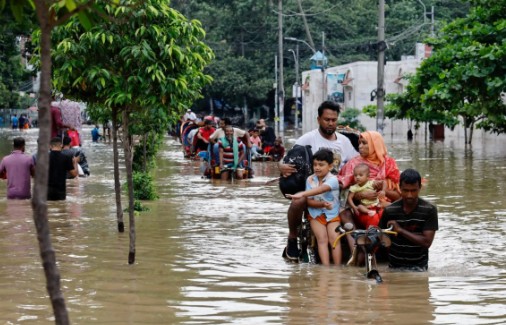
In recent years, South Asia has witnessed a series of devastating floods that have affected millions of people across Bangladesh, India, Nepal, Pakistan, Sri Lanka, and Afghanistan. Over the past few days, a large part of Bangladesh, including the two major cities of Dhaka and Chattogram, has been severely affected by flood-related torrential rainfall. Apart from this, the catastrophic flooding in Pakistan in 2025, along with major floods throughout the region during 2024 and 2025, has raised an important question: Are these disasters becoming more frequent because of climate change?
South Asia is home to nearly one-quarter of the world’s population, making it one of the most densely populated regions on Earth. When floods strike, the consequences are enormous. Thousands of people have lost their lives, millions have been displaced, and economic losses have reached billions of dollars.
The region’s geography makes it naturally prone to flooding. The mighty Himalayan mountain range, often called the “Third Pole” because of its vast ice reserves, feeds major rivers such as the Ganges, Brahmaputra, and Indus. During the summer monsoon, these rivers receive huge amounts of rainfall. Climate change is now intensifying this natural system by increasing temperatures and altering rainfall patterns.
One major concern is the rapid melting of Himalayan glaciers. As temperatures continue to rise, glaciers are shrinking faster, increasing the risk of glacial lake outburst floods (GLOFs). These occur when lakes formed by melting glaciers suddenly burst, releasing massive volumes of water downstream with little warning.
Climate models also project that rainfall across South Asia will continue to increase over the coming decades. According to analyses of General Circulation Models (GCMs), annual precipitation is expected to rise significantly between 2030 and 2050 under both moderate and high greenhouse gas emission scenarios. In Bangladesh, for example, monsoon rainfall could increase by around 5% by 2030 and by as much as 10% by the end of the century.
Natural climate cycles also play a role. Since 2020, persistent La Niña conditions have contributed to wetter-than-normal weather across much of South Asia, increasing the likelihood of severe flooding. In mountainous areas, intense cloudburst events, or short but extremely heavy rainfall, have become another growing concern. Deforestation, rapid urbanization, and rising temperatures may all contribute to making these events more frequent and destructive.
However, climate change is only part of the story. Human activities are making floods far more damaging. Rapid population growth, unplanned urban development, the destruction of forests, and settlement in flood-prone areas have significantly increased people’s exposure and vulnerability to flood hazards. As cities expand without adequate drainage systems or land-use planning, even moderate rainfall can trigger serious flooding.
Experts argue that South Asia must move beyond simply trying to “control” floods. Instead, governments should adopt integrated flood management approaches that combine improved early warning systems, ecosystem conservation, resilient infrastructure, and smarter land-use planning. Because many of the region’s rivers cross national borders, stronger regional cooperation is also essential. Reviving scientific collaboration through organizations such as SAARC and ICIMOD could help countries share data, improve forecasting, and coordinate disaster responses.
Floods may never be completely avoided in South Asia, but their impacts can be reduced. As climate change continues to reshape the region’s water cycle, combining sound science, effective policies, and regional cooperation will be critical to protecting millions of lives and building a more climate-resilient future.
The views expressed in this article are the author’s own and do not necessarily reflect Sarabangla English Edition’s editorial stance.