Play store

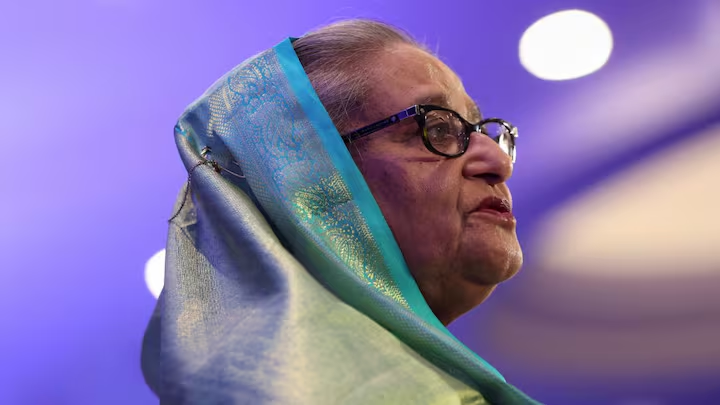
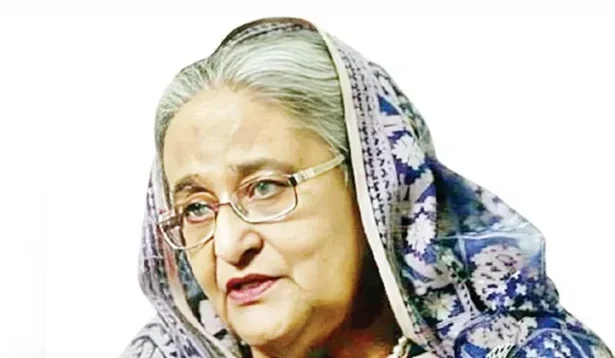
It remains one of the biggest unanswered questions for political analysts—and for millions of Bangladeshis—why the then-occupant of Ganabhaban, now the July Uprising Memorial Museum, reportedly asked the top army officials, “Shoot me and bury me here,” moments before ultimately leaving the country for India.
What drove her to express a desire to die and be buried at the Prime Minister’s official residence, only to flee shortly afterward, continues to fuel political debate and speculation.
Many observers believe Sheikh Hasina, the deranged occupant of the Ganabhaban at the time, made this explosive outburst to instigate her loyal security officials to crush the anti-government demonstrations with more brutality.
Her reaction came when she was asked to step down for the sake of her life and the country.
Hasina’s last minute provocative assertions were also documented in the trial proceedings of the International Crimes Tribunal (ICT).
According to the ICT prosecution, ousted prime minister Sheikh Hasina reportedly refused to relinquish power even in the final hours before leaving Bangladesh, telling senior military officials, “Then shoot me dead and bury me at Ganabhaban,” after they advised her to step down.
The account was presented by the prosecution of the International Crimes Tribunal (ICT) in its formal charge over alleged crimes against humanity committed during the July uprising, particularly the killings in Dhaka’s Chankharpul area.
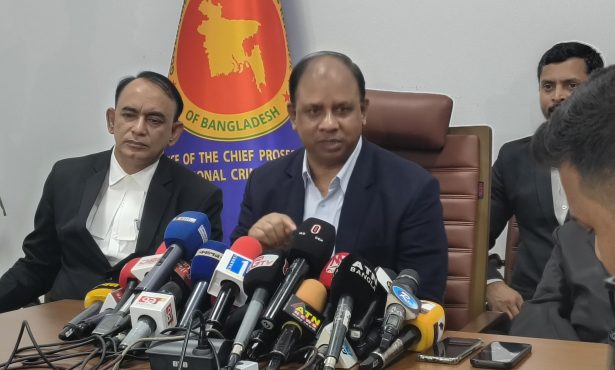
Chief Prosecutor Mohammad Tajul Islam read out the allegations during a tribunal hearing after the formal charges were submitted.
According to the prosecution, Hasina remained determined to stay in power until the very end and instructed the army chief to take a firm stance and suppress the protests with force.
The prosecution said the night of August 4, before Hasina fled the country on August 5, was marked by a series of tense, high-level meetings at Ganabhaban involving cabinet ministers, senior Awami League leaders, and top officials from the armed forces and security agencies.
Those present reportedly included the chiefs of the army, navy and air force, then Inspector General of Police Abdullah Al Mamun, and a former chief of the Bangladesh Air Force.
According to the formal charge, during a meeting between midnight and 12:15 a.m., former Defence Adviser Lt. Gen. (Retd.) Tarique Ahmed Siddique raised the issue of Hasina stepping down.
The prosecution alleged that Hasina reacted angrily, insisting that she would not resign under any circumstances.
The prosecution further alleged that Hasina instructed the army chief to remain resolute and use force to suppress the demonstrations.
It also claimed that Tarique Ahmed Siddique supported the proposal, saying the protests would subside if the army shot and killed some demonstrators.
According to the prosecution, Siddique also suggested that the Air Force open fire from helicopters.
The then Air Force chief allegedly became furious and told Hasina, “This man has already brought you down and will bring you down even further.”
The prosecution also alleged that the meeting ended abruptly after an unidentified individual—whom even members of the Special Security Force (SSF) on duty reportedly did not recognize—entered Ganabhaban.
Analysis | SB Desk