Play store

Sarah Aldrich, Acting Director of the Bureau of South and Central Asian Affairs at the U.S. Department of State, has said that the United States believes Bangladesh is on the right track and wants to further strengthen its diplomatic and economic relations with the country.
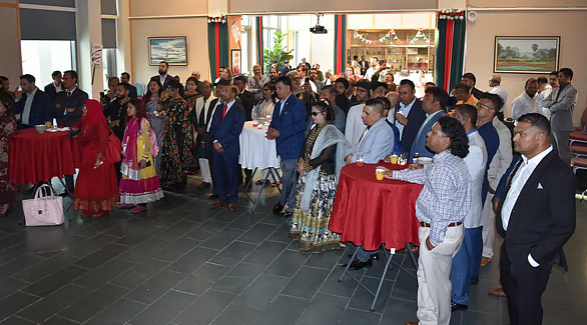
Speaking at a commemoration held at the Bangladesh Embassy in Washington, D.C., on August 28 to mark the second anniversary of the July Mass Uprising, Aldrich said the United States stands with Bangladesh’s democratic government and is ready to provide any assistance needed.
According to a press release issued by the embassy’s press wing on Tuesday, Aldrich was the chief guest at the event. She paid tribute to the students and members of the public who sacrificed their lives during the July Mass Uprising.
Aldrich said democracy had been established in Bangladesh through the July uprising and that an elected government is currently running the country. She added that the United States believes Bangladesh is moving in the right direction.
She also said that, despite the various challenges following the uprising, the interim government was able to complete a free and acceptable election within a short period. According to her, political and economic relations between Bangladesh and the United States have strengthened, and Washington wants to further deepen diplomatic and economic ties with Dhaka.
Aldrich called on Bangladesh to advance its agriculture, economy and political institutions in the spirit of the July uprising. She also expressed her wishes for the country’s continued progress and prosperity.
Michael Kugelman, a senior fellow at the Atlantic Council, was the special guest at the event. He said the change initiated by Bangladesh’s Generation Z youth through the mass uprising has inspired movements in many parts of the world. In that sense, he described Bangladesh’s July Mass Uprising as highly significant.
The event began with a minute of silence in memory of those who lost their lives seeking to end what the embassy described as “fascist rule,” restore Bangladesh to a democratic path, bring qualitative changes to social and state structures, and eliminate discrimination.
Ambassadors and diplomats from various countries, senior officials from the U.S. Department of State and other U.S. agencies, members of the Bangladeshi diaspora, and embassy officials attended the event.
A documentary titled July Kanya, highlighting the contributions of women to the July movement, was also screened.
Bangladesh’s Ambassador to Washington, Tarek Md. Ariful Islam, paid tribute to those who lost their lives during the uprising. The event was moderated by Naznin Sultana, Counsellor (Political-2) at the embassy.