Play store

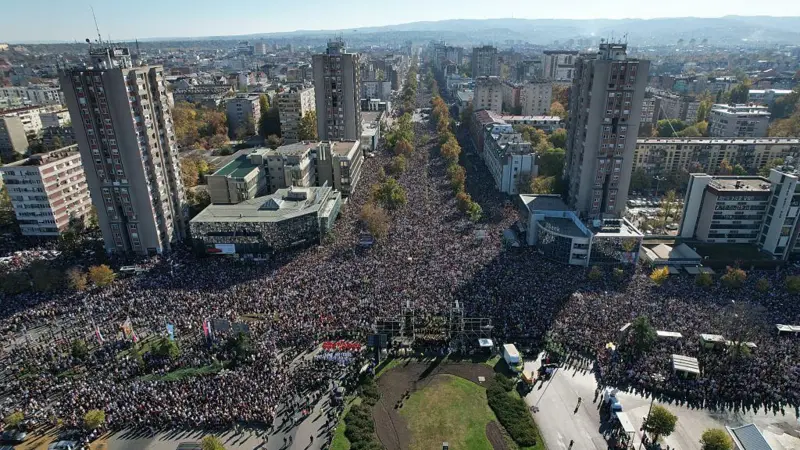
Serbian President Aleksandar Vučić has resigned amid more than a year of student-led protests and growing public anger over allegations of government corruption.
Speaking to supporters outside the presidential palace in the capital Belgrade, Vučić said the country had maintained peace and stability during his nine years in power. He had announced his intention to step down in June.
Vučić said he now wants to become his party’s candidate for prime minister in the upcoming parliamentary election. Under the constitution, he cannot seek a third presidential term.
The pro-Russian populist leader’s government had faced public criticism since the beginning of the protests. Anger intensified after the roof of a railway station in Novi Sad collapsed in 2024, killing 16 people. The incident became a major catalyst for protests against the government.
People from various sections of society joined the demonstrations, including students, teachers, workers and farmers. Serbian tennis star Novak Djokovic also expressed support for the protesters.
Protesters viewed the station disaster as a symbol of alleged failures under Vučić’s Serbian Progressive Party, which has been in power for more than a decade. Vučić had closely associated himself with the renovation of the station, which was presented as a symbol of Serbia’s progress.
Several officials serving under Vučić resigned one after another, but the protests continued. Demonstrations persisted throughout the summer and became increasingly tense following allegations of police violence.
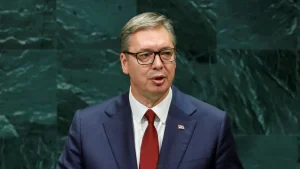
Aleksandar-Vucic. Photo: Collected
Vučić’s presidential term was due to end next year. Under Serbia’s constitution, a presidential election must be held within three months of a president’s resignation. This means Serbians are expected to vote twice before the end of the year.
Vučić said an early parliamentary election would be held in late October, followed more than a month later by the presidential election. The early parliamentary vote came amid sustained pressure from protesters, who had added a demand for elections to their list of demands.
Vučić had previously said he would contest the parliamentary election as the leader of the Progressive Party, potentially allowing him to remain a central figure in Serbian politics.
Parliament Speaker Ana Brnabić, also a member of the Progressive Party, will serve as interim president until a new president is elected.
Using his constitutional powers, Vučić has pardoned 49 people, including 23 students and several supporters of his party. According to Serbia’s public broadcaster RTS, they had been suspected of various offences linked to events over the past 18 months.
Vučić described those events as “terrible events that we have gone through over the past year and a half.”
In the upcoming parliamentary election, Vučić’s Progressive Party will face two main blocs: “Students Win”, an anti-corruption movement led by students, and “European Serbia”, an alliance of pro-Western opposition parties.
Vučić has been a prominent figure in Serbian politics for more than a decade. He became prime minister in 2014 and was first elected president in 2017.
He has publicly supported Serbia’s membership in the European Union while maintaining close ties with Russia and opening the country to Chinese investment. Source: Agencies.