Play store

DHAKA: The Bangladesh Nationalist Party (BNP) will organise rallies across the country, including in Dhaka, on 7 November to mark National Revolution and Solidarity Day.
The party will also hoist flags at its offices nationwide and pay tribute at the graves of late President Ziaur Rahman and former Prime Minister Khaleda Zia. Other programmes will include discussion meetings, poster publication, painting competitions and art exhibitions organised by the BNP and its affiliated organisations.
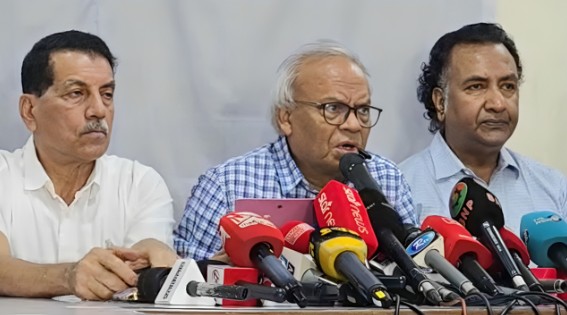
BNP Acting Secretary General Advocate Ruhul Kabir Rizvi announced the programmes while speaking to journalists after a joint meeting at the party’s central office in Nayapaltan on Monday.
Rizvi said the programme outline had been prepared based on the opinions of leaders of the BNP and its affiliated organisations.
Flags will be hoisted at party offices across the country at 6:00am on 7 November, followed by a central rally in Dhaka. District and upazila units will also be instructed to organise rallies, he said.
At 11:00am, party leaders will pay tribute at the graves of Ziaur Rahman and Khaleda Zia by placing wreaths and offering Fateha prayers.
Various affiliated organisations will arrange discussion meetings and publish posters, while the Jatiyatabadi Chhatra Dal will organise painting competitions and art exhibitions. A discussion meeting is tentatively scheduled for 6 November.
Describing 7 November as an important day in the country’s history, Rizvi said its spirit represented the defence of independence, sovereignty and democracy.
He said political conflict and uncertainty before 1975 had created public aspirations for change, leading to the events of 7 November. According to him, multiparty democracy, freedom of expression and press freedom returned after the events of that day.
Rizvi said Ziaur Rahman emerged at the centre of national politics and state power after 7 November. Referring to Zia’s declaration of independence from Kalurghat in 1971, he said the former president had provided direction to the nation during a critical period.
He also recalled the establishment of Baksal on 25 January 1975, saying all but four newspapers were shut down, leaving many journalists unemployed. He said newspapers and political parties later regained the opportunity to resume their activities.
Referring to the July movement, Rizvi said the revolutionary spirit of 7 November had influenced the movement, in which students, workers and ordinary people united. He added that the movement led to the fall of what he described as fascism on 5 August and reopened the path to democracy.